
Commercial Building Washing in Hampden County, MA
Low-pressure soft washing for low-rise commercial and multifamily exteriors — painted, brick, and EIFS surfaces cleaned without damage.
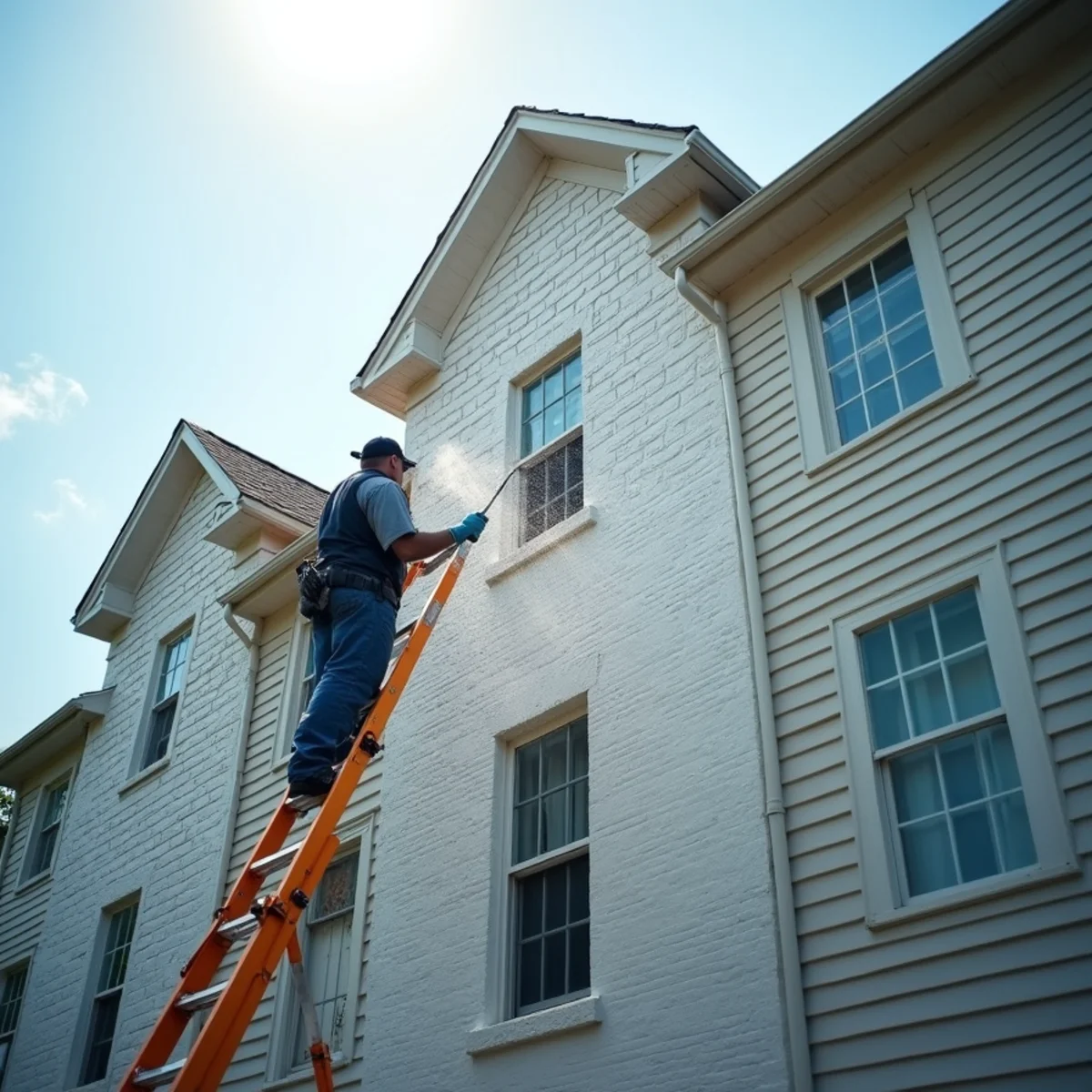
A building exterior collects the same algae, mildew, dirt, and staining a house does — it just does it across a much bigger surface, and usually where more people see it. On a retail strip, a medical office park, or a condo building in the Pioneer Valley, a green-streaked north wall and grimy soffits read as a property that has stopped being maintained, long before anything is actually wrong with it.
Most of those surfaces are also too delicate for high pressure. Painted block, synthetic stucco (EIFS), and even aged brick can be scarred, streaked, or driven full of water by a pressure wand. That is why we clean low-rise buildings by soft washing: a low-pressure application of a biodegradable cleaning solution that kills the growth at the root and rinses away clean, without the damage a high-pressure blast leaves behind.
We wash commercial and multifamily exteriors throughout Longmeadow, Springfield, Chicopee, Holyoke, and the surrounding Hampden County towns — matching the pressure and the solution to whatever the facade is made of, and using the right access equipment for the building's height and layout.
Recommended method
Low-pressure soft washing
Low-pressure soft washing for low-rise commercial and multifamily exteriors — painted, brick, and EIFS surfaces cleaned without damage.
Why building exteriors stain in the Connecticut River valley
The Pioneer Valley gives organic growth almost everything it wants. Humid summers, a heavy tree canopy, and the moisture that hangs over the Connecticut River corridor keep exterior walls damp for long stretches — and damp walls grow things. The first colonizer is almost always algae, including Gloeocapsa magma, the blue-green algae behind the black streaks you see running down light-colored siding and stucco. Once that thin algae layer is established, it holds moisture and becomes the base that fungus, lichen, and moss build on top of.
The pattern is easy to read. North and east walls, and any face shaded by the building next door or a stand of maples, stay the dirtiest, because they get the least sun to dry after rain and morning dew. Lower walls facing a parking lot pick up traffic film and winter road-salt residue, and below rooflines and window sills you get dirt, spring pollen, and tree sap streaking. On brick you may also see efflorescence — the white, chalky mineral bloom that migrates to the surface as water moves through masonry.
None of this means the building is failing; it is doing what every untended surface in Western Massachusetts does. Left alone, though, growth spreads, holds moisture against the wall, and eventually leaves a shadow where it sat. Washing on a sensible schedule is far cheaper than recoating a facade left to weather.
Why we soft wash commercial facades instead of pressure-blasting them
Soft washing is low-pressure cleaning done with chemistry instead of force. Rather than knocking growth off the wall with a high-pressure tip, we apply a biodegradable cleaning solution — surfactants plus a controlled amount of sodium hypochlorite where the growth requires it — at pressures closer to a garden hose than a pressure washer. It kills algae, mildew, mold, and lichen at the root, and the wall rinses clean. Because the organisms are killed rather than blown off, results last longer than a high-pressure rinse that leaves living roots behind.
On most building materials, that gentleness is not a nicety — it is the only safe way to clean. High pressure aimed at EIFS or synthetic stucco can puncture the thin base coat and drive water behind the finish, where it can cause hidden moisture problems inside the wall. On painted block and trim it strips and streaks the coating; on older brick and lime mortar it erodes the joints; and on any facade it can tear window seals and force water into wall cavities.
So we reserve real pressure for surfaces built to take it. Durable flatwork and hardscape — sidewalks, loading areas, and concrete aprons — are cleaned with controlled pressure under our commercial pressure washing service, while the vertical building envelope, where the delicate finishes are, gets soft washed.
How our building soft-wash process works, step by step
Every wash starts with a walk around the building. We identify what each face is made of — EIFS here, painted block there, brick on the entry elevation — because the solution and dwell time are dialed in to the surface and the growth on it. We also note the landscaping, entrances, signage, and fixtures, and plan access around the building's height and layout.
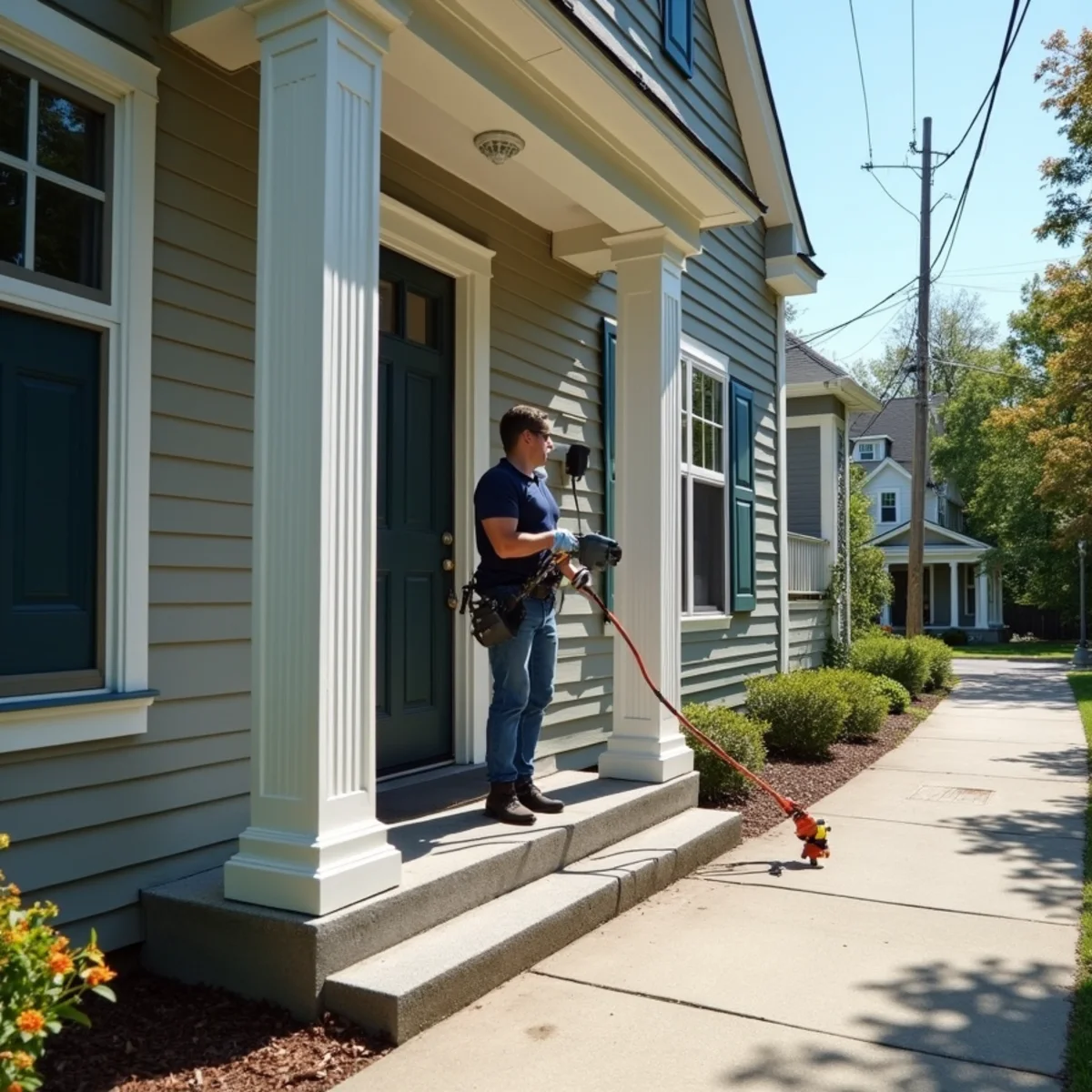
Before any solution goes up, we pre-soak the plantings at the base of the walls so runoff is diluted and plants are protected. We then apply the solution at low pressure and let it dwell — usually several minutes — so it kills the growth rather than just wetting it. On stucco and EIFS we work from the bottom upward, which keeps concentrated solution from running down a dry surface and leaving vertical clean-streaks — a common DIY mistake that is hard to undo.
Once the growth is broken down, we rinse from the top down with high water volume at low pressure, flushing the dead organic material and spent solution out of the surface without etching it. We finish with a walkthrough so you can see the result is even across the whole elevation, with no missed corners.
Surfaces and building types we clean across Hampden County
We soft wash the full range of low-rise construction found around the Valley — EIFS and synthetic stucco, painted concrete block and trim, brick and mortar, vinyl and fiber-cement siding, aluminum and composite panel cladding, and traditional cement stucco. We also clean the parts people forget: soffits, fascia boards, and the covered entry ceilings where cobwebs and grime collect.
That covers most of what owners and managers ask us to clean: strip retail and single-tenant storefronts, medical and dental office parks, bank and restaurant buildings, and the condo, townhome, and apartment complexes across Longmeadow, East Longmeadow, Springfield, Chicopee, Holyoke, West Springfield, Agawam, Westfield, Wilbraham, and Ludlow. For storefront-heavy properties we pair building washing with our storefront cleaning, and for portfolios we coordinate through our property management exterior cleaning service so several buildings run on one schedule.
How often should a commercial building be washed?
For most buildings in this climate, a full exterior soft wash once a year keeps growth from getting established and the property looking maintained. High-visibility elevations — the front of a retail or restaurant building, or the street side of an apartment complex — are often worth a second wash to stay ahead of pollen and summer growth.
A few things push a building toward more frequent cleaning: heavy tree cover and shade, a location near water or low-lying damp ground, north-facing walls that never fully dry, and lower walls that catch road salt and traffic film off a busy lot. Buildings in the open with good sun exposure can often go longer.
For managers and HOA boards with several buildings, a recurring maintenance schedule usually beats waiting until a facade looks bad and treating it as an emergency. Routine washing spreads the cost, keeps every building consistent, and stops growth before it stains the finish. We can set that up as a maintenance plan.
What building washing does — and does not — promise
Soft washing restores the surface: it removes the algae, mildew, lichen, dirt, and film, and kills the growth at the root so the wall stays clean longer than a surface rinse would, all while protecting the finish underneath instead of wearing it down the way a pressure tip does.
What no honest cleaner can promise is that the growth is gone for good. The Valley's humidity, shade, and tree canopy are still there after we leave, and algae will eventually try to return on every building in the region. Washing resets the clock and slows regrowth, especially on a regular schedule rather than once a decade. If a wall has been left long enough to stain beyond what cleaning can reverse, or the coating itself has failed, we will get it as clean as the surface allows but cannot replace paint past its life — and we will tell you honestly which situation your building is in.
Problems This Service Solves
- Black streaking and green algae spreading across shaded north and east walls
- Mildew and mold film dulling painted and EIFS finishes
- Moss and lichen taking hold on textured stucco and masonry
- Dirt, pollen, and tree sap staining below rooflines and windows
- Cobwebs, wasp nests, and grime built up in soffits and covered entryways
- Efflorescence and atmospheric staining on brick and mortar facades
- Road-salt and traffic film on lower walls facing parking lots and drive lanes
- Tired curb appeal that makes a well-run property look neglected to tenants and customers
What's included
- On-site assessment that matches pressure and cleaning solution to each facade material
- Low-pressure soft-wash application of a biodegradable cleaning solution
- Controlled sodium-hypochlorite blend where organic growth calls for it
- Even, streak-free cleaning of walls, soffits, fascia, and entry areas
- Proper ladders and access equipment for the building's height and access points
- Pre-wetting and rinsing of landscaping, plus protection of entrances and signage
- A final rinse and walkthrough to confirm even, consistent results
- Optional recurring maintenance scheduling for property managers and HOAs
Benefits
- Clean, even facades without the surface damage high pressure causes
- Growth killed at the root, so results hold up longer than a surface rinse
- Protects the finish you already paid for — paint, EIFS coatings, and sealed masonry
- A stronger first impression for tenants, customers, and prospective buyers
- Safer walkways and entries once slick organic film is removed
- Predictable, budgetable exterior maintenance across single or multi-building portfolios
Surfaces we treat
- EIFS and synthetic stucco (Dryvit-style) finishes
- Painted concrete block (CMU) and painted wood trim
- Brick and mortar facades
- Vinyl and fiber-cement siding on multifamily buildings
- Aluminum and composite panel cladding
- Traditional cement stucco
- Soffits, fascia, and covered entry ceilings
Safety & protection
- Low-pressure soft washing kept well below the threshold that damages EIFS, paint, and mortar
- Cleaning solution matched to each surface and diluted for the growth actually present
- Landscaping and shrubs pre-soaked and rinsed to protect plantings during the wash
- Entrances, walkways, signage, and light fixtures shielded while we work
- Proper ladders and access equipment for safe work at height
- Bottom-up application and top-down rinse to prevent clean-streaking on stucco and EIFS
- Care around windows, seals, and fixtures that high pressure would otherwise breach
What to Expect
Request an estimate
Call or send us a few details and photos. We respond with next steps and, where possible, a preliminary range before we visit.
Property & surface assessment
We look at each surface — siding, roof, hardscape — and identify the material, its condition, and the buildup we're dealing with.
Written scope of work
You get a clear, written estimate that spells out which surfaces we'll clean and the method we'll use on each one.
Property & plant protection
On service day we pre-wet landscaping, cover delicate plants, and take steps to protect fixtures before any solution is applied.
Surface-specific cleaning
We match the pressure and cleaning solution to the material — gentle soft washing for delicate surfaces, controlled pressure for durable hardscape.
Final walkthrough
We rinse thoroughly, remove protective coverings, tidy up, and walk the property with you to confirm you're happy with the result.
Before & After
Building Washing FAQs
Yes — soft washing is the safe method for exactly these surfaces. It cleans with a biodegradable solution at very low pressure, so it does not puncture the thin EIFS base coat, drive water behind the finish, or strip and streak paint the way a high-pressure tip does. We match the solution and dwell time to the material, and work bottom-up on stucco and EIFS to avoid clean-streaking.
Most low-rise buildings in this climate do well with a full soft wash once a year, with high-visibility fronts sometimes washed twice. Heavy shade, a damp or wooded location, north-facing walls, and parking-lot road salt all push toward more frequent cleaning. For portfolios, a recurring schedule usually costs less over time than waiting until a facade looks neglected.
Soft washing kills the growth at the root, so results last much longer than a high-pressure rinse that only knocks off the surface. But no cleaner can make it permanent — the Valley's humidity, shade, and tree canopy mean algae will eventually try to return on every building. Regular washing resets the clock and slows regrowth so it never reaches the point of staining the finish.
Yes. We plan the work around your entrances and traffic, protect signage, walkways, and light fixtures, and keep landscaping pre-soaked and rinsed. Soft washing is low-pressure and quiet compared to high-pressure blasting, and we can schedule around business hours or coordinate with a property manager so tenants and customers are minimally affected.
The building's vertical surfaces — painted, EIFS, stucco, brick, siding — are soft washed at low pressure so they are not damaged. Durable flatwork like sidewalks and concrete aprons can take controlled pressure and is handled under our commercial pressure washing service. Matching each surface to the right method is the core of the job, and we make that call for you on-site.
The solution is biodegradable and applied at low pressure. We pre-soak and rinse plantings so runoff is diluted, and we keep it off areas where it does not belong. Handled by a careful crew that dilutes to the surface and the growth present, soft washing is a well-established, responsible method for cleaning building exteriors around occupied properties and landscaping.
There is no flat rate, because cost depends on the building. The main factors are square footage of wall, the surface material, how much growth and staining there is, the height and access (whether ladders or lift access are needed), and whether it is a one-time wash or a recurring plan. The best way to get an accurate number is a free on-site estimate — call (351) 242-0666.
Ready to Refresh Your Property?
Request an estimate for pressure washing, house washing, roof cleaning, or soft washing in Longmeadow and surrounding communities.