
Patio & Walkway Cleaning in Longmeadow, MA
Joint-safe cleaning for pavers, brick, and stone that clears moss and organic film without blowing out the sand.
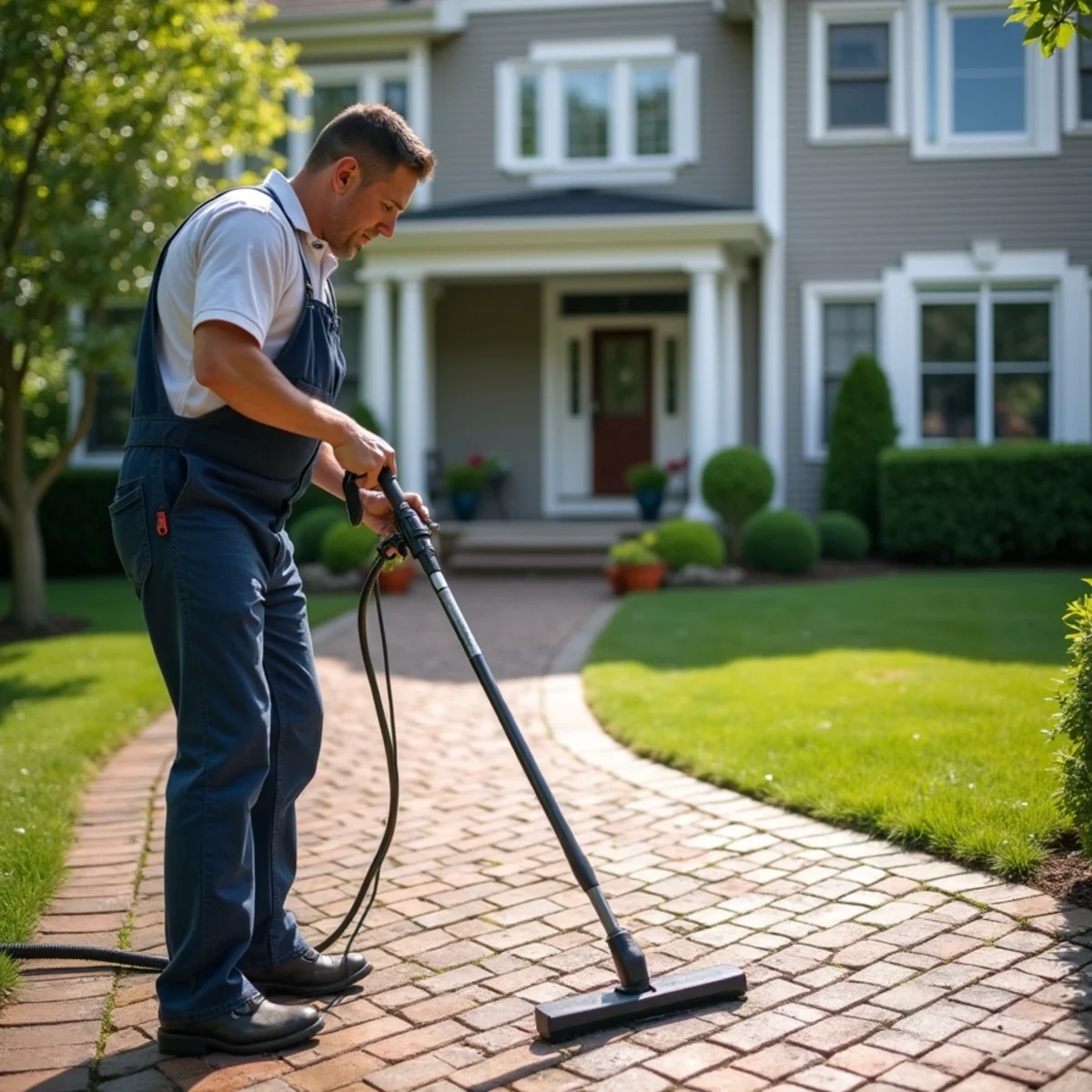
Patios and walkways are where moss and slippery green film build up fastest. They sit low to the ground, hold moisture, and in the Connecticut River valley they are often shaded by the mature maples and oaks that make Longmeadow neighborhoods so pleasant. That same canopy keeps north-facing brick walks and stone patios damp long after the rest of the yard has dried.
Cleaning them well takes more finesse than a driveway. Aggressive pressure blasts the sand out of paver joints, etches soft concrete, and forces water into porous bluestone. We match the pressure to the surface and treat the organic growth with a biodegradable solution that kills it at the root, so pavers, brick, and stone come clean without collateral damage.
If your joints need topping up or the surface would benefit from sealing, we tell you honestly and handle it as a separate step, never something we blow through and leave you to sort out.
Recommended method
Controlled pressure washing
Joint-safe cleaning for pavers, brick, and stone that clears moss and organic film without blowing out the sand.
Why Pioneer Valley patios grow moss faster than driveways
A driveway sits in the open and dries in the sun. A patio or walkway usually does not. Tucked beside the house, under a deck, or shaded by tree canopy, these surfaces stay damp, and damp, shaded stone is exactly what algae, moss, and lichen need to take hold. Through humid Connecticut River valley summers and the long shoulder seasons, that green film returns year after year on the same spots.
North-facing walks are the worst offenders. The north side of a Longmeadow colonial rarely sees direct sun, so it holds moisture and grows algae noticeably faster than a south-facing patio a few feet away. Add the leaf tannin, tree sap, and pollen that come with heavy New England tree cover, plus winter road salt tracked onto front walks, and you get surfaces that look tired and turn slick well before they are actually worn out.
Our method: solution first, controlled pressure second
Blasting a patio with high pressure might make it look clean for a week, but it does not kill what is growing, and it can do real damage. Our approach is different. We start by applying a biodegradable cleaning solution with surfactants, and controlled sodium hypochlorite where the growth warrants it, letting it break down algae, mildew, and moss at the root rather than just knocking the green off the top.
Only then do we rinse and lift with controlled, joint-safe pressure, often with a flat surface cleaner that spreads water evenly across pavers and concrete instead of a concentrated jet that carves lines and mines out joint sand. We keep the wand angle and distance dialed in for the surface in front of us. The result comes clean uniformly, the joints stay intact, and because the organics were killed at the root, the growth is slower to return.
Pavers, brick, and natural stone each get a different touch
Concrete and clay pavers are durable, but their sand-filled joints are the weak point. Too much pressure and you are re-sanding. Brick walks and patios add efflorescence to the mix, the white, powdery salt that migrates to the surface, which we treat with the right solution rather than trying to grind off. Older brick and lime mortar get a gentler hand still.
Natural stone is where experience matters most. Bluestone, flagstone, and fieldstone, common on Longmeadow and East Longmeadow walkways, are porous, and forcing water into them with high pressure can pull salts to the surface or cause pitting and flaking over time. We keep the pressure regulated, test an inconspicuous spot first, and use pH-appropriate cleaners so the stone comes clean without being saturated. Stamped and decorative concrete gets the same measured treatment to protect its finish.
Moss, weeds, and that slippery green film
The green and black film on a shaded walk is not just unsightly, it is the reason patios and steps get slick and dangerous, especially for kids and older family members. Because algae and moss root into the surface and into joint sand, simply rinsing them off leaves the root behind and they are back within weeks. Treating them with a proper cleaning solution kills the growth down into the pores, which is why solution-first cleaning lasts.
Weeds and moss growing up through paver joints are usually a sign the joint sand has thinned or washed out over the years. We can clear them as part of the cleaning, but if the joints are open, re-sanding is what actually keeps them from coming back, something we flag rather than paper over. No cleaning method stops regrowth permanently. Conditions that stay shaded and damp will eventually see growth again, which is why we talk with you about a sensible maintenance rhythm.
Re-sanding and sealing: when a cleaning is not the whole job
Cleaning restores how your hardscape looks. It does not refill joints that have lost their sand or replace a sealer that has worn off, and we will not pretend it does. After we clean, we tell you honestly whether your joints need topping up. Re-sanding, ideally with polymeric sand that hardens to lock pavers in place and slow weeds, is done once the surface is fully dry, so we handle it as a separate step rather than rushing it the same day.
Sealing is optional and surface-dependent. On the right paver or stone it can deepen color and make future cleanings easier; on porous natural stone it needs the right product and dry conditions. We give you a straight recommendation for your specific patio instead of upselling a coating that will not help. Our related paver cleaning, driveway cleaning, and concrete cleaning services cover the rest of your hardscape if you want the whole property done at once.
How often should you clean a patio or walkway in Western Massachusetts?
For most Hampden County homes, once a year keeps patios and walkways clean, safe, and looking their best, typically a spring cleaning to clear winter grime, salt residue, and the first flush of algae before entertaining season. Surfaces in heavy shade tell a different story. A north-facing brick walk under mature trees can green up roughly twice as fast as an open patio, and those spots may want attention twice a season.
The right interval depends on your specific yard: how much sun the surface gets, how close the tree canopy sits, and how much foot traffic it sees. After the first cleaning we can give you a realistic read on your property, whether you are in Longmeadow, East Longmeadow, Wilbraham, Hampden, Agawam, or elsewhere in the Pioneer Valley. A quick maintenance clean before growth digs in is always easier, and gentler on the surface, than waiting until it is deeply established.
Problems This Service Solves
- Moss and weeds sprouting through paver and stone joints
- Slippery green algae film on shaded stone and brick
- Black mildew and organic staining in damp, north-facing areas
- Leaf tannin, tree sap, and pollen staining after New England seasons
- White efflorescence and general dinginess on brick and concrete
- Winter road-salt residue tracked onto front walks and steps
- Faded, gray-looking pavers that have lost their original color
What's included
- Pre-inspection of surface type, condition, and joint state
- Application of a biodegradable cleaning solution that breaks down organic growth at the root
- Controlled-pressure cleaning of pavers, brick, or stone matched to the surface
- Even, streak-free surface-cleaner passes on open areas
- Joint-safe technique to protect paver and polymeric sand
- Hand detailing along edges, steps, and transitions where needed
- Rinse-down with runoff managed away from beds and lawn
- Assessment of whether re-sanding or sealing is recommended as a follow-up
Benefits
- Safer, less slippery footing on walkways, steps, and pool surrounds
- Restored color and clarity on pavers, brick, and stone
- Organic growth killed at the root, not just rinsed off the top
- Patios and entertaining areas ready for the warm season
- Cleaner transitions between hardscape and your home's entry
- A clear, honest read on whether re-sanding or sealing will help
Surfaces we treat
- Concrete and clay pavers
- Brick walkways, patios, and front steps
- Natural stone including bluestone, flagstone, and fieldstone
- Cut and cast stone
- Stamped and broom-finished concrete
- Pool decks and patio surrounds
Safety & protection
- Pressure kept joint-safe to preserve paver and polymeric sand
- Spot testing on delicate, older, or porous stone before full cleaning
- pH-appropriate, biodegradable solutions matched to the surface
- Controlled pressure on porous stone to avoid forcing water in and drawing out efflorescence
- Runoff directed and diluted away from garden beds, lawn, and storm drains
- Plants and shrubs pre-wet and rinsed to protect foliage
- Hand detailing near delicate edges instead of high pressure
What to Expect
Request an estimate
Call or send us a few details and photos. We respond with next steps and, where possible, a preliminary range before we visit.
Property & surface assessment
We look at each surface — siding, roof, hardscape — and identify the material, its condition, and the buildup we're dealing with.
Written scope of work
You get a clear, written estimate that spells out which surfaces we'll clean and the method we'll use on each one.
Property & plant protection
On service day we pre-wet landscaping, cover delicate plants, and take steps to protect fixtures before any solution is applied.
Surface-specific cleaning
We match the pressure and cleaning solution to the material — gentle soft washing for delicate surfaces, controlled pressure for durable hardscape.
Final walkthrough
We rinse thoroughly, remove protective coverings, tidy up, and walk the property with you to confirm you're happy with the result.
Before & After
Related Services
Patio & Walkway Cleaning FAQs
Not with the right technique. We keep the pressure joint-safe, use a surface cleaner that spreads water evenly instead of a concentrated jet, and treat organic growth with solution rather than brute force. If some joints have already thinned or washed out over the years, we point it out. Re-sanding is the real fix for open joints, and we handle it as a separate step.
For most Hampden County homes, once a year keeps hardscape clean and safe, usually a spring cleaning to clear winter salt and the first algae. Surfaces in heavy shade, like a north-facing brick walk under mature trees, can grow back roughly twice as fast and may want attention twice a season. After the first visit we can give you a realistic interval for your specific yard.
Eventually, yes. No cleaning method stops regrowth permanently, because algae and moss thrive wherever a surface stays shaded and damp. What we can do is kill the current growth at the root with a proper cleaning solution rather than just rinsing the top, which noticeably slows how fast it returns. A light maintenance clean every year or so keeps it from ever getting deeply established again.
Yes, and it is exactly why we regulate pressure by surface. Bluestone, flagstone, and fieldstone are porous, so we avoid the high pressure that forces water in and can draw out salts or cause pitting over time. We test an inconspicuous spot first, use pH-appropriate cleaners, and let the solution do the work so the stone comes clean without being saturated or etched.
Those are separate steps, not part of a standard cleaning, and we are upfront about that. Re-sanding, ideally with polymeric sand that hardens to lock pavers and slow weeds, is done once the surface is fully dry. Sealing is optional and depends on your surface. On the right paver or stone it can help, but we only recommend it where it genuinely makes sense for your patio.
We take real care with your landscaping. Beds and shrubs near the work are pre-wet and rinsed so nothing sits on foliage, and we direct and dilute runoff away from plantings, lawn, and storm drains. The solutions we use are biodegradable and applied at controlled strength for the surface. If you have prized or delicate plantings right at the edge, tell us and we will plan around them.
There is no flat rate, because cost depends on the size of the area, the surface type, how much moss or staining has built up, and access to the space. A shaded stone walk that is heavily overgrown takes more than a small open paver patio. The honest way to price it is to look at your specific project. Request a free estimate or call (351) 242-0666.
Ready to Refresh Your Property?
Request an estimate for pressure washing, house washing, roof cleaning, or soft washing in Longmeadow and surrounding communities.