
The Complete Pressure Washing Guide for Massachusetts Homeowners
The short answer
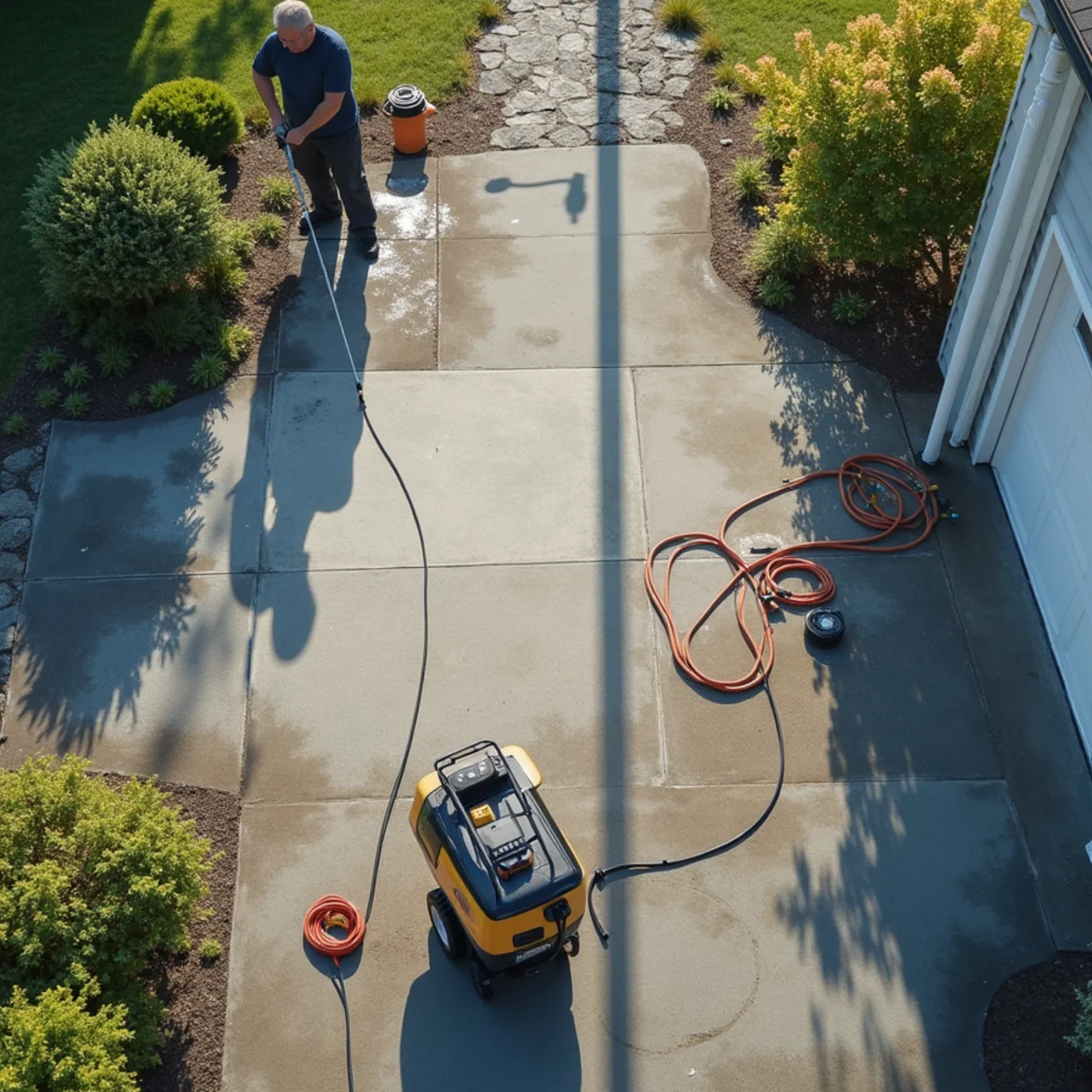
Pressure washing cleans durable surfaces with high-pressure water; soft washing cleans delicate surfaces with low pressure and a biodegradable cleaning solution that kills organic growth at the root. The single most important decision is matching the method to the surface. High pressure on siding, roofs, or old brick causes damage that often isn't visible until later, so roofs and most siding should be soft washed, while pressure is reserved for durable concrete and hardscape.
Pressure washing is a spectrum, not a single setting
Most homeowners use "pressure washing" as a catch-all, but cleaning a home's exterior is really a spectrum of water pressure and chemistry. At one end sits high-pressure washing, roughly 1,500 to 3,000 PSI, which blasts dirt and staining off durable surfaces like concrete. At the other end sits soft washing, which uses very low pressure — often no stronger than a garden hose — combined with a purpose-made cleaning solution that does the actual work. In between are dozens of judgment calls about nozzle angle, distance, water temperature, and which cleaner is safe on which material.
Getting this right is the whole game, because the wrong method causes damage that frequently isn't visible the day of the job. Water driven behind vinyl or clapboard feeds mold inside the wall. Too much pressure on an asphalt roof strips the protective granules that give shingles their lifespan. A strong tip held too close to older brick erodes soft lime mortar and opens the wall to moisture. The clean looks fine at first; the consequences show up months or years later.
This guide walks through how the pros decide, surface by surface, so you can either clean safely yourself or hire well. Craft Bros Exterior Cleaning is a soft-wash-first specialist serving Longmeadow and Hampden County, and the approach below is the same one we use on homes across the Connecticut River valley.
Pressure washing vs. power washing vs. soft washing
These three terms get used interchangeably, but they describe different tools. Pressure washing uses unheated water at high pressure. Power washing is essentially the same equipment with a heater that adds hot water, which helps cut grease and stubborn grime on hard surfaces like commercial concrete. Both rely primarily on mechanical force — the water itself scours the surface clean.
Soft washing works on an opposite principle. Instead of force, it uses chemistry: a biodegradable solution built around surfactants and a controlled dose of sodium hypochlorite is applied at low pressure, allowed to dwell, and then rinsed away gently. The cleaning happens because the solution kills and dissolves the organic growth, not because the water is hitting hard. For anything living on a surface — algae, mildew, moss, lichen — soft washing is both safer and more effective, because force alone only removes what you can see.
The practical takeaway: the term on the marketing flyer matters far less than whether the crew matches the method to your specific surfaces. A company that pressure washes everything the same way is the one to be wary of.
How soft washing actually works: chemistry, not force
When you pressure wash a living surface, you shear off the visible top layer of algae or mold but leave the root structure embedded in the pores of the material. That is why a pressure-washed roof or north-facing wall often streaks again within a season — you cut the weeds instead of pulling them. Soft washing solves this at the source.
The active ingredient in most soft-wash blends is sodium hypochlorite, the same compound in household bleach, diluted to a controlled working strength. It is a strong oxidizer: its hypochlorite ion attacks the color-producing molecules inside the growth and breaks down the cell walls of algae, mildew, lichen, and bacteria until they collapse. In plain terms, it kills the organism rather than just knocking the top off it.
Surfactants are the second half of the recipe. On their own, water and bleach bead up and run off a vertical wall or sloped roof before the chemistry has time to act. Surfactants break the water's surface tension so the solution clings and sheets evenly, extending dwell time to the ten to twenty minutes needed to finish the job. A gentle, low-pressure rinse then carries the dead material away. Done properly, the result is a surface that stays clean far longer than a pressure-only wash — because the growth was treated at the root.
Matching the method to each surface
Roofs: soft wash only. Asphalt shingles, cedar shakes, and most other roofing cannot tolerate pressure without losing granules or shakes lifting. Roofs are cleaned with a low-pressure application of solution and a gentle rinse — never a pressure wand.
Vinyl and aluminum siding: soft wash. Vinyl can technically take limited pressure, but high pressure drives water behind the panels where it feeds hidden mold, and it can etch or dull oxidized vinyl. Low-pressure soft washing cleans it evenly without forcing water into the wall cavity.
Wood and cedar (clapboard, shakes, trim): soft wash, low pressure. New England has a lot of natural and painted cedar, and it is easy to raise the grain, furry the surface, or strip finish with a pressure tip. Gentle chemistry is the safe path.
Fiber cement (such as HardiePlank) and stucco: soft wash. Both look tough but are vulnerable — stucco can pit and fiber cement's factory finish can be marred by aggressive pressure.
Brick and masonry: soft wash, especially on older homes. Antique brick and the soft lime mortar common in historic New England construction erode under pressure, which opens the wall to water. Chemistry lifts biological staining and grime without cutting the joints.
Concrete driveways, walkways, patios, and durable hardscape: controlled pressure washing is the right tool. These surfaces can take the force and often need it to lift ground-in grime, and a flat-surface cleaner delivers an even result without wand streaks.
Composite and wood decking, and pavers: usually a hybrid. A soft-wash pre-treatment kills the organic growth, followed by light, controlled pressure — with pavers, too much force blows out the joint sand and destabilizes the surface, so restraint matters.
Roofs are the highest-stakes surface: Gloeocapsa magma and your warranty
Those black streaks running down so many New England roofs are not dirt and not the shingles wearing out. They are a living colony of Gloeocapsa magma, a hardy blue-green cyanobacteria that spreads by airborne spores and takes hold first on shaded, north-facing slopes that stay damp. It feeds on the ground limestone (calcium carbonate) used as filler in asphalt shingles, so left alone it slowly consumes part of what the shingle is made of, holds moisture against the roof, and darkens the surface enough to raise attic temperatures.
This is exactly why pressure is off the table for roofs. The Asphalt Roofing Manufacturers Association (ARMA), whose guidance the major shingle makers follow, calls for cleaning algae with a low-pressure application of a sodium hypochlorite solution left to dwell and then rinsed gently — and its bulletin is blunt about power washing: do not use a power washer. High pressure strips the granules that shield the asphalt from UV, shortening the roof's life, and power washing a shingle roof generally violates manufacturer specifications and can void the warranty.
The honest expectation to set: soft washing kills the current colony and restores the roof's appearance, and it slows regrowth considerably, but Gloeocapsa spores are always in the air here. No cleaning makes a roof immune forever. Periodic maintenance keeps it in check, and zinc or copper strips near the ridge can further slow return by releasing trace metal ions that algae dislike.
Why New England — and the Connecticut River valley — is so hard on exteriors
Massachusetts homes get dirty faster than homes in drier parts of the country, and it is worth understanding why so you can plan around it. Humid summers in the Connecticut River valley, a heavy mature tree canopy, and long stretches of shade on north and east walls give algae, moss, mildew, and lichen exactly the damp, low-sun conditions they need to thrive. Homes tucked into wooded lots in Longmeadow, Hampden, and the surrounding towns tend to grow the heaviest buildup.
The seasons pile on their own residues. Spring coats everything in yellow-green tree pollen and sticky sap. Summer humidity accelerates biological growth. Fall drops leaves and organic debris that trap moisture against siding and in gutters. Winter leaves a film of road salt and de-icer along lower walls, walkways, and driveways, and repeated freeze-thaw cycles work moisture into any crack in brick or concrete, widening it a little more each time it freezes and expands. That same salt-laden moisture can also drive efflorescence, the chalky white crystalline deposit that surfaces on brick as water evaporates out of the masonry.
Two consequences follow. First, exteriors here generally need attention more often than in a dry climate. Second, because so much of the buildup is biological rather than just dirt, it has to be killed at the root — a rinse that only removes the surface layer invites it straight back.
When is the best time to pressure wash a house in Massachusetts?
For our climate, late spring and early fall are the sweet spots. A spring cleaning clears away winter's road salt, grime, and the first flush of pollen, giving the house a fresh start; roughly April through early June works well as temperatures settle. A fall cleaning strips off algae, sap, and leaf debris before it gets sealed under snow and ice for the winter. Many homeowners here do both — a wash before winter and a refresh after.
Temperature is the hard constraint. Aim for days when it stays comfortably above freezing, ideally in the 40 to 75 degree range, and avoid washing when overnight lows will dip below 32. Water left on wood or in masonry that then freezes expands and can cause cracking, warping, and spalling — the opposite of what you want. Bright sun on a very hot day is also less than ideal for soft washing, because the solution can dry before it finishes working; mild, overcast days are close to perfect.
There is real flexibility within those windows. If your roof or north wall has heavy algae, the growth is active and worth addressing whenever conditions allow rather than waiting for a calendar-perfect week.
PSI, nozzles, and why the number on the machine tells half the story
PSI (pounds per square inch) measures water pressure, and it is the number people fixate on — but it is only part of what actually reaches the surface. GPM (gallons per minute) determines rinsing volume, the nozzle tip determines how tightly the stream is focused, and your distance and angle from the surface change the effective force dramatically. A high-PSI machine held far back with a wide 40-degree tip can be gentler than a modest machine held inches away with a narrow 15-degree tip.
As a rough reference, durable concrete tolerates the high end, often 2,000 to 3,000 PSI with a surface cleaner, while vinyl siding should generally stay at or below roughly 1,300 to 1,600 PSI and be cleaned with chemistry doing most of the work. Roofs and delicate surfaces should not see pressure-washer force at all. The narrow red 0-degree tip that comes with most consumer machines has no business on any home surface — it concentrates all the force into a point that can carve wood, etch concrete, and shatter the illusion that pressure washing is foolproof.
The reason professionals rarely lead with a PSI number is that surface, condition, and technique matter more than the machine's rating. The right question is not "how many PSI" but "how little force can get this surface clean" — and for anything organic, the honest answer is usually chemistry first, pressure last.
DIY rental vs. hiring a professional: the honest tradeoffs
A rented pressure washer is cheaper up front, and for the right job — a sturdy concrete patio or a section of walkway — a careful homeowner can get a good result. If you go that route, keep the wand moving, use a wide tip, stay well back from the surface, work at a downward angle so water isn't driven upward under laps, and never point it at a roof, a window seal, or soft mortar.
The trouble is that a rental is a blunt instrument, and most of the damage we are called to assess comes from a homeowner or handyman using too much pressure on the wrong surface: gouged cedar, striped and dulled siding, blown-out paver joints, water forced into a wall, or a roof left visibly lighter where the granules washed away. Those repairs cost far more than the wash ever saved. Roof and ladder work adds real fall risk on top of that, and mixing and applying cleaning solutions safely — protecting your landscaping, your neighbors, and yourself — is its own skill.
A professional brings matched pressure and chemistry for each surface, the experience to tell which is which, and the plant-protection and containment steps that keep your yard safe. For roofs, delicate siding, and older masonry especially, the gap between a pro and a rental is the difference between a clean home and an expensive lesson. When the risk is high, hiring well is usually the cheaper decision in the long run.
What a careful exterior cleaning actually looks like
A good job starts before any water flows, with an assessment: identifying each surface, its age and condition, and the type of buildup present. That assessment is what tells the crew where to soft wash, where controlled pressure is safe, and where to spot-test first. On painted, older, or uncertain surfaces, a small test area confirms the solution and method won't cause a problem before it's applied broadly.
Landscaping protection is non-negotiable. Plants near the work are pre-wetted and, where needed, covered, and beds are rinsed during and after so no concentrated solution lingers on foliage. Windows, light fixtures, and openings are considered so water isn't driven where it doesn't belong. The cleaning itself proceeds surface by surface with the right method for each, and the job ends with a thorough rinse and a walkthrough so you can see the result and raise anything you noticed.
Use this as a hiring filter. If a contractor can't tell you which method they'll use on your roof versus your driveway, quotes a one-size-fits-all pressure number, or skips plant protection, those are red flags. A careful company is happy to explain its plan for each surface before it starts.
How long results last, how often to clean, and what drives cost
How long a clean holds depends on the surface and its exposure. A soft-washed roof or shaded wall that was treated at the root generally stays clear far longer than a pressure-only wash — often a few years — while a sunny, open surface may go longer still. Heavily shaded, tree-covered, north-facing areas regrow fastest. As a general rhythm for our climate, many Massachusetts homes benefit from a house soft wash roughly every one to two years, a roof treatment every few years or when streaking returns, and hardscape cleaning as staining warrants.
No exterior cleaning is permanent, and any company promising that isn't being straight with you. Spores and grime are always returning; the goal is to restore the surface and slow regrowth, then maintain on a sensible schedule rather than let buildup damage the material.
On cost, the honest answer is that it depends on measurable factors rather than a flat number: the size and height of the home, how many and which surfaces are involved, the severity of the buildup, and access considerations like steep roofs, tight lots, or delicate landscaping. That's why a good estimate follows a look at the actual property. For a free, specific estimate on your home in Longmeadow, Hampden County, or the surrounding Pioneer Valley, call Craft Bros Exterior Cleaning at (351) 242-0666.
Craft Bros Exterior Cleaning
Local exterior-cleaning specialists serving Longmeadow and Hampden County. Questions about your home? Call (351) 242-0666.