
Roof Cleaning in Longmeadow, MA
Roof-safe soft washing that removes black streaks, moss, and lichen without ever putting high pressure on your shingles.
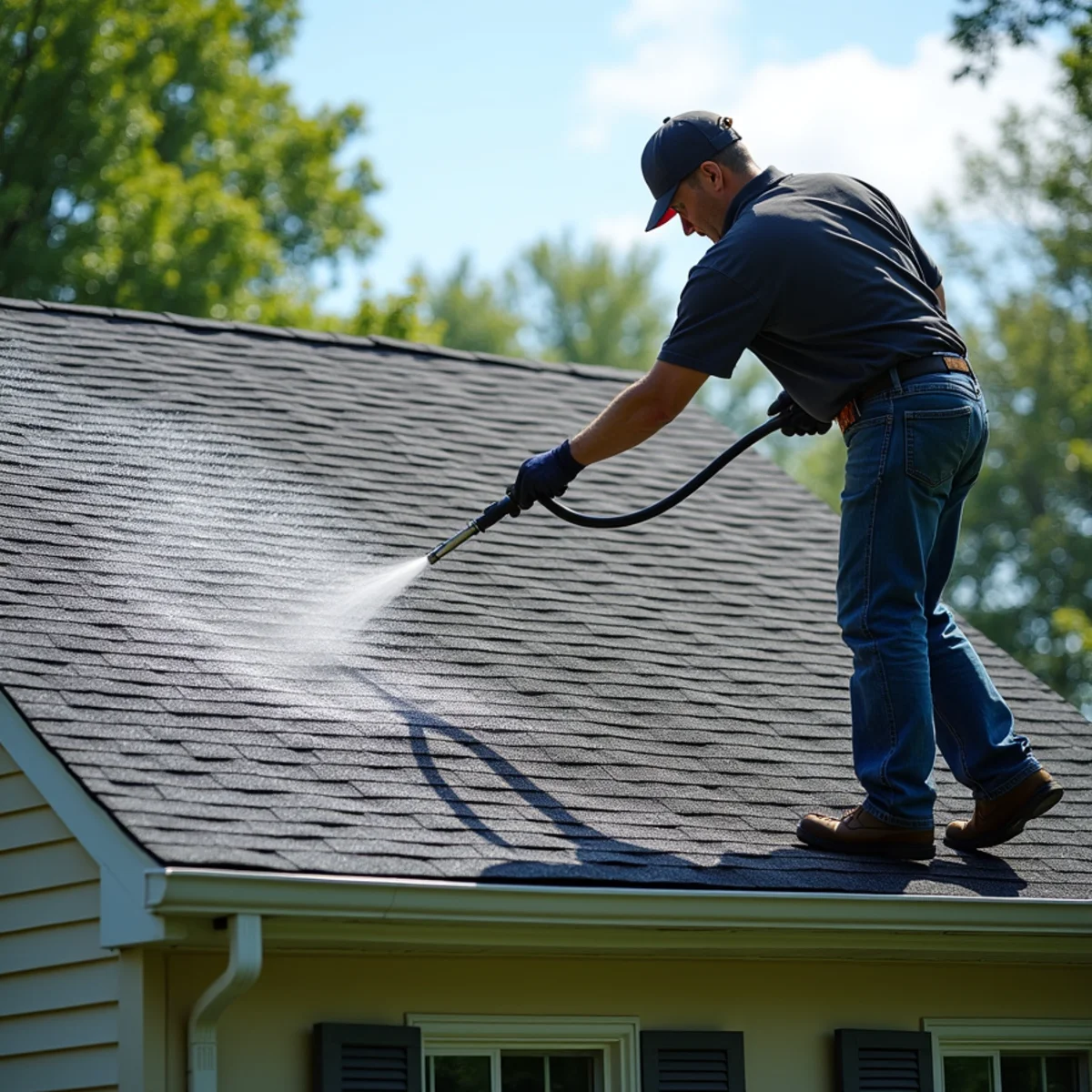
Those dark streaks running down your roof are not just dirt. They are colonies of a hardy blue-green algae, Gloeocapsa magma, that thrive in our humid river valley and feed on the limestone filler in asphalt shingles. Moss and lichen follow close behind, taking hold first on the shaded, north-facing slopes and valleys that stay damp under Longmeadow's mature tree canopy.
We clean roofs the way the roofing industry recommends: a low-pressure soft wash that kills the algae, moss, and lichen at the root, then rinses gently only where it helps. High pressure never touches your shingles, because it strips the protective granules and can void a manufacturer's warranty. Our method restores the roof's appearance while protecting the surface underneath.
Craft Bros Exterior Cleaning serves Longmeadow, Hampden County, and the wider Pioneer Valley, matching the right cleaning solution and the lightest effective touch to every roof. If your roof has gone dark and streaked, we will give you an honest look and a free estimate.
Recommended method
Low-pressure soft washing
Roof-safe soft washing that removes black streaks, moss, and lichen without ever putting high pressure on your shingles.
What those black streaks on your roof actually are
The dark stains streaking down a New England roof are rarely just dirt. They are colonies of Gloeocapsa magma, a hardy blue-green algae that arrives on the wind, settles on your shingles, and feeds on the ground limestone used as filler in modern asphalt. The black tint you see is a protective sheath the algae grows to shield itself from the sun, which is why the streaks run downward as rain carries spores across the field of the roof.
In the Connecticut River valley, conditions are close to ideal for it. Humid summers, heavy morning dew, and a mature tree canopy over many Longmeadow and Hampden County neighborhoods keep roofs damp long after the rest of the house has dried. North-facing slopes, valleys, and the sections shaded by overhanging maples, oaks, and pines hold that moisture the longest, so growth almost always shows up there first before spreading.
Left alone, the colonies thicken and trap even more moisture against the shingle. Over time that shortens the life of the roof and drags down the look of the whole house, so clearing the growth early, with the right method, keeps a small cosmetic problem from turning into a maintenance one.
Why we never put high pressure on a roof
It is tempting to think a pressure washer would blast the streaks away, and plenty of roofs in the area have been damaged by exactly that. The granules bonded to an asphalt shingle are its sunscreen and its armor. High pressure, which a pressure washer can push to several thousand PSI, strips those granules, exposes the asphalt mat underneath, and can drive water up under the shingle courses. The result is a roof that looks briefly cleaner but ages faster, and most shingle manufacturers will not honor a warranty on a roof that has been power washed.
That is why the roofing industry, including the Asphalt Roofing Manufacturers Association (ARMA), points to low-pressure soft washing instead. Soft washing does the work chemically rather than mechanically: a cleaning solution kills the algae, moss, and lichen at the root, and only a gentle rinse, closer to the pressure of a garden hose than a pressure washer, is used where it helps. Nothing scrubs or scours the granule surface.
Roofs and delicate elevations are soft wash only, every time. It is the method that removes the organism causing the stain rather than just knocking the surface color off, and it does it without trading the look of your roof for years of its life.
How our roof soft wash works, step by step
Every job starts with a look at the roof and the ground around it. We check the shingle condition, note where algae, moss, and lichen have taken hold, and identify the plants, gutters, and hardscape that need protecting. Older or brittle shingles, skylights, and flashing all change how we approach a slope.
Before any solution goes down, we pre-wet and cover the landscaping and flush the gutters so runoff is diluted and directed safely. We then apply a biodegradable, roof-safe cleaning solution at low pressure. It combines surfactants with a controlled amount of sodium hypochlorite, the same active family ARMA describes, mixed to the strength the surface and the severity of the growth call for.
The solution is given time to dwell and do its work, killing the organisms down to the root rather than just bleaching the surface. Where a gentle rinse helps, we use one; in other spots we let the coming rains carry off the dead growth so nothing is forced. Before we leave, we walk the property, flush loosened debris from the gutters, and give you honest guidance on when the roof will likely need attention again.
Moss and lichen: why they need patience, not a scraper
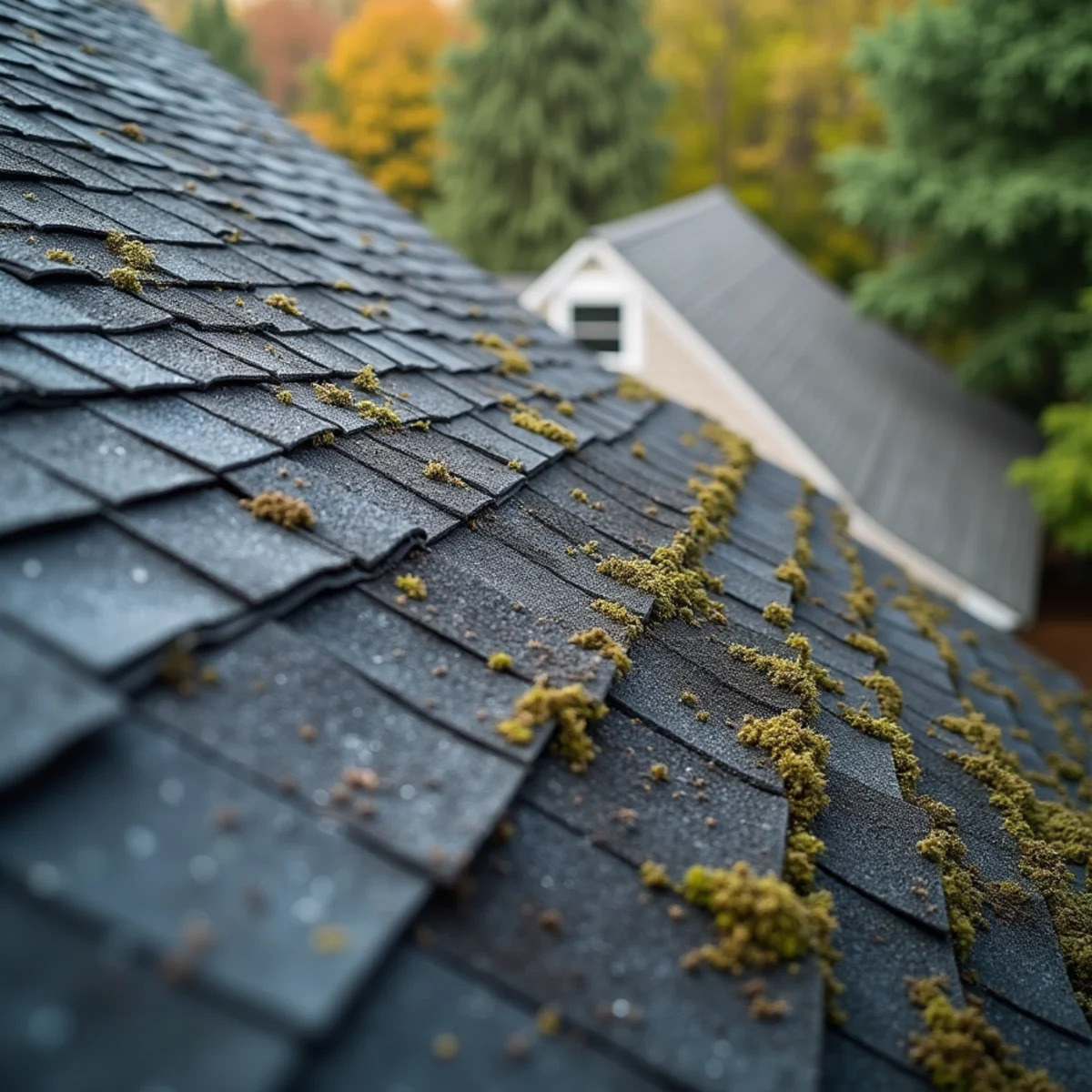
Algae stains the surface, but moss and lichen dig in, and they call for a different touch. Moss builds up into spongy cushions along shaded valleys and north slopes, holding water against the shingle and, once it is thick enough, lifting shingle edges where wind can catch them like a sail. Lichen goes further, anchoring into the granule surface itself, which is why it clings so stubbornly.
Scraping, brushing, or blasting these off does more harm than the growth itself, because it takes the granules with it. Our approach is to treat moss and lichen with the soft wash solution and let it die back, then allow natural weathering and rain to release it over the following weeks. Heavy moss may need a follow-up visit. It is slower than a one-and-done blast, but it protects the shingle, which is the whole point.
How often should a roof be cleaned in the Pioneer Valley?
For most homes in Longmeadow and the surrounding Hampden County towns, a professional soft wash keeps a roof looking clean for roughly three to five years. That window depends heavily on your specific lot. A roof in full sun that dries quickly can go longer; one shaded by tall pines and oaks, or hemmed in by a damp tree canopy, may show growth again in one to two years.
Elevation matters too. North-facing slopes, valleys, and sections under overhanging branches almost always green up first, so we often treat those areas more attentively or set a shorter interval for heavily shaded properties. Timing within the year matters as well: soft washing works best in the milder months, not in freezing conditions, so late spring through fall is generally ideal in Western Massachusetts.
The honest answer is that the right frequency is the one that keeps your particular roof ahead of the growth. We are glad to look at your home and suggest a realistic interval rather than a one-size-fits-all number.
Keeping your roof cleaner for longer
Because algae is a living organism carried on the wind, no cleaning stops it from ever returning, and anyone promising a permanent fix is overselling it. What a proper soft wash does is remove the colonies at the root and reset the clock, and there are practical ways to slow how fast they come back.
Trimming branches that overhang the roof lets slopes dry faster and drops less organic debris into valleys and gutters. Keeping gutters clear stops water from backing up and feeding growth along the eaves. On roofs prone to heavy regrowth, zinc or copper strips installed near the ridge release trace metal ions when it rains that discourage algae and moss on the slope below, though they work best within roughly ten to fifteen feet downslope and are a supplement to cleaning, not a replacement for it.
For shaded Longmeadow and Wilbraham homes that green up quickly, the simplest option is a maintenance schedule: a lighter, periodic soft wash that keeps the roof ahead of the algae so it never gets back to heavy staining.
Problems This Service Solves
- Black algae streaks (Gloeocapsa magma) staining asphalt shingles
- Moss cushions holding moisture along shaded north slopes and valleys
- Lichen rooted into the granule surface and clinging to shingles
- Organic staining that spreads year over year from an overhead tree canopy
- Premature granule loss and shortened roof life from neglect or improper cleaning
- A dark, aged appearance that drags down curb appeal and resale value
- Debris and staining in valleys and along eaves where leaves and pollen collect
What's included
- Inspection of the roof and grounds to identify algae, moss, and lichen and check shingle condition
- Pre-wetting and protection of gutters, downspouts, landscaping, and plantings
- Low-pressure application of a biodegradable, roof-safe cleaning solution
- Controlled dwell time so the solution kills algae, moss, and lichen at the root
- Gentle rinsing where appropriate, letting weather release stubborn growth elsewhere
- Flushing of gutters and downspouts of loosened debris
- A post-clean walkthrough with honest guidance on maintenance timing for your roof
Benefits
- Restores your roof's clean appearance without lifting or loosening a shingle
- Keeps cleaning aligned with ARMA and shingle-manufacturer guidance
- Removes the organisms that shorten shingle life, protecting your roof investment
- Slows the return of algae and moss so results last longer
- Improves curb appeal and first impressions for guests or buyers
- Low-pressure method protects granules, flashing, and seals
- Careful plant and gutter protection keeps the rest of your property safe
Surfaces we treat
- Asphalt shingle roofs (three-tab and architectural)
- Metal roofing (method adjusted to the material and finish)
- Cedar shake and wood roofs (gentle, low-pressure treatment)
- Low-slope and accessible roof sections
- Roof valleys, eaves, and north-facing slopes where growth concentrates
- Skylights, flashing, and adjacent trim protected during the wash
Safety & protection
- No high pressure on shingles, ever — low-pressure soft wash only
- Biodegradable cleaning solution applied at a controlled strength
- Landscaping and plantings pre-wet, covered, and rinsed as needed
- Gutters and downspouts flushed and protected from concentrated runoff
- Careful attention to skylights, flashing, and roof penetrations
- Ladder and roof-access safety practices to protect the crew and your home
- Application timed for milder weather, never in freezing conditions
What to Expect
Request an estimate
Call or send us a few details and photos. We respond with next steps and, where possible, a preliminary range before we visit.
Property & surface assessment
We look at each surface — siding, roof, hardscape — and identify the material, its condition, and the buildup we're dealing with.
Written scope of work
You get a clear, written estimate that spells out which surfaces we'll clean and the method we'll use on each one.
Property & plant protection
On service day we pre-wet landscaping, cover delicate plants, and take steps to protect fixtures before any solution is applied.
Surface-specific cleaning
We match the pressure and cleaning solution to the material — gentle soft washing for delicate surfaces, controlled pressure for durable hardscape.
Final walkthrough
We rinse thoroughly, remove protective coverings, tidy up, and walk the property with you to confirm you're happy with the result.
Before & After
Related Services
Roof Cleaning FAQs
No, and no reputable company should. High pressure strips the protective granules off the shingles, exposes the asphalt underneath, and can force water up under the courses, often voiding the manufacturer's warranty. The roof-safe method is a low-pressure soft wash, which kills the algae, moss, and lichen with a cleaning solution rather than blasting the surface. It cleans without shortening the life of your roof.
For most Longmeadow and Hampden County homes, a soft wash keeps a roof looking clean for about three to five years. Shaded lots under tall pines, oaks, or a dense tree canopy stay damp longer and may need attention every one to two years, while roofs in full sun can go longer. We are happy to look at your specific home and suggest a realistic interval.
Some regrowth over time is normal, because algae is a living organism carried on the wind, so no honest company can promise it will never return. A proper soft wash removes the colonies at the root and slows their comeback, and steps like trimming overhanging branches, keeping gutters clear, or a periodic maintenance wash help keep your roof ahead of the growth for longer.
Yes. Soft washing is the method the Asphalt Roofing Manufacturers Association and shingle makers point to. It cleans chemically rather than mechanically: a biodegradable solution does the work, and any rinse is done at low pressure, closer to a garden hose than a pressure washer. Nothing scrubs or scours the granule surface, so the shingles are cleaned without losing the granules that protect them.
We take plant protection seriously. Before applying any solution we pre-wet and cover nearby landscaping, dilute and direct the runoff, and rinse plantings afterward as needed. The solution is biodegradable and breaks down quickly. With these precautions your garden and lawn are kept safe. Just keep pets indoors while we work and until sprayed areas have been rinsed and have dried.
Both. Moss forms thick cushions in shaded valleys and can lift shingle edges, and lichen roots right into the granule surface. We treat them with the soft wash solution and let them die back, then allow rain and weathering to release the dead growth over the following weeks rather than scraping or blasting it off, which would take granules with it. Heavy moss may need a follow-up visit.
There is no flat rate, because cost depends on your roof: its size and pitch, the shingle or metal type, how heavy the algae, moss, and lichen growth is, and how accessible the slopes are. A steep, complex, or heavily shaded roof takes more care and material than a simple one. The best way to get an accurate number is a free estimate. Call us at (351) 242-0666 and we will take a look.
Ready to Refresh Your Property?
Request an estimate for pressure washing, house washing, roof cleaning, or soft washing in Longmeadow and surrounding communities.