
The Complete Guide to Soft Washing in Massachusetts
The short answer
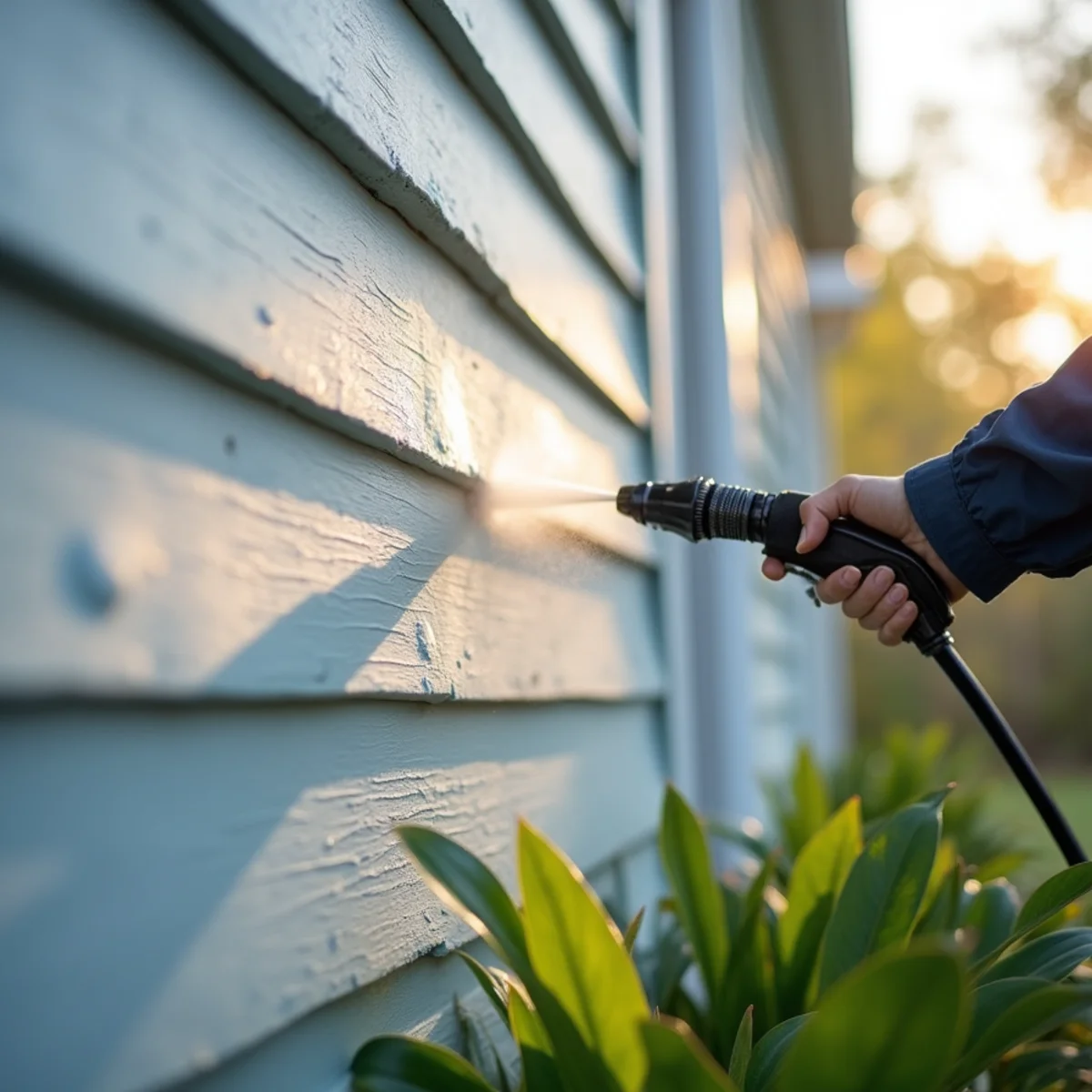
Soft washing applies a biodegradable cleaning solution at very low pressure — often no more than a garden hose, and well under 500 PSI — that kills mold, algae, moss, and bacteria at the root, then rinses gently. It's the safe method for roofs, siding, stucco, painted surfaces, and historic materials, where high pressure strips granules, etches finishes, and forces water where it doesn't belong.
What soft washing actually is
Soft washing flips the usual logic of pressure washing. Instead of relying on force to blast buildup off a surface, it relies on chemistry: a water-based, biodegradable cleaning solution does the work, applied at a pressure gentler than the water coming out of your garden hose.
Once the solution is on the surface, it's given a short dwell time — usually several minutes — to break down the organic growth that discolors New England homes: mold, algae, moss, lichen, and mildew. Then the surface is rinsed at low pressure. Because the growth is killed at the cellular level rather than simply knocked loose, the surface comes back cleaner and stays that way longer than a quick mechanical rinse would allow.
That distinction matters. A high-pressure wand can make a roof or wall look better for a season by physically removing the top layer of growth, but the living colony underneath survives and returns. Soft washing treats the cause, not just the symptom, which is why it has become the standard for delicate exterior surfaces.
Soft washing vs. pressure washing: the real difference
The two methods are often confused, but they solve problems in opposite ways. Pressure washing is mechanical — it uses fast-moving water, commonly in the 1,300 to 3,100 PSI range and higher, to physically strip material off a surface. Soft washing is chemical — the cleaning solution does the killing and lifting, and the water pressure at the surface is minimal, typically well under 500 PSI and often no stronger than a garden hose.
Neither method is universally better; each has a correct job. High pressure is appropriate for durable hardscape that can take it: concrete driveways and walks, many patios, and some masonry where the goal is to grind away embedded grime. Soft washing is the correct call — the only safe call — for anything fragile: asphalt roofs, vinyl and wood siding, stucco, fiber cement, screens, and painted trim.
The mistake most homeowners and inexperienced contractors make is reaching for pressure on a surface that needs chemistry. High pressure on a roof strips protective granules. On siding it etches, gouges, and drives water behind the cladding. As soft-wash specialists, we match the method to the material every time rather than treating a pressure washer as an all-purpose tool.
The chemistry: how the solution kills growth at the root
A professional soft-wash solution is built around three things: water, a controlled amount of sodium hypochlorite, and a surfactant. Sodium hypochlorite — the same active compound found in household chlorine bleach — is a strong oxidizer that destroys mold, algae, and bacteria by breaking down their cell structure. This is what kills the colony rather than relocating it.
The surfactant is the quiet workhorse. It lowers the surface tension of the water so the solution sheets evenly across siding and clings to vertical and sloped surfaces instead of running straight off. That cling buys the dwell time the chemistry needs — usually several minutes — to finish the job before the surface is rinsed. Letting the solution work but not letting it dry on the surface is part of doing this correctly.
Concentration is not one-size-fits-all. A delicate painted or vinyl wall calls for a gentler mix than a heavily stained north-facing roof. We describe our process, not the solution, as safe: we match dilution to the surface, control application and rinsing, and follow the plant-protection steps covered below. No responsible cleaner calls a cleaning chemical harmless — but applied and rinsed correctly, it does its work and then breaks down.
Why soft washing is the only safe method for asphalt roofs
Those black streaks running down asphalt shingle roofs across the Pioneer Valley are not dirt and not simple stains. They're colonies of Gloeocapsa magma, a hardy blue-green cyanobacteria that feeds on the limestone (calcium carbonate) filler used in asphalt shingles. Spores travel on the wind and by birds, which is why one streaked roof in a neighborhood is often followed by others, and why the shaded, slower-drying north and tree-covered slopes tend to streak first.
You cannot pressure-wash this problem away safely. The protective mineral granules on a shingle are what shield the asphalt from UV and weather, and high pressure dislodges them — visibly aging the roof and shortening its life. The Asphalt Roofing Manufacturers Association and the major shingle makers recommend cleaning algae with a low-pressure application of a diluted cleaning solution, not high pressure. Pressure washing a shingle roof is excluded under most manufacturer warranties for exactly this reason.
Soft washing kills the algae and moss with solution instead of force, restoring the roof's appearance without scouring a single shingle. On a soft-wash roof cleaning we never walk-and-blast the surface; we apply, let the chemistry work, and rinse gently. It's the method that aligns with how roofing manufacturers say their products should be cleaned — and the only one we'll use on a roof.
The delicate surfaces soft washing protects
Beyond the roof, soft washing is the right method for the majority of a home's exterior. Vinyl siding cleans beautifully at low pressure, whereas high pressure can crack it, chalk it, and force water into the wall cavity behind it. Painted wood, fiber cement such as HardiePlank, stucco, and EIFS all share the same vulnerability: pressure etches the finish or the substrate, while chemistry lifts the growth without touching it.
The list extends to the parts of a house people forget — screened porches, window frames and trim, soffits and fascia, gutters, fences, and composite or wood decking. These are precisely the surfaces where a stray high-pressure stream does expensive, sometimes invisible damage by driving water where it shouldn't go.
It matters even more on older homes, which the Longmeadow area and the Connecticut River valley have in abundance. Cedar clapboard, antique brick, and the soft lime-based mortar in historic masonry are fragile in ways modern materials are not — high pressure can carve out mortar joints and splinter aged wood. Soft washing lets these homes be cleaned without eroding the very details that make them worth preserving.
Know the growth: algae, moss, lichen, and mildew in New England
Western Massachusetts gives organic growth almost everything it wants. Humid Connecticut River valley summers, a heavy mature tree canopy, and shaded north walls that stay damp for hours after a rain create the moisture and shelter that mold, algae, moss, and lichen need to take hold. Add spring pollen and tree sap and winter road-salt residue, and most exteriors here need attention on a cycle.
It helps to know what you're looking at. Green or black surface staining is usually algae. Spongy green cushions in shingle keyways and on north-facing decks and walkways are moss, which sends shallow rhizoids into seams. Flat, crusty, gray-green or orange patches that seem fused to the surface are lichen — a partnership of fungus and algae that is the most stubborn of the three. A fine dark film in shaded, poorly ventilated spots is typically mildew.
None of it is only cosmetic. Moss and lichen hold moisture against whatever they grow on. On a roof that means water wicking under shingle edges and lifting them; on masonry it means saturated brick and mortar heading into winter. When that trapped water freezes, it expands by roughly nine percent — and the freeze-thaw cycles that define a New England winter turn held moisture into cracked mortar, spalled brick, and shortened roof life. Removing the growth is part of protecting the surface, not just cleaning it.
What soft washing fixes — and what it doesn't
Honest expectations are part of good work. Soft washing is the right answer for anything living: algae, mold, mildew, moss, lichen, and the biofilm that greens up siding and darkens a roof. Those it removes and, with periodic maintenance, keeps in check. Results are restored rather than permanent — on a shaded, tree-covered lot some regrowth over time is normal, which is why exterior cleaning is a cycle, not a one-time event.
Some problems are not organic and a soft wash won't erase them. Efflorescence — the chalky white crystalline deposit on brick, block, and concrete — is mineral salt carried to the surface by moisture moving through the masonry. Rinsing the surface treats the symptom; the real signal is water movement inside the wall, and persistent efflorescence is worth investigating for its moisture source rather than simply washing away.
Likewise, oxidation and chalking on aged vinyl is the finish itself breaking down, not a coating of dirt; cleaning improves the look but can't restore fatigued material. Rust and mineral stains, dried paint failure, and deeply set staining also fall outside what a soft wash is designed to do. We'll tell you plainly which of your issues are cleanable and which are a repair or restoration conversation.
Protecting plants, pets, and property
Because soft washing uses a cleaning solution, protecting what surrounds the house is part of the job, not an afterthought. Done right, that means thoroughly pre-wetting plants, shrubs, and beds with clean water before any solution is applied, covering delicate plantings, and rinsing foliage again afterward. Saturated leaves and soil dilute and shed incidental overspray instead of absorbing it.
Runoff gets managed, not ignored. Where conditions call for it, downspouts are directed and heavily landscaped areas are watered down and rinsed so the diluted solution never sits on roots. Without these steps, chloride uptake can scorch shrubs like azaleas and shallow-rooted plantings — so the precautions are the point, not paperwork.
For pets and people, the guidance is simple: keep pets indoors during the service and off treated surfaces until they've been rinsed and dried, generally an hour or two. Windows and doors should be closed. We describe our process rather than promising a chemical is harmless, and the process — pre-wet, protect, apply, rinse, keep off until dry — is what keeps the work safe for your yard, your pets, and your family.
The soft wash process, step by step
Every job starts with a look, not a spray. We identify the surfaces involved and their condition — a chalky old vinyl wall, a north-slope roof heavy with lichen, and a shaded brick face each call for a different dilution and approach — and note the plantings, fixtures, and access points that need protection.
Next comes protection and setup: pre-wetting and covering landscaping, moving or shielding furniture and grills, and closing up the house. Then the solution, mixed to match the surface, is applied at low pressure and given time to dwell and do its work. On stubborn areas we let the chemistry lead rather than turning up the pressure, agitating gently only where a surface allows it.
Finally the surface is rinsed at low pressure — on a roof, worked so runoff sheds cleanly and gently — and we walk the property to rinse foliage again and confirm nothing was missed. The goal is a surface that's genuinely clean and undamaged, with a yard that looks like we were never there.
When to soft wash in the Connecticut River valley
Timing is a fair-weather question in Western Massachusetts. Sodium hypochlorite works best in moderate temperatures — it slows in the cold and, on a hot day in direct sun, can dry too fast to dwell properly. That makes the stretch from late spring through fall the practical window, avoiding hard freezes and the hottest, driest afternoons.
Spring is a natural time to clear off a winter's worth of grime, pollen, and tree sap and to knock back growth before the humid summer feeds it. Fall cleaning removes the season's buildup and, importantly, strips the moss and lichen that would otherwise hold moisture against your roof and masonry all winter — a real advantage heading into freeze-thaw season.
How often depends on your lot. An open, sunny, breezy property may go a few years between cleanings. A home tucked under a mature canopy with shaded north walls, common throughout Longmeadow, Wilbraham, and the older Pioneer Valley neighborhoods, will regrow faster and benefit from a shorter cycle. Think of it as maintenance that slows regrowth, not a permanent fix.
DIY risks, hiring a pro, and what affects cost
Soft washing looks simple, and that's the trap. The real risks aren't the wand — they're the ladder and roof (falls are the leading danger in this work), the chemistry (too strong burns plants and streaks siding; too weak leaves the growth alive), and water control (no plan for runoff means scorched beds and stained hardscape). Getting the dilution, dwell, and rinse right on a two- or three-story home is harder and more consequential than most DIY guides admit.
A specialist brings surface-specific dilutions, plant-protection protocols, the reach and safety gear for roofs and upper stories, and the judgment to know when a surface needs a repair conversation instead of a cleaning. That's the value: not just a clean result, but no collateral damage getting there.
As for cost, we quote by the property rather than a sticker price, because the honest answer is that it depends. The factors that move it are square footage, the surfaces involved and their condition, the number of stories and roof pitch, access and obstacles, and how much landscaping needs protecting. For a straight answer for your home, request a free estimate or call Craft Bros Exterior Cleaning at (351) 242-0666 — we'll walk the property and tell you exactly what it needs.
Craft Bros Exterior Cleaning
Local exterior-cleaning specialists serving Longmeadow and Hampden County. Questions about your home? Call (351) 242-0666.