
Gutter Cleaning & Brightening in Longmeadow, MA
We clear the debris inside and brighten the black oxidation streaks on the outside — two different jobs, done right.
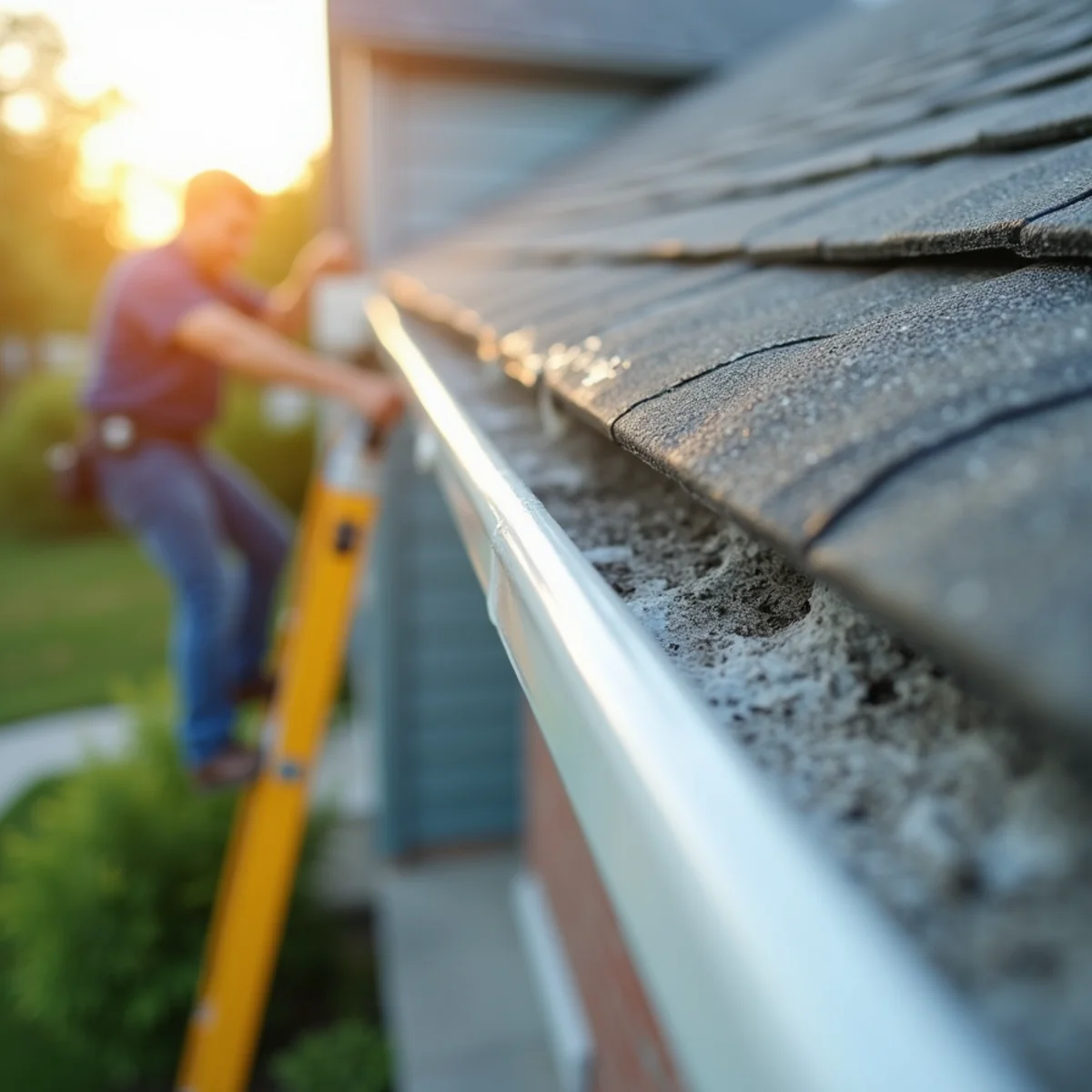
Your gutters carry two very different kinds of dirt, which is why cleaning them is really two jobs. On the inside, the troughs fill with maple leaves, oak tassels, white-pine needles, and shingle grit until water can no longer reach the downspout. On the outside, the faces develop black vertical streaks — the 'tiger stripes' that a garden hose won't budge, because they aren't loose dirt at all.
We handle both in a single visit. First we hand-clear the debris from the troughs and flush every downspout until it runs clear, so your drainage is ready for the next Connecticut River valley downpour. Then, as a separate step, we brighten the exterior faces with a metal-safe treatment that breaks down the bonded oxidation and returns the finish to a clean, even color.
It's careful, low-pressure work suited to New England homes — from the seamless aluminum on a newer East Longmeadow colonial to the older runs on a historic house near the Longmeadow green. High pressure has no place on a gutter face, and we never use it there.
Recommended method
Low-pressure soft washing
We clear the debris inside and brighten the black oxidation streaks on the outside — two different jobs, done right.
Gutter cleaning and gutter brightening are two different jobs
People use 'gutter cleaning' to mean everything, but the work splits cleanly in two. Cleaning is functional: clearing the leaves, seed pods, and roof grit out of the troughs and downspouts so water drains the way the system was designed to. It protects your fascia, soffit, and foundation. Brightening is cosmetic: removing the black oxidation streaks from the outward-facing metal so your gutters look clean from the curb again.
The two don't overlap. You can have spotless, free-flowing gutters that still show ugly tiger stripes, and you can have freshly brightened faces over troughs packed with debris. That's why we treat them as separate steps in the same visit — and why a quote should tell you plainly which one you're getting, or whether you want both.
Why the black 'tiger stripes' won't rinse off
The dark vertical streaks on your gutter faces are not dirt sitting on the surface. Painted aluminum slowly develops a thin, chalky layer called oxidation. At the same time, every rain washes a fine slurry of asphalt-shingle grit, pollen, soot, and airborne pollution off your roof and over the gutter lip. That slurry bonds to the oxidized paint through a kind of electrostatic grip and settles into the streaked pattern that gives 'tiger stripes' their name.
Because the staining is chemically bonded rather than loose, pressure and plain soap don't remove it — and blasting the metal only risks denting it and stripping the paint. Lifting tiger stripes takes a dedicated brightening product that breaks that bond, applied by hand and agitated so it can release the oxidation from the finish underneath.
How we clear and flush your gutters
We start at the trough and work by hand, pulling out the packed leaves, maple keys, pine needles, and the gritty sludge of shingle granules that settles at the bottom. Wet debris gets bagged rather than dropped onto your beds and lawn. As we go, we watch for sagging runs, separated seams, and loose spikes or hangers, and we point out anything that looks like it needs a repair.
Then we flush. Every downspout gets run with water until it drains clear, which confirms the elbows and underground outlets aren't blocked farther down where you can't see. A gutter that looks clean but won't pass water is still a clogged gutter, so the flow check is the part that actually proves the job is done.
How gutter-face brightening works
Brightening is a low-pressure, hands-on process, not a power-washing pass. We apply a metal-safe brightening solution to the exterior faces, lips, and end caps, let it dwell so it can break down the bonded oxidation, and agitate the streaks with soft brushes where they're stubborn. Then we rinse gently to carry the dissolved grime away and even out the finish.
We match the strength of the treatment to what's actually on the metal — true oxidation gets a brightener, while ordinary dirt just needs washing — so we're not over-treating a painted finish. Older or heavily oxidized aluminum may not come all the way back to factory-new, and we'll tell you honestly what to expect before we start rather than promising a showroom result.
What clogged gutters do to a New England home
When the troughs pack solid, rainwater has nowhere to go but over the edge — and often over the back edge, where it runs straight down the fascia board and into the soffit. Sustained moisture rots that wood, and the overflow saturates the soil against your foundation, where hydrostatic pressure can push water through cracks into a basement or crawl space.
Winter raises the stakes here in the Pioneer Valley. Clogged, ice-filled gutters can't drain meltwater, so it refreezes at the roof edge and helps ice dams build. Water then backs up under the shingles and finds its way into walls and ceilings. Clearing the gutters before the first hard freeze is one of the cheapest forms of insurance a Hampden County homeowner has.
How often should gutters be cleaned in the Pioneer Valley?
For most homes here, twice a year is the baseline — once in late spring after the buds, blossoms, and pollen drop, and once in late fall after the last leaves come down but before the first real freeze. That fall cleaning is the important one, because it sets your gutters up to handle winter melt without feeding ice dams.
Tree cover changes the math. Homes tucked under the mature oak and maple canopy that shades so many Longmeadow and Wilbraham streets, or near stands of white pine, can pack their gutters far faster and may need three or four visits a year. Brightening runs on a slower cycle — usually about once a year — since oxidation streaks build back gradually rather than overnight.
Serving Longmeadow, Hampden County, and the wider Pioneer Valley
We're a local, surface-specific exterior cleaning team based in Longmeadow, and we clean gutters throughout Hampden County — East Longmeadow, Springfield, Wilbraham, Hampden, Agawam, West Springfield, Chicopee, and Ludlow among them. Working here every season, we know how the Connecticut River valley's humid summers, heavy tree canopy, and long freeze-thaw winters treat a gutter system.
Gutter work also pairs naturally with the rest of the exterior. Many homeowners have us handle roof cleaning to clear the algae streaks feeding the runoff, or a full house washing while our ladders and low-pressure soft washing gear are already on site. Call (351) 242-0666 for a free estimate, and we'll tell you exactly what your gutters need.
Problems This Service Solves
- Gutters and downspouts packed with leaves, needles, and shingle grit
- Overflow that spills over the back edge and saturates fascia and soffit
- Standing water and debris that help winter ice dams form
- Black oxidation 'tiger stripes' streaking the exterior gutter faces
- Chalky oxidation and bonded road grime dulling painted aluminum
- Water pooling at the foundation from blocked downspouts and outlets
- Granule sludge, seed pods, and mildew left behind after storms
- Slow-draining or sagging sections you can't see from the ground
What's included
- Hand-clearing of leaves, needles, and debris from the gutter troughs
- Downspout flushing and a water-flow check to confirm drainage
- Bagging and haul-away of the debris we remove
- Exterior gutter-face brightening to lift the oxidation streaks
- Low-pressure application and hand agitation of a metal-safe brightener
- A gentle rinse to even out the finish on the faces and end caps
- A visual check for loose fasteners, separated seams, or sagging spans, noted for you
- Cleanup of the work area, including the ground and beds below
Benefits
- Water that drains freely before spring melt and heavy fall storms
- Lower risk of ice dams, back-edge overflow, and fascia rot
- Restored, streak-free gutter faces that match your trim again
- Protection for the fascia, soffit, and foundation below the roofline
- Curb appeal restored without the cost of replacing the gutters
- Both the functional and cosmetic work handled in one visit
- A clear read on your gutters' condition from someone on the ladder
Surfaces we treat
- Painted and mill-finish aluminum gutters
- Vinyl and seamless gutter systems
- Downspouts, elbows, and outlets
- Exterior gutter faces, lips, and end caps
- Fascia-mounted gutter runs on one- and two-story homes
Safety & protection
- Ladders set and stabilized at safe working heights and angles
- Low-pressure and hand methods only — no high-pressure blasting on the gutters
- Brightener matched to true oxidation versus ordinary dirt to avoid over-treating
- Foundation plantings, shrubs, and lawn rinsed and protected below the work area
- Metal-safe chemistry chosen so it won't strip the painted finish
- Careful footing and spotting on wet or sloped ground
- Downspout outlets checked so flushed debris clears the full run
What to Expect
Request an estimate
Call or send us a few details and photos. We respond with next steps and, where possible, a preliminary range before we visit.
Property & surface assessment
We look at each surface — siding, roof, hardscape — and identify the material, its condition, and the buildup we're dealing with.
Written scope of work
You get a clear, written estimate that spells out which surfaces we'll clean and the method we'll use on each one.
Property & plant protection
On service day we pre-wet landscaping, cover delicate plants, and take steps to protect fixtures before any solution is applied.
Surface-specific cleaning
We match the pressure and cleaning solution to the material — gentle soft washing for delicate surfaces, controlled pressure for durable hardscape.
Final walkthrough
We rinse thoroughly, remove protective coverings, tidy up, and walk the property with you to confirm you're happy with the result.
Before & After
Related Services
Gutter Cleaning & Brightening FAQs
Those streaks aren't loose dirt. Painted aluminum develops a chalky oxidation layer, and roof runoff — shingle grit, pollen, and soot — bonds to it electrostatically in a streaked pattern. Because the staining is chemically gripped to the finish, water, soap, and even pressure won't lift it. It takes a dedicated brightening product, applied by hand and agitated, to break the bond and restore the face.
Cleaning is functional and brightening is cosmetic. Cleaning clears leaves and grit out of the troughs and downspouts so water drains properly, protecting your fascia, soffit, and foundation. Brightening removes the black oxidation 'tiger stripes' from the outside faces so the gutters look clean from the curb. They solve different problems, so we treat them as separate steps and can do one or both.
For most Pioneer Valley homes, twice a year works — late spring and late fall. The fall cleaning matters most, since clear gutters help prevent winter ice dams. If your home sits under mature oaks and maples or near white pine, expect to clean three or four times a year. Gutter brightening runs on a slower cycle, usually about once a year.
Over time, yes — brightening restores the finish but doesn't stop oxidation from forming again, and every rain keeps carrying roof grit over the lip. How fast the streaks return depends on your roof, tree cover, and exposure. Most homes look clean for roughly a year before the stripes become noticeable again, which is why brightening is best treated as periodic maintenance rather than a one-time fix.
Not when it's done correctly. We use a metal-safe brightener at low pressure and match its strength to what's actually on the surface, so a painted finish isn't over-treated. We never high-pressure blast a gutter face, which is what actually dents aluminum and strips paint. On older, heavily oxidized metal the finish may not return fully to new, and we'll set that expectation up front.
There's no flat rate, because a few things drive the price: the total linear footage of gutter, the number of stories and how accessible the roofline is, how much debris has built up, and how heavy the oxidation staining is. Whether you want cleaning, brightening, or both matters too. For an accurate number, request a free estimate or call (351) 242-0666.
You can, but both jobs carry real risk. Cleaning means working from a ladder at roof height, where many homeowner falls happen, and it's easy to miss a downspout that's blocked lower down. Brightening involves chemicals and careful technique to avoid streaking or dulling the paint. If you're comfortable on a ladder the cleaning is doable; for two-story homes or stubborn oxidation, it's usually worth calling a pro.
Ready to Refresh Your Property?
Request an estimate for pressure washing, house washing, roof cleaning, or soft washing in Longmeadow and surrounding communities.