
Driveway Cleaning in Longmeadow, MA
Even, streak-free concrete cleaning that lifts algae, tire marks, leaf tannin, and winter salt residue from your driveway and hardscape.
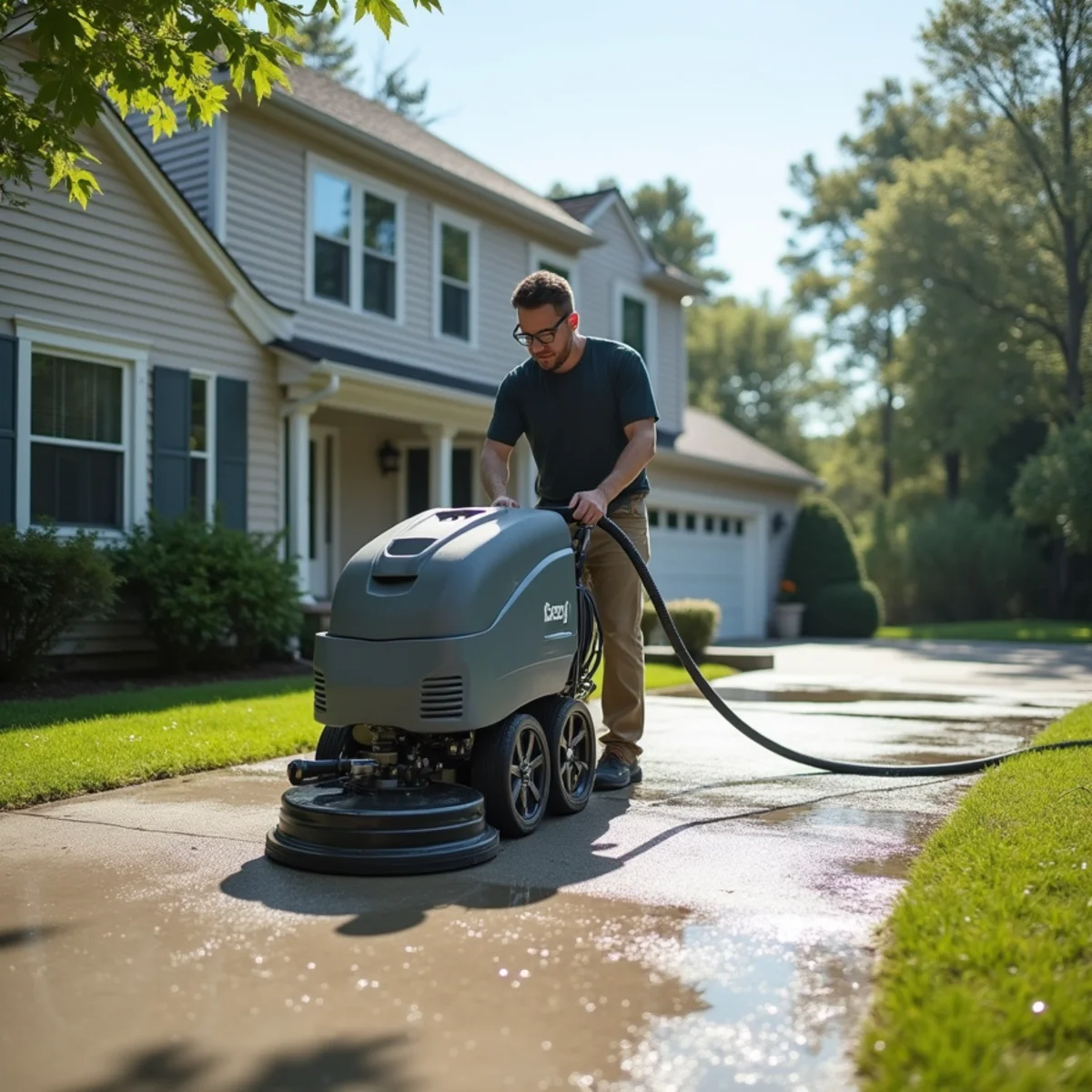
Your driveway is the largest paved surface most people see when they pull up to your home, and it quietly collects everything the Connecticut River valley throws at it: leaf tannins in the fall, a green film of algae in the shade, tire marks, and a winter's worth of road salt and de-icer. The buildup is gradual, so most homeowners don't notice how grey and streaked the concrete has become until half of it is clean.
For durable hardscape like poured concrete, we clean with a commercial flat-surface cleaner and pressure matched to the slab. That spins the water across the whole path evenly, lifting staining edge to edge without the wand marks, zebra stripes, and gouges that come from cleaning by hand. Where organic growth is heavy, we pre-treat with a low-pressure cleaning solution first so we're killing the algae at the root, not just blasting the surface film.
We'll also tell you honestly what will come clean and what won't. Some oil and rust staining has been soaking into porous concrete for years, and no one can promise a factory-new slab. What we can promise is a careful assessment, the right method for your surface, and a straight answer before we start.
Recommended method
Controlled pressure washing
Even, streak-free concrete cleaning that lifts algae, tire marks, leaf tannin, and winter salt residue from your driveway and hardscape.
Why driveways in the Connecticut River valley get so dirty
Western Massachusetts hands driveways a hard set of conditions. Humid summers and a heavy, mature tree canopy over towns like Longmeadow and Wilbraham keep the north and shaded sides of a slab damp for days, and damp concrete is exactly what algae, moss, and mildew need to take hold. That is the green-to-black film that makes a driveway look grey and feel slick underfoot.
The seasons pile on from there. Spring drops pollen and tree sap. Fall buries the concrete under maple and oak leaves, and the tannins in those leaves bleed rust-brown stains into the surface if they sit through a wet stretch. Then winter arrives with plow sand, rock salt, and calcium-chloride de-icer that leaves a chalky residue and works into the pores of the slab. By spring, the average Pioneer Valley driveway carries a full year of all four seasons at once.
How we clean concrete driveways evenly, edge to edge
Concrete is durable, but it still needs the right approach. The mistake homeowners see most from a rented wand is striping: high pressure held too close leaves a trail of clean-and-dirty bands and, worse, can etch shallow lines into the surface that never fully blend. We avoid that entirely by using a commercial flat-surface cleaner, which rides on the slab and spins two pressurized jets under a shroud. That distributes the pressure evenly across a wide path, so the whole driveway cleans at the same rate with no wand marks.
When a driveway is carrying heavy algae or mildew, pressure alone is the wrong tool because it only strips the visible film and leaves the living root behind to grow back quickly. We pre-treat those areas with a low-pressure application of a biodegradable cleaning solution that kills the organic growth at the root. That is the same soft-washing chemistry we lead with on siding and roofs, applied here to the hardscape. Then the surface cleaner does the mechanical work, and a controlled rinse blends the edges, borders, and control joints the machine can't reach. The result is a uniform finish and organic staining that is slower to return.
Oil, rust, and leaf-tannin stains: an honest look at what lifts
General grime, algae, and traffic film almost always clean up well. The tougher stains are the ones people ask about most, and each behaves differently. Oil and hot-tire marks are best worked with a concrete-safe degreaser given time to dwell and break the bond before rinsing; a fresh drip lifts far more completely than one that has been soaking into porous concrete for a season. Rust from patio furniture, fertilizer, or a leaking vehicle is iron-based, so it needs a rust-specific treatment that converts and lifts the stain rather than pressure, which does nothing to it.
Leaf-tannin staining responds well when it's addressed reasonably soon after leaf drop, before the pigment fully bonds into the slab. Across all of these we're straight about expectations: deeply set oil or rust may lighten rather than disappear, and we won't promise a factory-new slab. We test a problem area, tell you what to realistically expect, and if a stain needs a dedicated approach we'll flag it as targeted rust-stain removal rather than overselling the wash.
Brick, paver, and stamped-concrete driveways
Not every driveway is a plain concrete slab, and decorative surfaces need a gentler hand. Brick and concrete pavers are cleaned with joint-safe pressure and technique so we restore the color and clear the moss and weeds without blasting out the stabilizing joint sand that locks the field together. Cleaning does tend to loosen some sand, so re-sanding is often the right follow-up; if your paver driveway needs it, we'll tell you and can arrange it as a separate step.
Stamped, colored, and sealed concrete gets spot-tested first, because aggressive pressure or harsh acids can dull the finish or strip a coating. Exposed-aggregate driveways are cleaned carefully to lift growth without loosening the decorative stone. If your driveway is primarily interlocking pavers, our dedicated paver cleaning service goes deeper on joint stabilization and efflorescence hazing.
How often should you have your driveway cleaned?
For most homes in Hampden County, once a year keeps a driveway looking sharp and, more importantly, keeps slippery organic growth from building into a real fall hazard. A slab in full sun with good drainage can often stretch further between cleanings. One that sits under a dense canopy, faces north, or stays shaded and damp will green up faster and benefits from attention every year, sometimes with a light refresh between visits.
Timing matters too. Spring is popular for clearing off the winter's salt, sand, and the algae that crept in over the cold months. Fall, after the leaves come down, is ideal for lifting tannin stains before they set through the wet season. A yearly clean is also the natural moment to reseal if your concrete or pavers are due, since sealer should only go over a clean, dry surface. Regular maintenance won't stop New England algae forever, but it keeps regrowth slow and the surface easy to bring back.
Protecting your plantings, joints, and the slab itself
A driveway clean shouldn't come at the cost of your landscaping or your concrete. Before we start, we pre-wet the lawn, beds, and foundation shrubs along the edges so any cleaning solution is diluted on contact rather than concentrating on the roots, and we direct and rinse runoff away from sensitive plantings. On pavers and brick we keep the pressure joint-safe to preserve the sand; on asphalt we dial pressure down and skip products that can soften the binder.
The slab itself gets the same care. We match pressure and nozzle to the material so we clean without etching, and we spot-test anything older, spalling, colored, or sealed before committing to the full surface. Decorative and exposed-aggregate concrete never sees the harsh acids that can etch or dull them. The goal is a driveway that looks restored today and is in good shape for the next cleaning, not one worn thin to get there.
Driveway cleaning across Longmeadow and Hampden County
We're a local, surface-specific exterior cleaning team, and driveways in the Pioneer Valley are a core part of what we do. We clean concrete and paver driveways throughout Longmeadow, East Longmeadow, Springfield, Wilbraham, Hampden, Agawam, West Springfield, Ludlow, and Chicopee, with statewide reach by county. The same shaded, tree-lined streets that make these towns beautiful are the ones that grow the most algae, and we clean with that in mind.
A driveway is often the first surface we clean for a homeowner, and it pairs naturally with concrete cleaning, patio and walkway cleaning, and a full house washing if you want the whole exterior to match. For a straight assessment of what your driveway needs, request a free estimate or call Craft Bros Exterior Cleaning at (351) 242-0666.
Problems This Service Solves
- Green and black algae film on shaded concrete
- Tire marks, hot-tire pickup, and general traffic grime
- Leaf-tannin and organic staining after fall leaf drop
- Winter road salt, sand, and de-icer residue
- Dull, greyed concrete that has never been cleaned
- Mildew and mold spotting along damp edges
- Efflorescence hazing on brick and paver driveways
- Moss and weeds creeping into control joints and paver seams
What's included
- Pre-inspection of the surface, condition, and any problem stains
- Low-pressure pre-treatment on heavy organic growth where needed
- Flat-surface cleaning of the full driveway for even results
- Controlled pressure matched to the material and its condition
- Edge, border, and control-joint detailing by hand
- Trigger-controlled rinse to blend the whole surface
- Honest post-clean walkthrough of any staining that remains
- Optional targeted stain treatment or re-sanding where appropriate
Benefits
- Even, streak-free results across the entire slab
- A brighter, cleaner approach that lifts the look of the whole home
- Removes slippery algae and mildew that make a wet driveway a fall risk
- Clears salt and sand residue that grinds into the surface over winter
- Slows organic regrowth when growth is killed at the root, not just rinsed
- A pre-sealing clean if you plan to seal concrete or pavers afterward
- A local team that treats your concrete's condition, not a one-size setting
Surfaces we treat
- Poured and broom-finished concrete driveways
- Concrete aprons, borders, and skirts at the garage
- Brick and concrete-paver driveways (pressure adjusted for joints)
- Exposed-aggregate concrete (assessed and cleaned gently)
- Stamped and colored concrete (spot-tested first)
- Asphalt driveways (low pressure, no binder-softening chemistry)
- Attached walkways, steps, and parking pads
Safety & protection
- Pressure and nozzle matched to the substrate to avoid etching the surface
- Spot testing on older, spalling, colored, or sealed surfaces first
- Joint-safe technique on pavers and brick to protect stabilizing sand
- Reduced pressure and safe cleaners on asphalt to avoid softening the binder
- Runoff directed and diluted away from lawns, beds, and sensitive plantings
- Beds and foundation shrubs pre-wet so cleaning solution can't concentrate on them
- No harsh acids on exposed-aggregate or decorative concrete that they can dull
What to Expect
Request an estimate
Call or send us a few details and photos. We respond with next steps and, where possible, a preliminary range before we visit.
Property & surface assessment
We look at each surface — siding, roof, hardscape — and identify the material, its condition, and the buildup we're dealing with.
Written scope of work
You get a clear, written estimate that spells out which surfaces we'll clean and the method we'll use on each one.
Property & plant protection
On service day we pre-wet landscaping, cover delicate plants, and take steps to protect fixtures before any solution is applied.
Surface-specific cleaning
We match the pressure and cleaning solution to the material — gentle soft washing for delicate surfaces, controlled pressure for durable hardscape.
Final walkthrough
We rinse thoroughly, remove protective coverings, tidy up, and walk the property with you to confirm you're happy with the result.
Before & After
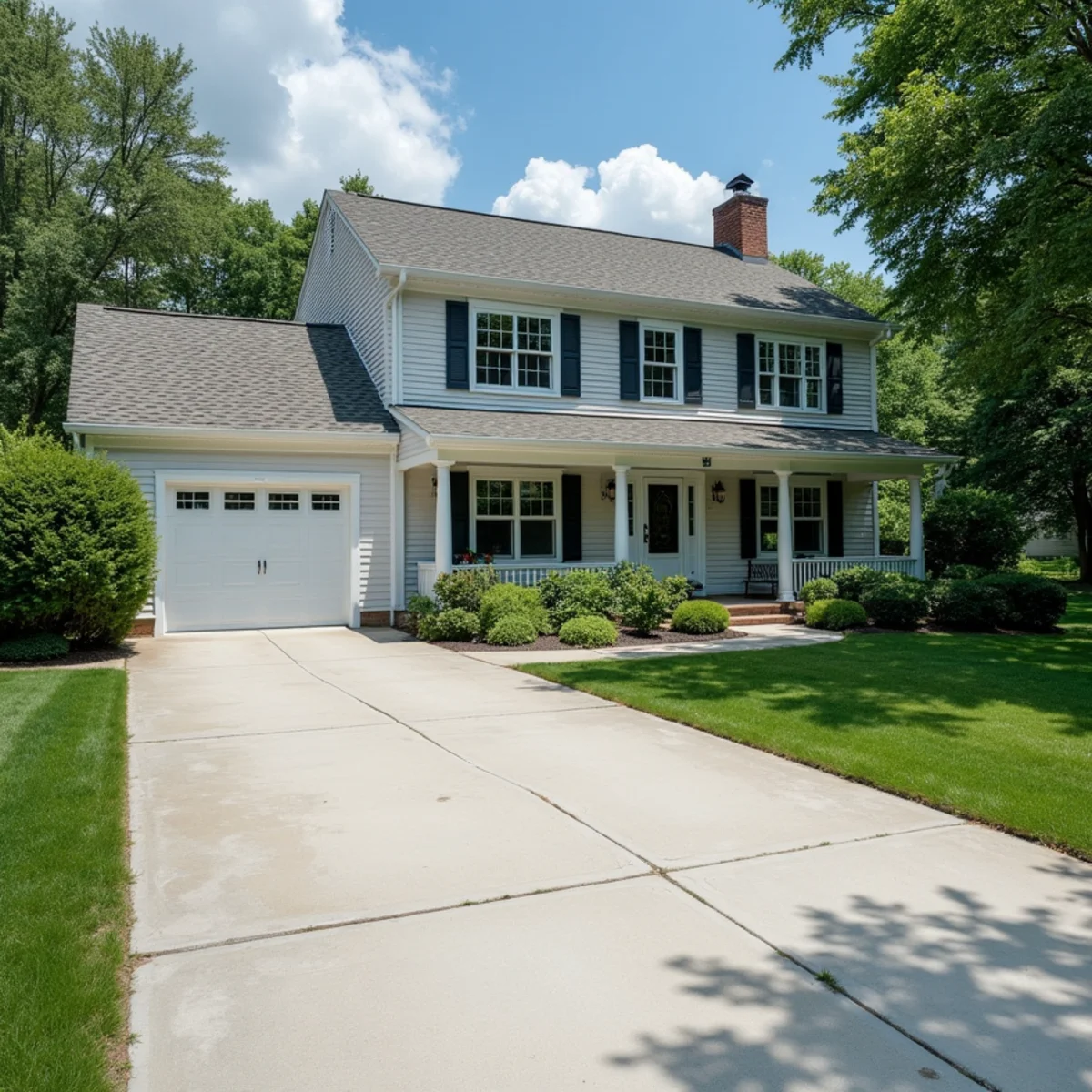
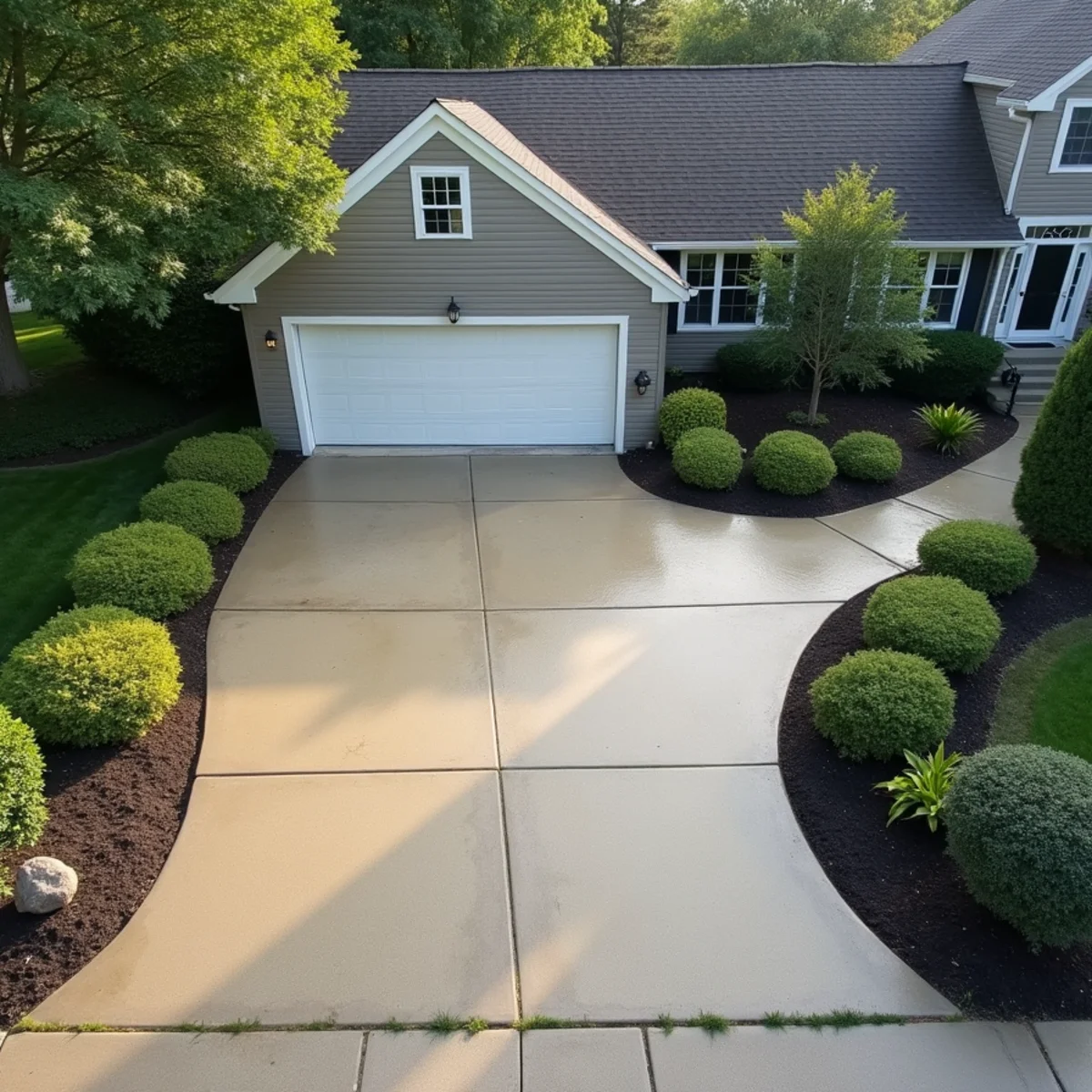
Driveway Cleaning FAQs
Not when it's done correctly. Damage happens when the wrong nozzle or too much pressure is held too close, which can etch shallow lines or wear the surface. We use a flat-surface cleaner that spreads the pressure evenly, match the setting to your slab's condition, and spot-test older or decorative concrete first. On brick, pavers, and asphalt we adjust the technique further so the surface is cleaned, not worn.
Once a year suits most Hampden County homes and keeps slippery algae from building up. A sunny, well-drained driveway can go longer between cleanings, while a shaded, north-facing, or tree-canopied slab greens up faster and benefits from yearly attention. Spring is good for clearing winter salt and algae; fall is ideal for lifting leaf-tannin stains before they set. Regular cleaning slows regrowth but won't stop New England algae for good.
We can lighten many of them, but results depend on the stain type, how deep it has soaked, and how long it's been there. Oil responds to a concrete-safe degreaser with dwell time; rust needs an iron-specific treatment, not pressure. Deeply set stains may fade significantly rather than vanish. We won't promise full removal, we'll test a spot and tell you honestly what to expect before we start.
Organic growth naturally returns in our humid, shaded valley, but how fast depends on how it's cleaned. Pressure alone strips the surface film and leaves the living root, so it regrows quickly. Where growth is heavy, we pre-treat with a low-pressure cleaning solution that kills it at the root, which slows the regrowth noticeably. A yearly maintenance clean keeps it from taking hold again between visits.
Yes. We clean brick and concrete-paver driveways with joint-safe pressure that restores color and clears moss and weeds without blowing out the stabilizing joint sand. Cleaning does loosen some sand, so re-sanding is often the right follow-up and we can arrange it as a separate step. If your driveway is mostly interlocking pavers, our dedicated paver cleaning service goes deeper on joints and efflorescence.
Yes, with the right precautions. Before we clean, we pre-wet the lawn, beds, and foundation shrubs along the driveway so any cleaning solution is diluted rather than concentrated on the roots, and we direct and rinse runoff away from sensitive plantings. The solutions we use are biodegradable and applied at controlled strength. Taking care of your landscaping is part of the job, not an afterthought.
It depends on a few things: the size of the driveway, the surface (concrete, pavers, brick, or asphalt), how much organic growth or staining is present, whether specialty stains like oil or rust need targeted treatment, and access. Every driveway is a little different, so rather than quote a number blind, we'll look at yours and give you a clear price. Request a free estimate or call (351) 242-0666.
Ready to Refresh Your Property?
Request an estimate for pressure washing, house washing, roof cleaning, or soft washing in Longmeadow and surrounding communities.