
Soft Washing in Longmeadow, MA
Our core specialty: low-pressure, biodegradable cleaning for roofs, siding, and every delicate surface high pressure would ruin.
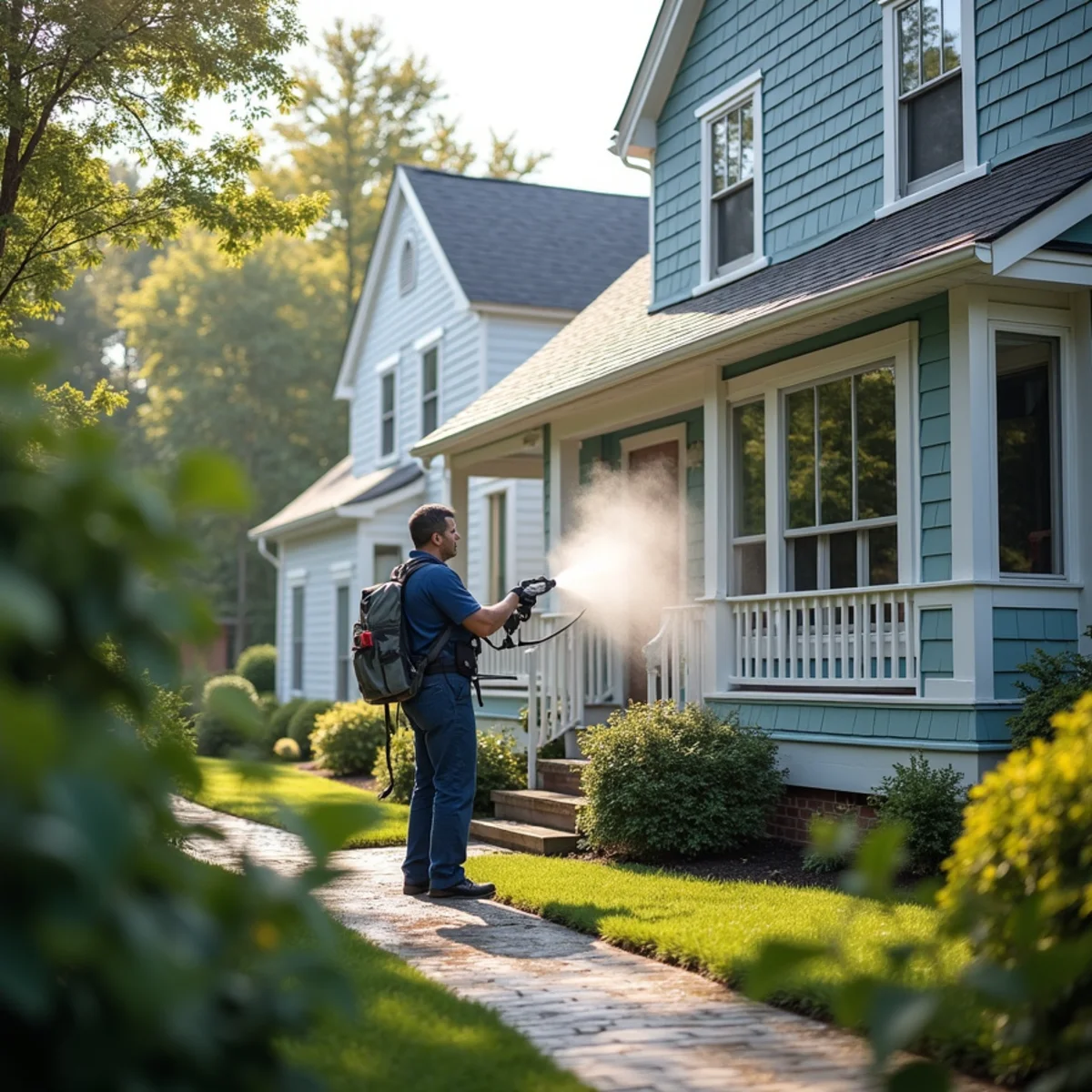
Soft washing is what Craft Bros Exterior Cleaning is built around. Rather than blasting a surface with force, it applies a biodegradable cleaning solution at very low pressure — well under 500 PSI — that kills the algae, mold, moss, and bacteria staining your home. The solution is left to dwell, does the actual work, and the surface is then gently rinsed. Nothing is scoured; the growth is killed at the root.
That distinction matters more here than almost anywhere. The Connecticut River valley gives us humid summers, heavy mature tree canopy, and shaded north walls that stay damp for weeks — ideal conditions for the black roof streaks, green siding film, and lichen that spread across Longmeadow and Hampden County homes. High pressure can strip growth off for a season, but it also strips shingle granules, splinters cedar, and drives water behind siding.
Soft washing is the only method we will use on a roof, wood clapboard, stucco, painted trim, or historic masonry. For the older colonials, capes, and antique homes throughout Longmeadow, East Longmeadow, and Wilbraham, matching the right pressure and solution to each surface isn't a nice-to-have — it's the difference between a clean home and thousands of dollars in avoidable damage.
Recommended method
Low-pressure soft washing
Our core specialty: low-pressure, biodegradable cleaning for roofs, siding, and every delicate surface high pressure would ruin.
How soft washing works — and why it isn't just pressure washing
Soft washing and pressure washing solve different problems with different tools. Pressure washing relies on mechanical force — a high-PSI stream — to blast dirt off durable hardscape like concrete and pavers. Soft washing relies on chemistry. A biodegradable blend of surfactants and, where appropriate, a controlled amount of sodium hypochlorite is applied at low pressure, closer to the force of a garden hose than a power washer.
The solution is left to dwell for several minutes so it can penetrate and kill the organism, then the surface is rinsed clean. Because the growth is dead rather than merely knocked loose, it doesn't return within weeks the way a plain rinse allows. The mix is also tuned to the surface — a lighter concentration on vinyl and painted wood, a stronger one on a heavily streaked roof — instead of one aggressive blend used everywhere.
Why the Connecticut River valley is so hard on roofs and siding
Western Massachusetts sits in a humid river valley under a thick, mature tree canopy. Warm, damp summers and shaded, slow-drying north and east walls create exactly the conditions algae, moss, mildew, and lichen need to establish. Add heavy spring pollen, tree sap, and the organic film that drifts down from oaks and maples, and most homes here start showing growth within a few years of their last cleaning.
The black streaks that run down so many asphalt roofs are Gloeocapsa magma, a hardy blue-green algae that feeds on the limestone filler in shingles. It forms a dark, UV-protective sheath as it spreads, which is why the streaking looks like staining rather than dirt. Moss and lichen go a step further, sinking rootlike structures between shingles and holding moisture against the roof. Left alone, that trapped dampness shortens the life of both roofing and wood.
The surfaces that should only ever be soft washed
Some materials simply cannot take high pressure. Asphalt shingles lose their protective granules under a pressure stream, exposing the asphalt beneath to UV and cutting years off the roof. Cedar shakes and clapboard splinter and furr. Stucco chips and cracks. Painted trim peels. Antique brick and soft lime mortar — common on the older homes around the Longmeadow Green — erode and crumble when blasted.
For every one of these, soft washing is the correct and, frankly, the only responsible method. It cleans thoroughly without etching, gouging, or forcing water behind the surface, which is why we treat roofs, wood siding, fiber cement, stucco, and historic masonry this way as a rule. When a surface can genuinely take pressure — a concrete driveway or a paver patio — we say so and use it. The skill is knowing the difference.
Protecting your roof's granules and manufacturer warranty
Homeowners are often surprised to learn that pressure washing an asphalt roof can void the shingle warranty. The Asphalt Roofing Manufacturers Association recommends a low-pressure chemical wash — soft washing — as the method for removing algae, precisely because high pressure dislodges the granules that protect the shingle and shorten its usable life.
There is also a results argument. High pressure only removes the surface layer of algae and leaves the root structure behind, so the streaks return within a season or two. Soft washing kills Gloeocapsa magma at the root, so the roof stays clean far longer. You protect the warranty, preserve the granules, and get a result that actually lasts — three reasons the gentle method wins on a roof every time.
Our soft wash process, step by step
Every job starts with a walk-around. We identify the surface, its age and condition, and the type of growth present, then spot-test an inconspicuous area so there are no surprises. Before any solution goes up, we pre-wet and cover the surrounding shrubs, beds, and delicate plantings and note where downspouts drain.
We then apply the biodegradable solution at low pressure and let it dwell long enough to do its work, keeping it wet so it never dries on the surface. Once the growth is killed, we rinse gently from the correct angle — never driving water up under shingles or behind siding — and neutralize the runoff around sensitive plantings. We finish with a walk-through so you can see the result before we pack up.
Keeping your landscaping, pets, and property safe
The cleaning solutions we use are biodegradable and break down after the job, but the same chemistry that kills algae can stress plants if it isn't managed. That's why plant protection is part of the process, not an afterthought. We saturate beds and foliage with clean water first — well-watered leaves absorb far less — cover what needs covering, and rinse and neutralize the runoff once we're done.
Pets and family are best kept indoors or clear of the immediate work area during application and rinsing; the surfaces are safe to be around again once everything has dried and been rinsed down. If you have a well, a koi pond, a vegetable garden, or unusually sensitive plantings, tell us before we start and we'll adjust our approach and protection accordingly.
How long results last and how often to soft wash
No exterior cleaning is permanent — algae and streaks are living organisms, and in a climate this humid they eventually return. What soft washing does is reset the surface and slow that regrowth substantially. A soft-washed roof typically stays clean for several years, while siding on shaded, tree-covered lots may show film again a little sooner.
For most Longmeadow and Hampden County homes, having the house and roof soft washed every couple of years keeps growth from ever getting established and makes each cleaning easier than the last. Homes tucked under heavy canopy or facing constant shade benefit from the shorter end of that range. Late spring through summer, when growth is most active, is the ideal window — but we soft wash year-round as weather allows.
Problems This Service Solves
- Black algae streaks (Gloeocapsa magma) running down asphalt shingle roofs
- Green and black algae, mildew, and mold film on siding, especially shaded north and east walls
- Moss and lichen taking hold on roofs, gutters, and stucco under heavy tree canopy
- Delicate painted, cedar, and historic surfaces that high pressure would etch, splinter, or strip
- Recurring growth that surface-only rinsing leaves behind because the organism survives at the root
- Trapped moisture from moss and lichen holding dampness against shingles and wood
- Spring pollen, tree sap, and organic film dulling siding and trim
What's included
- On-site inspection to identify the surface, its condition, and the growth present
- Pre-wetting and covering of landscaping, shrubs, and delicate plantings
- Low-pressure application of a biodegradable solution mixed to the specific surface
- Controlled dwell time so the solution kills algae, mold, and bacteria at the root
- Gentle low-pressure rinse that carries away dead growth without forcing water behind materials
- Neutralizing of runoff around sensitive beds and foliage after the rinse
- A final walk-through so you can see the result before we leave
Benefits
- Safe for the most delicate surfaces on your home — roofs, cedar, stucco, and painted trim
- Kills growth at the root, so results last far longer than a surface rinse
- No etching, no stripped granules, no water forced behind siding
- Helps preserve your shingle manufacturer's warranty by using the industry-recommended low-pressure method
- Removes the moss and algae that trap moisture and shorten roof and wood life
- Restores curb appeal without repainting or replacing materials
- The correct method for Longmeadow's older colonials and historic homes
Surfaces we treat
- Asphalt shingle, architectural, and other pitched roofing
- Vinyl, aluminum, wood clapboard, and fiber cement siding
- Stucco and painted exterior surfaces
- Antique brick, lime mortar, and delicate masonry
- Cedar shakes, shingles, and natural wood
- Screened porches, soffits, fascia, and window trim
- Shaded overhangs and gutter exteriors where growth first starts
Safety & protection
- Pressure kept low — well under 500 PSI — on roofs and delicate siding
- Spot testing on an inconspicuous area before full application
- Cleaning solution mixed to the specific surface, not one aggressive blend for everything
- Landscaping pre-wet and covered, then runoff neutralized after rinsing
- Downspouts and drainage noted to keep solution away from sensitive areas
- Roof and ladder access handled from safe positions rather than walking fragile shingles
- Weather and dwell time monitored so the solution never dries on the surface
What to Expect
Request an estimate
Call or send us a few details and photos. We respond with next steps and, where possible, a preliminary range before we visit.
Property & surface assessment
We look at each surface — siding, roof, hardscape — and identify the material, its condition, and the buildup we're dealing with.
Written scope of work
You get a clear, written estimate that spells out which surfaces we'll clean and the method we'll use on each one.
Property & plant protection
On service day we pre-wet landscaping, cover delicate plants, and take steps to protect fixtures before any solution is applied.
Surface-specific cleaning
We match the pressure and cleaning solution to the material — gentle soft washing for delicate surfaces, controlled pressure for durable hardscape.
Final walkthrough
We rinse thoroughly, remove protective coverings, tidy up, and walk the property with you to confirm you're happy with the result.
Before & After
Related Services
Soft Washing FAQs
Pressure washing uses a high-pressure water stream to clean durable hardscape like concrete and pavers. Soft washing uses low pressure — closer to a garden hose — plus a biodegradable cleaning solution that kills algae, mold, and moss at the root. We match the method to the surface: hardscape can take pressure, but roofs, siding, and delicate materials should only be soft washed.
Yes. Soft washing is the method the Asphalt Roofing Manufacturers Association recommends for removing roof algae, because it cleans without the high pressure that strips protective granules and can void your shingle warranty. We keep pressure low, work from safe access points rather than walking fragile shingles, and let the solution do the work so your roof is cleaned without being damaged.
When it is done properly, no. The solutions are biodegradable, but we still treat plant protection as part of the job — pre-wetting beds and foliage with clean water, covering what needs it, and rinsing and neutralizing runoff afterward. Keep pets and children out of the immediate work area during cleaning; once everything is rinsed and dry, the surfaces are safe to be around. Tell us about wells or ponds first.
It depends on shade, tree cover, and rainfall, but because soft washing kills growth at the root rather than just rinsing the surface, results last far longer than a plain wash — typically a few years on a roof, and often a bit less on heavily shaded siding. No cleaning is permanent in a climate this humid, but soft washing meaningfully slows how quickly algae and streaks come back.
For most homes in Longmeadow and Hampden County, soft washing the house and roof every couple of years keeps growth from establishing and makes each cleaning easier. Homes under heavy tree canopy or on damp, shaded lots benefit from the shorter end of that range, while sunnier, more open properties can often wait a little longer. We'll give you an honest recommendation based on what your home actually shows.
You can rent a pressure washer, but that is exactly the risk — used on a roof or siding it strips granules, splinters wood, and forces water behind materials, causing damage that costs far more than the cleaning. Getting soft-wash chemistry, concentration, dwell time, and plant protection right takes experience and the correct equipment. For delicate surfaces, and for working safely at height, it is genuinely a job worth leaving to a specialist.
We don't quote a flat rate because every home is different. What affects the price is the size and height of the areas being cleaned, the surface type, how much growth has built up, and how accessible everything is. The best way to get an accurate number is a free on-site estimate — we'll assess your home and explain the scope. Call (351) 242-0666 to set one up.
Ready to Refresh Your Property?
Request an estimate for pressure washing, house washing, roof cleaning, or soft washing in Longmeadow and surrounding communities.