
How Often Should You Wash Your House in Massachusetts?
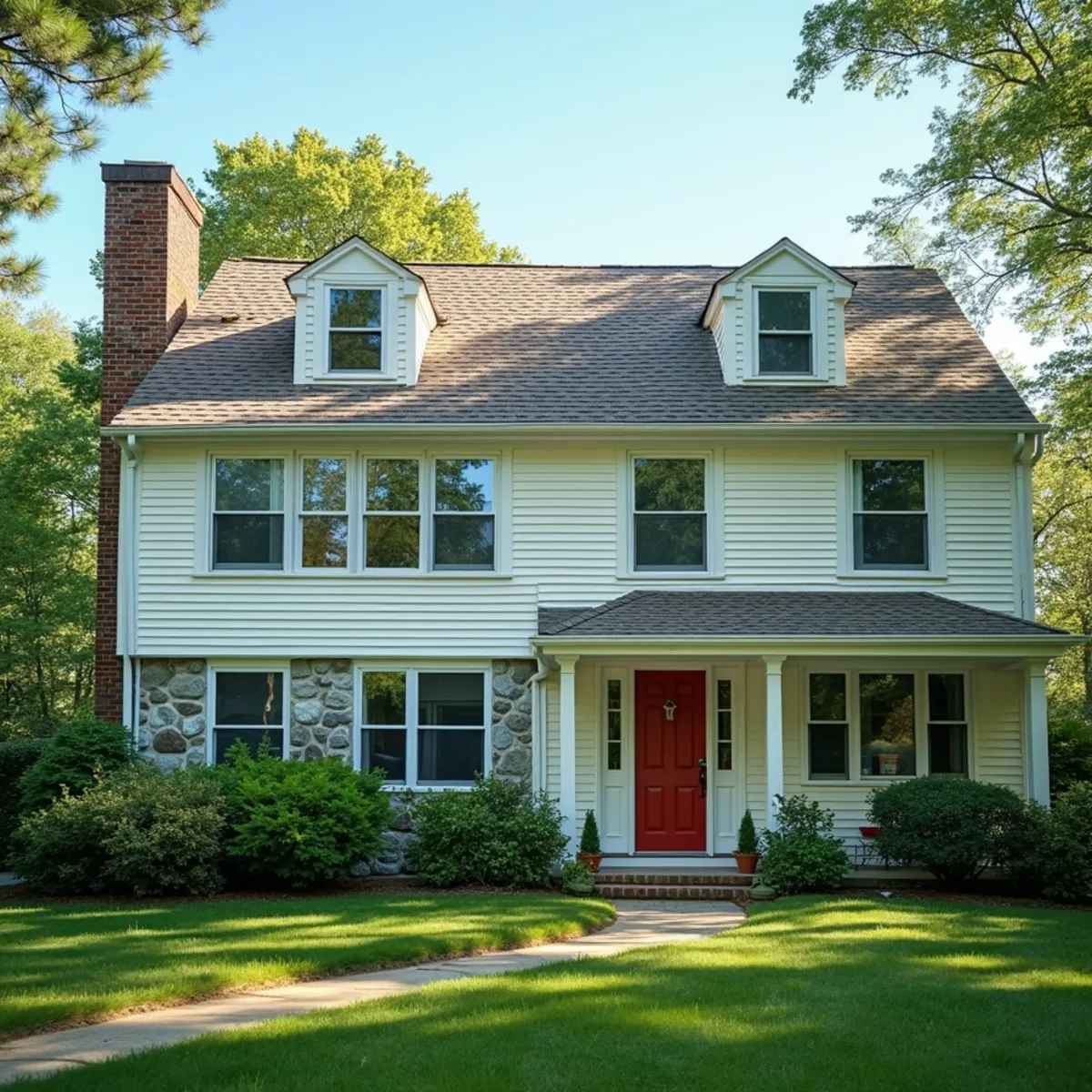
The short answer
Most Massachusetts homes benefit from a house wash every one to two years, and closer to once a year if they sit under heavy tree cover or have shaded, north-facing walls that stay damp. Sunny, open lots can often stretch toward every two years, while homes fighting heavy algae or mildew may want a spring-and-fall rhythm. Roofs run on a separate schedule and are cleaned when the first black streaks appear, using low-pressure soft washing rather than a pressure washer.
The short answer, and why it is a range
For a typical Massachusetts home with reasonable sun exposure, a house wash every one to two years keeps siding clean, holds mildew and algae in check, and prevents the kind of buildup that becomes hard to remove. That is the general rule most homeowners can start from.
But the average hides a lot of variation, and your own lot narrows the number quickly. A home sitting in full sun on an open lot may comfortably go closer to every two years. A shaded home tucked under a mature canopy, or one on a damp, wooded parcel, is usually better served by an annual wash. Homes fighting persistent growth on the north side sometimes benefit from a lighter touch-up twice a year, in spring and again in fall.
Think of one-to-two years as the frame, then let shade, siding type, and the elevations that stay wet the longest tell you where inside that frame your home actually falls.
What really sets your schedule: shade, trees, and valley humidity
The single biggest driver is how long your surfaces stay wet after rain or morning fog. Organic growth, algae, mildew, moss, and lichen, needs moisture and shade to establish. Anything that keeps a wall damp for hours speeds it up.
North-facing and east-facing elevations get the least drying sun and almost always show growth first. Heavy tree canopy over the roof and walls drips, drops debris, and blocks the sunlight that would otherwise dry things out. Low spots that trap morning fog stay humid well into the day. Here in the Connecticut River valley, humid summers and the mature tree cover common across Longmeadow, Wilbraham, and Hampden combine to make shaded walls a reliable spot for that first green haze.
So two identical houses a mile apart can need very different schedules. A sunny, open ranch might look fine at two-year intervals, while a colonial shaded by oaks on its north side may want cleaning every year to stay ahead of the growth.
Your siding and masonry each want a different rhythm
Siding material changes both how often you clean and how gently you have to do it. Vinyl and fiber cement handle regular maintenance well, and an annual wash keeps the mildew film, oxidation haze, and pollen from settling in. Most siding manufacturers treat routine cleaning as expected upkeep rather than something that wears the product out, provided it is done with low pressure and an appropriate solution.
Natural and painted wood, cedar clapboard and shakes, is the exception. Wood should be cleaned when it genuinely needs it rather than on a rigid calendar, and always with gentle, low-pressure methods. High-pressure blasting strips finish, raises the grain, and can split or furr the wood, so restraint matters more than frequency here.
Brick and masonry look tough but ask for care too. They take a soft approach, and it is best not to saturate masonry right before a hard freeze, because water held in the brick and lime mortar can freeze, expand, and contribute to spalling over time. If you see a white, powdery bloom on brick, that is efflorescence, mineral salts wicking to the surface, which is a different issue from algae and is handled differently. Composite decking and concrete hardscape are more durable and tolerate more frequent cleaning, with concrete and pavers being the surfaces where controlled pressure is actually appropriate.
Roofs run on their own clock
Those dark streaks running down an asphalt roof are not dirt. They are colonies of Gloeocapsa magma, a hardy blue-green cyanobacteria that feeds on the limestone filler in asphalt shingles. It takes hold on the shaded, north-facing slopes first, exactly where the roof stays damp longest, and spreads from there.
Do not wait for the whole roof to darken before acting. Left alone, the growth holds moisture against the shingles and gradually loosens the protective granules, which can shorten a roof's usable life. The right treatment is a low-pressure soft wash, not a pressure washer. The Asphalt Roofing Manufacturers Association is explicit that high-pressure washing is likely to damage shingles, and it can also void the shingle warranty; a soft-wash solution instead kills the organism at the root and is rinsed away gently.
Most roofs need attention every few years, or whenever the streaks return, rather than annually. A cleaning restores the roof's appearance and slows regrowth, but no treatment makes it permanent; the algae will eventually recolonize, which is why periodic maintenance, and sometimes zinc or copper at the ridge, is part of the plan.
Reading the signs: when your home is telling you it is time
You do not have to track dates if you know what to watch for. Check the shaded elevations first, since they lead the way.
A green or gray tinge creeping across siding, black streaks starting on the north roof slope, a slick or darkened film on north-facing walkways and steps, and spotty mildew near gutters and downspout splash zones all mean growth is established. In spring you may also see a chalky yellow-green pollen film, and near heavy tree cover a sticky sap or sooty mold residue.
The lesson in all of them is the same: the sooner it is treated, the easier it clears and the less it wears on the surface. Established growth digs into the pores of siding and roofing, so catching it early keeps each cleaning quick and gentle.
The best time of year to wash in Western Massachusetts
Timing matters as much as frequency in a four-season climate. Spring is the popular starting point because it rinses away the road-salt residue and grime left from winter and refreshes the house after months under snow. It helps to wait until the heaviest pollen has settled, usually toward late spring, so the wash is not immediately re-coated.
Summer is well suited to tackling algae and mildew, since warm, dry conditions let surfaces dry properly afterward. Fall is the time to clear leaf tannins and debris before winter, reducing the freeze-thaw damage that trapped moisture and organic buildup can cause under snow and ice.
Deep cold is the season to avoid. When temperatures sit near or below freezing, water can freeze inside siding seams and masonry, expand, and cause cracking or spalling, and the process is simply less effective. As a rule, exterior washing goes best once temperatures are reliably above about 50 degrees. On very hot, sunny days a cleaning solution can flash-dry and streak, so those days call for working the shaded elevations or starting early. Because soft washing relies on the solution rather than brute force, it also widens the comfortable window compared with high-pressure methods.
Why steady, gentle cleaning beats a big rescue wash
There is a common worry that washing a house often will wear it out. With soft washing, the opposite is true. Soft washing is the low-pressure application of a biodegradable cleaning solution, surfactants paired with a controlled amount of sodium hypochlorite where the surface calls for it, that kills algae, mildew, and mold at the root and is then rinsed away with gentle pressure. It cleans through chemistry and dwell time, not force.
Because of that, regular light maintenance keeps growth from ever digging in, which makes each visit faster and easier on your siding, roof, and trim. Wait too long and you are doing a rescue wash on deeply rooted colonies, which is harder on every surface involved.
It is high-pressure blasting, not the frequency of cleaning, that actually causes wear, etching concrete, forcing water behind siding, and stripping roof granules. Matching the right pressure and solution to each surface is exactly the careful, surface-by-surface approach we take on New England homes. If you are unsure what your home needs or when, the honest answer depends on your shade, siding, and exposure, and we are glad to walk the property and give you a straight recommendation. For a free estimate, call Craft Bros Exterior Cleaning at (351) 242-0666.
Craft Bros Exterior Cleaning
Local exterior-cleaning specialists serving Longmeadow and Hampden County. Questions about your home? Call (351) 242-0666.