
Concrete Cleaning in Longmeadow, MA
Even, streak-free cleaning for concrete flatwork — patios, slabs, steps, and pool surrounds.
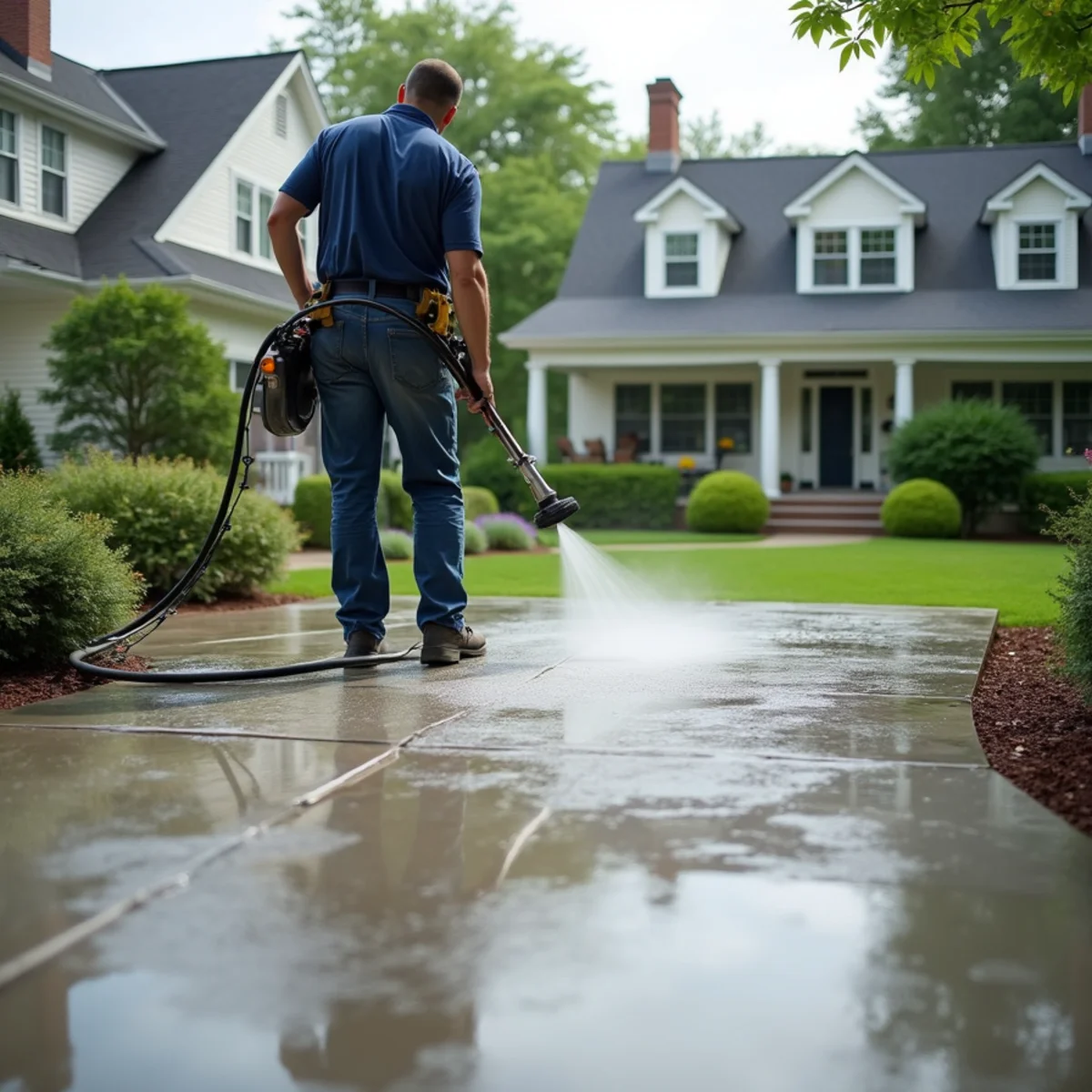
Concrete reads as one flat grey until you clean a single strip of it — then the line between old and new is startling. Because dirt, algae, and organic staining darken the surface a little more each season, most homeowners in Longmeadow never notice how far a patio or walkway has drifted from the color it started with.
The grey is only half the story. In the Connecticut River valley's humid summers and heavy tree canopy, the harder problem is alive: green and black algae, mildew, and lichen that root into the concrete's pores, hold moisture, and turn steps and pool decks slick. Rinsing the surface makes it look better for a few weeks; killing the organism is what actually restores the slab.
We clean concrete with a rotary flat-surface cleaner and pressure matched to the condition of the slab, paired with a biodegradable cleaning solution that breaks growth down at the root. The result is even, edge to edge, and free of the wand streaks and lap lines that come from cleaning flatwork by hand.
Recommended method
Controlled pressure washing
Even, streak-free cleaning for concrete flatwork — patios, slabs, steps, and pool surrounds.
What concrete cleaning removes — and why your slab looks grey
Concrete is porous, so it collects everything that lands on it: airborne dirt and pollen, foot- and tire-traffic grime, barbecue grease, leaf and acorn tannin from the valley's mature oaks and maples, and the fine mud that splashes up during mud season. Ground into the pores, that film reads as a uniform, dull grey that a garden hose simply can't touch.
The darker discoloration in shaded, north-facing, and tree-covered areas is biological — mostly green algae and black mildew, and in the dampest low spots, moss and lichen. That growth is not only cosmetic. It holds water against the surface, feeds on it, and makes steps, walkways, and pool surrounds genuinely slippery. Getting concrete back to its true color means addressing both the ground-in grime and the living growth, not just one or the other.
Why a surface cleaner beats a pressure wand
A pressure wand cleans in a narrow fan, so covering a patio by hand means overlapping dozens of passes at slightly different speeds and angles. On concrete, that shows up as zebra striping — light lap lines and darker missed bands — that you can't un-see once the slab dries. It is the single most common reason a DIY concrete cleaning ends up looking worse than before.
A rotary flat-surface cleaner solves it. The machine rides on the surface at a fixed height with jets spinning inside a shroud, so every square inch gets the same pressure, distance, and dwell time. The output is even, edge to edge, with no streaks. We follow it with a pressure wand only where the machine can't reach — along walls, around posts, on steps, and into corners — and feather those areas so they blend into the rest of the slab.
Killing algae at the root, not just rinsing the surface
High pressure alone shears the visible top layer of algae and mildew off, so the slab looks clean the day we leave. But the organism's structure stays embedded down in the porous concrete, and in valley humidity it greens back up quickly. That is exactly why pressure-only cleaning so often seems to "not last."
We pre-treat with a biodegradable cleaning solution — surfactants plus a controlled amount of sodium hypochlorite where the growth calls for it — and give it time to dwell. That kills the algae, mold, and lichen inside the pores rather than just knocking the top off. It won't keep growth away forever; nothing does in a shaded, damp New England yard. But a root-deep kill means a cleaner slab and noticeably slower regrowth than a surface rinse — the honest difference between a wash and a clean.
Concrete in the Connecticut River valley: freeze-thaw, road salt, and efflorescence
Western Massachusetts is hard on concrete. Our winters swing repeatedly across the freezing line, and every cycle drives moisture into the pores, freezes it, and pries at the surface. Where deicing salt collects — driveway aprons, front steps, and the edges nearest the road — that freeze-thaw stress accelerates into pitting and surface flaking called spalling. Cleaning won't reverse spalling, but it lets us see the true condition of the concrete and clean it without making thin, flaking areas worse.
You may also notice a chalky white haze, especially in spring: that is efflorescence, mineral salts carried to the surface as moisture moves through the slab. We can lift much of it during cleaning. A homeowner who wants longer-term protection is a good candidate for a penetrating sealer applied after the concrete has fully dried — usually a day or two after washing, longer in humid stretches. We're glad to give you a straight read on whether sealing makes sense for your particular surface.
Protecting your concrete, your plants, and your joints
Concrete is durable, but it isn't indestructible, and older slabs, decorative finishes, and previously sealed surfaces all behave differently under pressure. Before we open up, we assess the flatwork and spot-test where needed, then set pressure and nozzle distance to clean without etching the surface or carving lines into it. Exposed-aggregate, stamped, and colored concrete get a gentler approach, and expansion joints and any existing cracks are worked carefully so we don't widen them.
What's growing on your concrete lives in the surrounding soil too, so how we handle runoff matters. We pre-wet nearby plantings, lawn, and foundation beds, shield sensitive greenery where needed, and rinse everything down afterward, directing runoff away from gardens, water features, and storm drains. The goal is a bright slab and landscaping that never knew we were there.
How often should you clean concrete — and keep it cleaner longer?
For most Hampden County homes, concrete flatwork benefits from a cleaning every one to two years, but the right interval is really set by exposure. A sunny, open front walk can go longer; a north-facing patio under a mature canopy, a shaded pool deck, or a low spot that drains poorly may green up every year. If a surface is starting to feel slick underfoot, that's your cue regardless of the calendar.
You can stretch the time between cleanings with a few small habits: keep leaves, acorns, and organic debris swept off so they don't stain the surface and feed algae, improve drainage where water pools, and trim back vegetation so more sun and air reach the concrete. For heavily used or salt-exposed slabs, a penetrating sealer slows water and staining from soaking in. We'll give you a straight answer on what your specific surface needs rather than a one-size schedule.
Concrete cleaning across Longmeadow and Hampden County
We clean concrete flatwork throughout Longmeadow, East Longmeadow, Springfield, Wilbraham, Hampden, Agawam, West Springfield, Chicopee, and Ludlow, and across the wider Pioneer Valley. Whether it's the front walk and steps on an older Longmeadow home or the patio and pool deck of a newer subdivision, we match the method to the surface and the staining we actually find rather than treating every slab the same.
Concrete rarely needs attention on its own. Most of our concrete-cleaning visits pair naturally with driveway cleaning, patio and walkway cleaning, or rust-stain removal for the irrigation, fertilizer, and metal-furniture marks that a standard clean won't lift. If you're tackling more than one surface, we'll clean them together so the whole property matches when we're done.
Problems This Service Solves
- Grey, dingy concrete that has dulled so gradually you stopped noticing
- Green and black algae in shaded, north-facing, and tree-canopied areas
- Slippery organic growth on steps and pool surrounds that becomes a safety hazard
- Leaf and acorn tannin staining, mildew spotting, and mud-season splatter
- Ground-in dirt, pollen, and foot- and tire-traffic grime in the pores
- Moss and lichen taking hold in low, damp, poorly draining spots
- White efflorescence and winter road-salt residue along edges and steps
- Dark mildew lines where downspouts and runoff track across the slab
What's included
- A walkthrough and condition assessment of every flatwork surface before we start
- A biodegradable cleaning solution applied to break down and kill algae, mold, and lichen at the root
- Rotary flat-surface cleaning for even, edge-to-edge results without wand streaks
- Controlled pressure matched to the age and condition of the concrete
- Hand detailing of edges, corners, steps, and expansion joints the machine can't reach
- A thorough final rinse that carries residue off the slab rather than into the pores
- Pre-wetting and post-rinsing of surrounding plantings, lawn, and foundation beds
- Honest guidance on sealing and realistic maintenance intervals for your surface
Benefits
- A uniform, streak-free finish with no lap lines or wand marks
- Brighter, lighter patios, walkways, steps, and pool decks
- Safer footing once slick algae and moss are removed
- Organic growth killed at the root, so regrowth is slowed rather than instant
- Restored curb appeal that makes the whole property look cared for
- A clean, sound surface if you plan to seal, stain, or resurface afterward
- Cleaning tuned to Western Massachusetts weather and staining, not a one-size rinse
Surfaces we treat
- Poured concrete patios and slabs
- Concrete walkways, paths, and sidewalks
- Concrete steps, stoops, and landings
- Pool decks and surrounds
- Garage floors and concrete pads
- Broom-finished and lightly textured concrete
- Concrete driveway aprons and sections (paired with our driveway cleaning)
- Exposed-aggregate and stamped concrete, with pressure adjusted for the finish
Safety & protection
- Pressure and nozzle distance matched to the substrate to avoid etching and lap marks
- Spot testing on older, spalling, decorative, or previously sealed concrete first
- Low-pressure chemical application so the solution — not brute force — does the work
- Expansion joints and existing cracks worked carefully so we don't widen them
- Plants, lawn, and foundation beds pre-wet, shielded where needed, and rinsed after
- Runoff directed away from gardens, water features, and storm drains
- Biodegradable products chosen and diluted for the surface and its surroundings
- Spalling, structural cracks, and failing surfaces flagged instead of blasted through
What to Expect
Request an estimate
Call or send us a few details and photos. We respond with next steps and, where possible, a preliminary range before we visit.
Property & surface assessment
We look at each surface — siding, roof, hardscape — and identify the material, its condition, and the buildup we're dealing with.
Written scope of work
You get a clear, written estimate that spells out which surfaces we'll clean and the method we'll use on each one.
Property & plant protection
On service day we pre-wet landscaping, cover delicate plants, and take steps to protect fixtures before any solution is applied.
Surface-specific cleaning
We match the pressure and cleaning solution to the material — gentle soft washing for delicate surfaces, controlled pressure for durable hardscape.
Final walkthrough
We rinse thoroughly, remove protective coverings, tidy up, and walk the property with you to confirm you're happy with the result.
Before & After
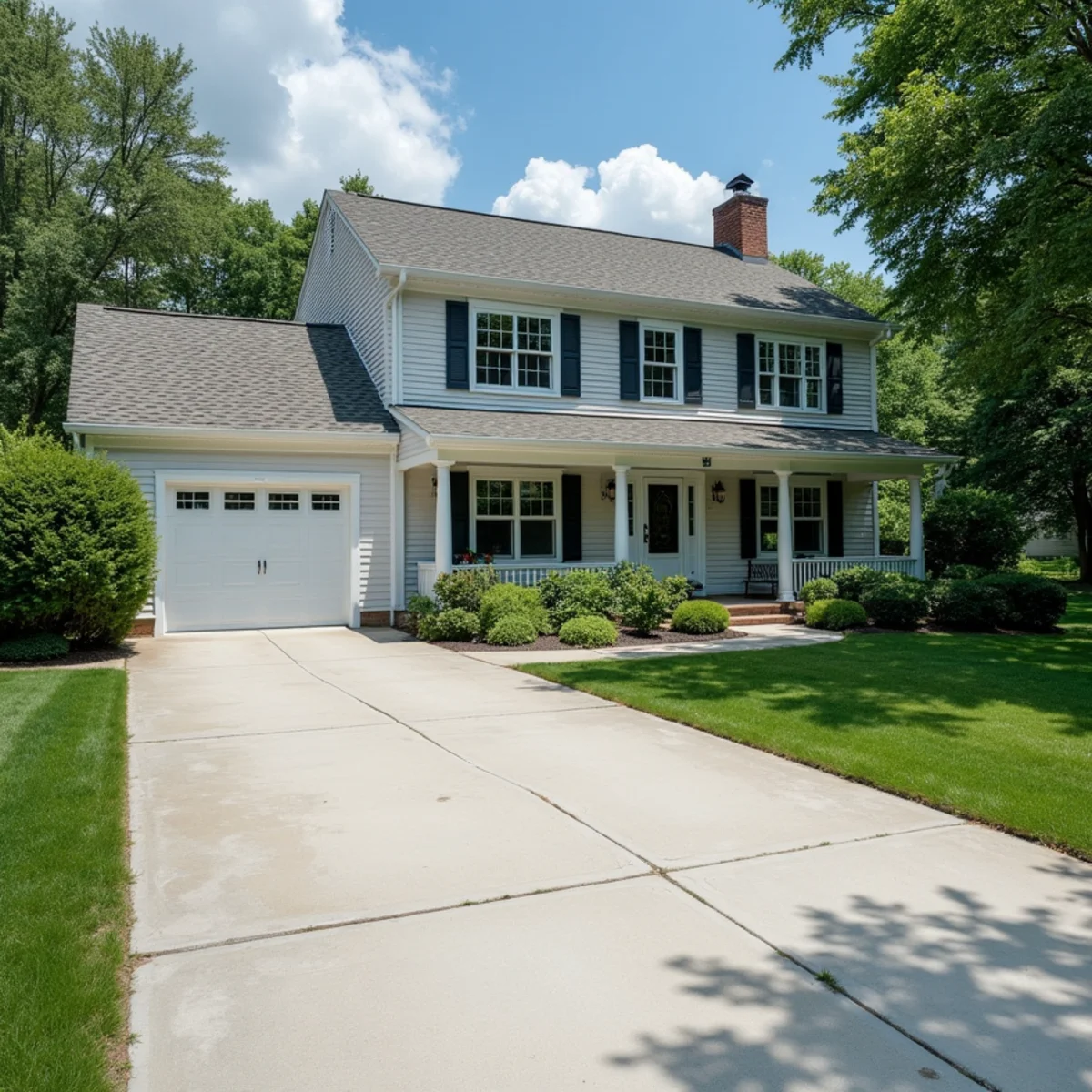
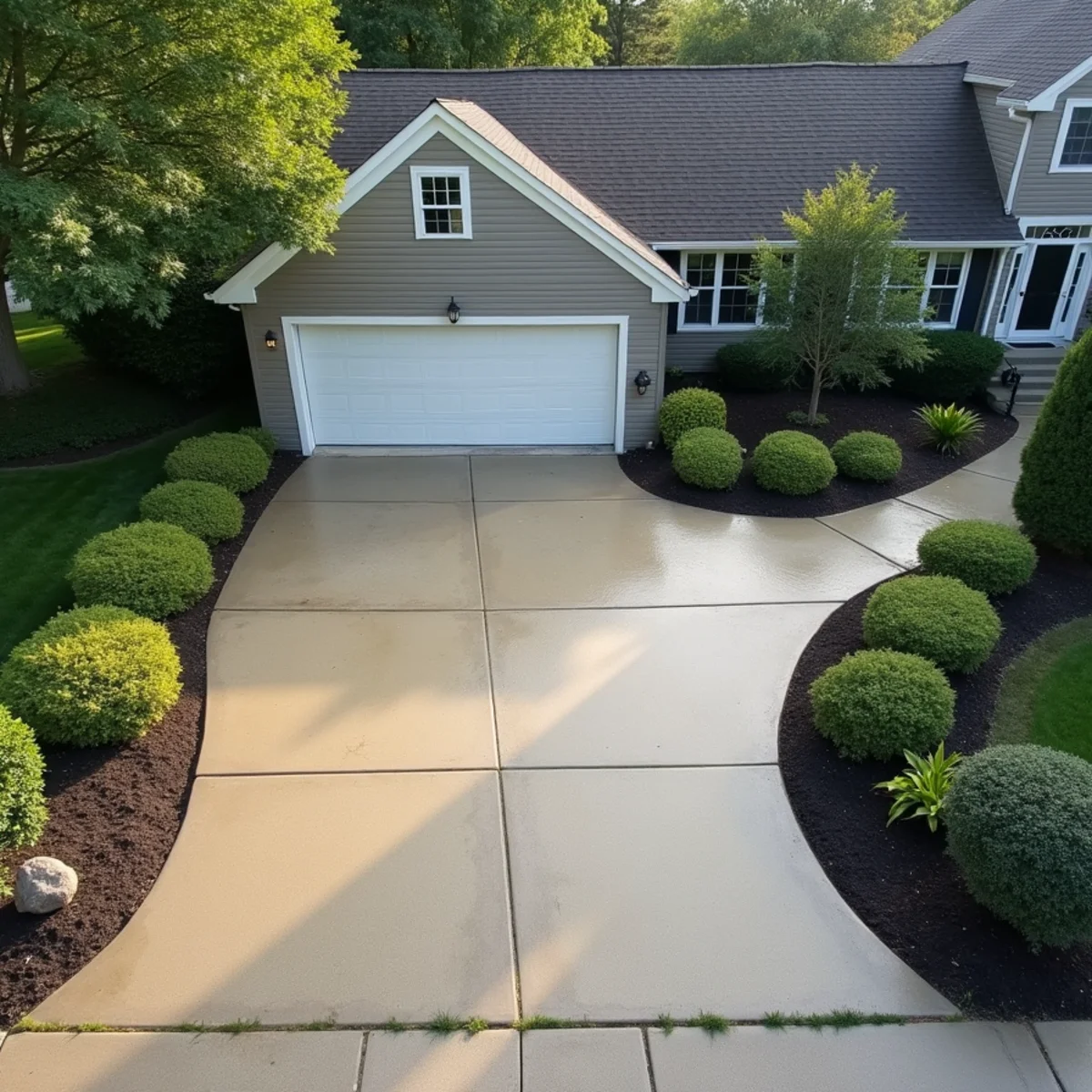
Concrete Cleaning FAQs
For most homes here, every one to two years keeps concrete looking right, but exposure sets the real schedule. Sunny, open surfaces go longer; shaded, north-facing, or tree-covered patios and pool decks in the Connecticut River valley often green up yearly. The best signal isn't the calendar — it's when a surface starts looking dingy or feeling slick underfoot.
Not when the pressure is matched to the surface. Concrete is durable, but too much pressure, or a nozzle held too close, can etch it, leave lines, or worsen flaking on older slabs. We assess the condition first, spot-test where needed, and use a flat-surface cleaner at controlled pressure so the slab comes out even, not carved. We'll flag any spalling rather than blasting through it.
Because rinsing removes only the visible top layer while the organism stays rooted in the concrete's pores, and valley humidity brings it right back. We pre-treat with a biodegradable solution that kills algae, mold, and lichen down in the surface, not just on top. Nothing keeps growth away permanently in a shaded, damp yard, but a root-deep clean slows regrowth far more than a surface wash.
Yes, with the precautions we take as standard. We use biodegradable products diluted for the surface, pre-wet and rinse the surrounding plantings and lawn so nothing sits on the leaves, shield sensitive greenery, and direct runoff away from gardens, water features, and storm drains. Keep pets and children off the treated area until it has dried and been rinsed down, and everything comes through fine.
Sealing is optional, but worth considering for high-traffic or salt-exposed concrete like driveways, aprons, and front steps. A penetrating sealer slows water, deicing salt, and staining from soaking into the pores, which helps against our freeze-thaw winters. It should go on only after the concrete has fully dried — usually a day or two, longer in humid weather. We're happy to advise whether it makes sense for your surface.
Most older concrete cleans up well; it just needs a gentler, tested approach so we brighten it without worsening surface wear. Some staining — rust from irrigation or fertilizer, deep oil, or heavy efflorescence — needs a targeted treatment beyond a standard clean, and we'll tell you honestly what will lift and what won't. Structural cracks or advanced spalling are a repair question, not a cleaning one.
It depends on the square footage, the surface and its condition, how much organic growth or staining is present, and access to the area. A large, heavily soiled patio takes more than a small, lightly dirty walk. We don't quote sight-unseen numbers, because that's how homeowners get surprised; instead we look at your surfaces and give you a free, no-obligation estimate. Call (351) 242-0666.
Ready to Refresh Your Property?
Request an estimate for pressure washing, house washing, roof cleaning, or soft washing in Longmeadow and surrounding communities.