Dumpster-Pad Cleaning in Hampden County, MA
Hot-water degreasing for the grimiest corner of your property — cutting grease, odor, and the pests they attract.
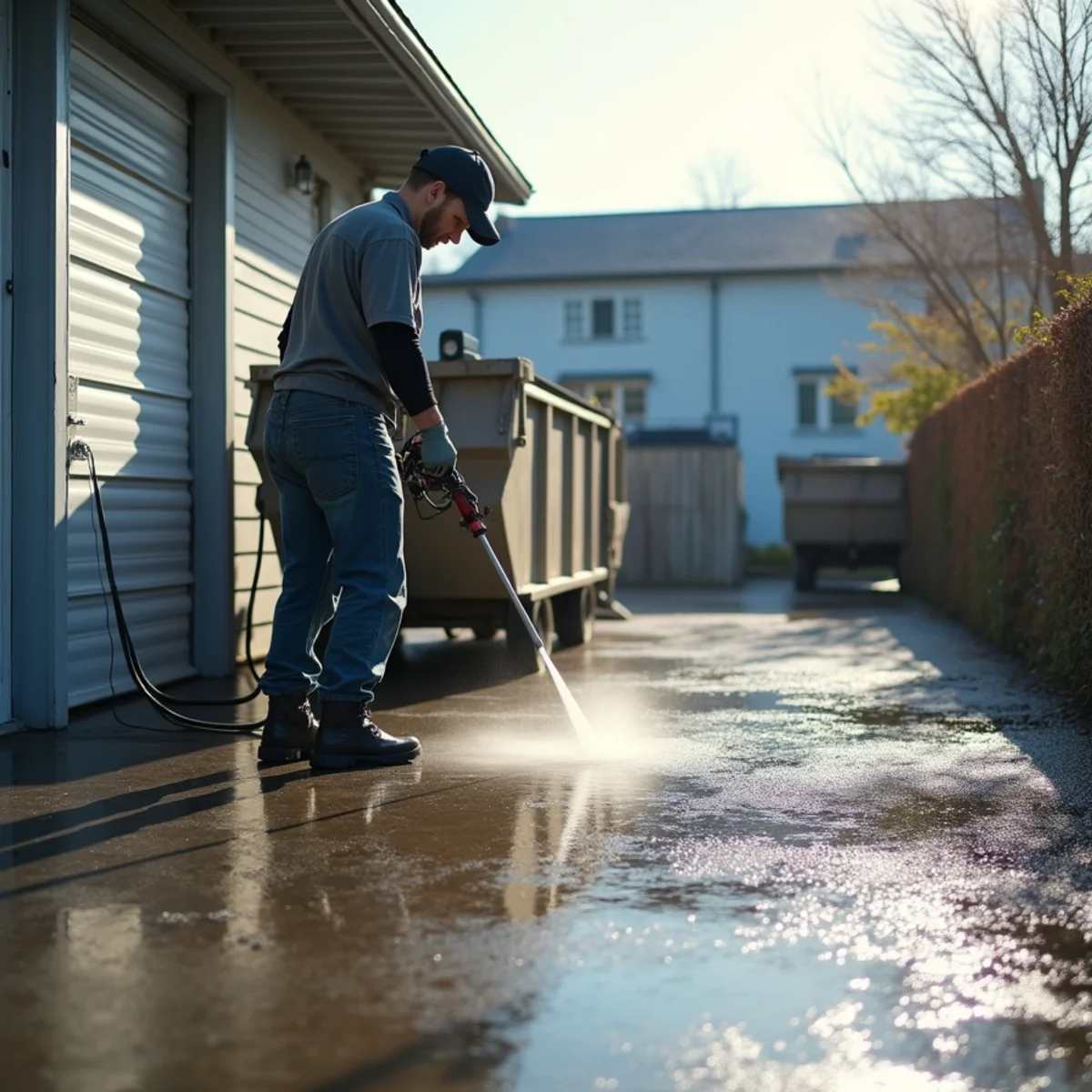
The dumpster pad is the grimiest, most-overlooked surface on any commercial property. Every leaking bag, overflowing container, and hauler pickup leaves grease, food fat, and leachate soaking into the concrete — and in the humid Connecticut River valley, that residue turns sour and sticky fast, drawing pests and odor that customers and inspectors notice before they reach your door.
We degrease and wash dumpster pads with hot water at controlled pressure. A surfactant-based, concrete-safe degreaser breaks the grease down at its source, then hot water lifts the baked-on residue and leachate that cold rinses leave behind — cleaning the pad, the enclosure base, and the surrounding hardscape.
It is a genuine improvement, not a magic wand. On a surface this heavily used, some staining and odor will return between cleanings, which is why a recurring schedule matched to your waste volume keeps it in check. We serve restaurants, retail, and property managers across Longmeadow, Springfield, and Hampden County.
Recommended method
Controlled pressure washing
Hot-water degreasing for the grimiest corner of your property — cutting grease, odor, and the pests they attract.
Why the dumpster pad is the dirtiest surface on your property
No other surface on a commercial property takes the abuse a dumpster pad does. Every bag that leaks, every container that overflows, and every hauler pickup leaves behind a layer of grease, food fat, and leachate — the dark, sour liquid that seeps out of decomposing waste. It soaks into the pores of the concrete, where a garden hose and a push broom never reach it.
In the Connecticut River valley, the problem has a season. Humid Pioneer Valley summers speed up decomposition, so a pad that looked passable in May can turn sour and sticky within days of a missed cleaning. Winter tracks its own residue through the enclosure as road salt and slush. Left alone, that buildup becomes a stain that no longer lifts with routine cleaning, a slip hazard underfoot, and a smell your customers and tenants pick up on well before they reach the door.
How we clean a dumpster pad: hot water, degreaser, and controlled pressure
Grease does not rinse away with cold water and volume alone — it has to be broken down chemically first. We start by clearing loose trash and debris, then apply a concrete-safe, surfactant-based degreaser to the pad surface and the corral walls. Surfactants lower the surface tension of water so it can surround and lift the grease on a molecular level, emulsifying it instead of just pushing it around.
After the degreaser has had time to dwell, we wash with hot water at controlled pressure. Heat is what separates a real dumpster-pad cleaning from a quick rinse: it melts and lifts the baked-on residue and leachate that cold water leaves behind. We keep the pressure matched to the concrete so the surface is cleaned, not gouged or etched, and finish by rinsing the pad, the enclosure base, and any adjacent walkway. Where odor is the main concern, a deodorizing treatment can be added at the end.
Odor, pests, and your board of health inspection
A dirty dumpster pad is not just unpleasant — it is a liability. The grease and food residue baked into the concrete are exactly what draw rodents, roaches, and flies, which is why waste-storage areas are a routine inspection point for restaurants and food establishments. Standing leachate, visible grease, and pest evidence are the kinds of findings that put a mark on a health report and quietly undercut the pest-control program you are already paying for.
Regular cleaning removes the food source at its origin. By stripping the organic buildup out of the concrete, we cut the odor that carries across a parking lot and take away what the pests come looking for. For Hampden County food-service operators, a clean pad is one of the simpler, more reliable ways to keep a back-of-house area from becoming an inspection problem.
How often should a dumpster pad be cleaned?
Frequency comes down to what goes in the dumpster and how quickly it breaks down. Restaurants, supermarkets, and other high-volume food operations usually need monthly or bi-weekly service, because grease and organics accumulate fast — especially through a humid Pioneer Valley summer. Offices, retail plazas, and moderate-traffic properties are often well served by quarterly cleaning.
The honest answer is that the right interval is the one that keeps the pad ahead of the buildup. If odor, staining, or pests return well before your next scheduled visit, the pad is telling you it needs attention more often. We are glad to recommend a cadence based on your waste volume and business type, and to set up a recurring schedule so it is one less thing you have to track.
Managing the wash water responsibly
Everything rinsed off a dumpster pad — grease, oil, food residue, and detergent — is what regulators consider process wastewater, and under the federal Clean Water Act it is not meant to run untreated into a storm drain. Plenty of operators do not realize their back lot drains straight toward the nearest waterway, and a careless wash can turn a routine cleaning into a pollution complaint.
We work to keep contaminated wash water out of storm drains, directing and managing runoff responsibly for the site rather than blasting it toward the curb. It is the right thing to do for the Connecticut River watershed, and it protects you as the property owner, because the liability for an illicit discharge lands on the site, not only on the contractor doing the work.
Dumpster-pad cleaning for Hampden County businesses
We clean dumpster pads and enclosures for restaurants, supermarkets, convenience stores, retail plazas, medical offices, apartment complexes, and property managers across Longmeadow, Springfield, Chicopee, Holyoke, Westfield, West Springfield, Agawam, East Longmeadow, Wilbraham, and the surrounding Hampden County towns.
Because the pad is rarely the only surface that needs attention, we often handle it alongside our commercial pressure washing, parking-lot cleaning, and property-management exterior cleaning — clearing the enclosure, the approach apron, and the surrounding hardscape in a single visit. Whether you run one storefront or manage a portfolio of properties, we can build a recurring plan that keeps the grimiest corner of each site under control. Call (351) 242-0666 for a free estimate.
Problems This Service Solves
- Grease, oil, and food-fat baked into the pad and corral walls
- Leachate and organic sludge from leaking bags and containers
- Persistent, sour odor from decomposing residue
- Rodents, roaches, and flies drawn to the food source
- Dark staining and a slick, slippery film around the enclosure
- Buildup that triggers board of health or landlord complaints
- Standing water and clogged pad drains where present
What's included
- Clearing loose trash and debris from the pad and enclosure
- Application of a surfactant-based, concrete-safe degreaser to the pad and corral walls
- Dwell time so the degreaser emulsifies grease at its source
- Hot-water washing at controlled pressure to lift baked-on residue and leachate
- Rinse of the pad, enclosure base, and adjacent walkways
- Optional deodorizing treatment where odor is the main concern
- Responsible direction and management of wash water
- Recurring schedules available — monthly, bi-monthly, or quarterly
Benefits
- A cleaner, far less odorous back-of-house area
- Fewer pests and reduced sanitation and health concerns
- A better impression for customers, tenants, and inspectors
- Slower grease re-accumulation with regular service
- Support for your existing pest-control and food-safety programs
- Safer footing where a grease film had made the concrete slick
- Predictable maintenance, coordinated with your other exterior cleaning
Surfaces we treat
- Concrete dumpster pads
- Masonry and block enclosure walls and corral bases
- Enclosure gate frames, posts, and their base areas
- Adjacent walkways and approach aprons
- Loading-dock and back-of-house concrete
- Compactor and trash-corral pads
Safety & protection
- Concrete-safe, biodegradable degreasers matched to the buildup
- Controlled pressure and hot water tuned to the surface, so concrete is cleaned rather than etched
- Contaminated wash water directed away from storm drains where possible
- Loose debris cleared and disposed of before washing begins
- Wet-surface and slip precautions during and after the job
- Honest expectations set on residual staining and odor
- Cleaning coordinated with your hauler's pickup schedule for full pad access
What to Expect
Request an estimate
Call or send us a few details and photos. We respond with next steps and, where possible, a preliminary range before we visit.
Property & surface assessment
We look at each surface — siding, roof, hardscape — and identify the material, its condition, and the buildup we're dealing with.
Written scope of work
You get a clear, written estimate that spells out which surfaces we'll clean and the method we'll use on each one.
Property & plant protection
On service day we pre-wet landscaping, cover delicate plants, and take steps to protect fixtures before any solution is applied.
Surface-specific cleaning
We match the pressure and cleaning solution to the material — gentle soft washing for delicate surfaces, controlled pressure for durable hardscape.
Final walkthrough
We rinse thoroughly, remove protective coverings, tidy up, and walk the property with you to confirm you're happy with the result.
Before & After
Dumpster-Pad Cleaning FAQs
Hot-water degreasing removes the grease and food residue baked into the concrete, which is the source of most of the odor, so the smell drops noticeably after a cleaning. On a surface used this hard, some odor does return between visits as new waste accumulates. A recurring schedule, plus an optional deodorizing treatment, is what keeps it in check over the long run.
It depends on your waste volume. Restaurants, grocery stores, and other food-service properties usually need monthly or bi-weekly cleaning, since grease builds up fast in the Pioneer Valley's humid summers. Offices and moderate-traffic retail are often fine quarterly. If odor, staining, or pests come back before your next visit, that is the sign to clean more often. We will recommend a cadence for your property.
Usually we can lighten them substantially. Fresh grease lifts readily, but grease that has soaked deep into old, porous concrete over months or years bonds with the surface and may leave a shadow even after a thorough degreasing. We are honest about this up front: we will get the pad markedly cleaner and cut the odor, but we do not promise a heavily stained old pad will look brand new.
Yes. Grease and splatter collect on the corral walls and the base of the gates as much as on the pad itself, so we treat those surfaces along with the concrete, then rinse the approach apron and any adjacent walkway. If the enclosure or nearby building faces need broader attention, we can fold that into the same visit under our commercial pressure washing.
We manage it responsibly. Everything rinsed off the pad counts as process wastewater, and under the Clean Water Act it should not run untreated into a storm drain. We direct and control runoff for the site rather than pushing it toward the curb, keeping contaminated water out of the storm system where possible. That protects the Connecticut River watershed and limits your liability as the property owner.
There is no flat rate. Cost depends on the size of the pad, how much grease and buildup has accumulated, whether the enclosure walls and gates are included, access to the area, and whether you want one-time or recurring service. Recurring plans are usually more economical per visit. Call (351) 242-0666 or request a free estimate and we will price it for your property.
In most cases, yes. We schedule around your hours and your hauler's pickup so the dumpster can be moved or emptied for full access to the pad. Much of this work happens early morning, after close, or during slow periods for restaurants and retail. Tell us your constraints when you call and we will fit the cleaning to your operation.
Ready to Refresh Your Property?
Request an estimate for pressure washing, house washing, roof cleaning, or soft washing in Longmeadow and surrounding communities.