
Parking-Lot Cleaning in Hampden County, MA
Even, streak-free cleaning for parking-lot concrete, asphalt, and walkways — traffic grime, gum, and organic buildup cleared, with oil treated honestly.
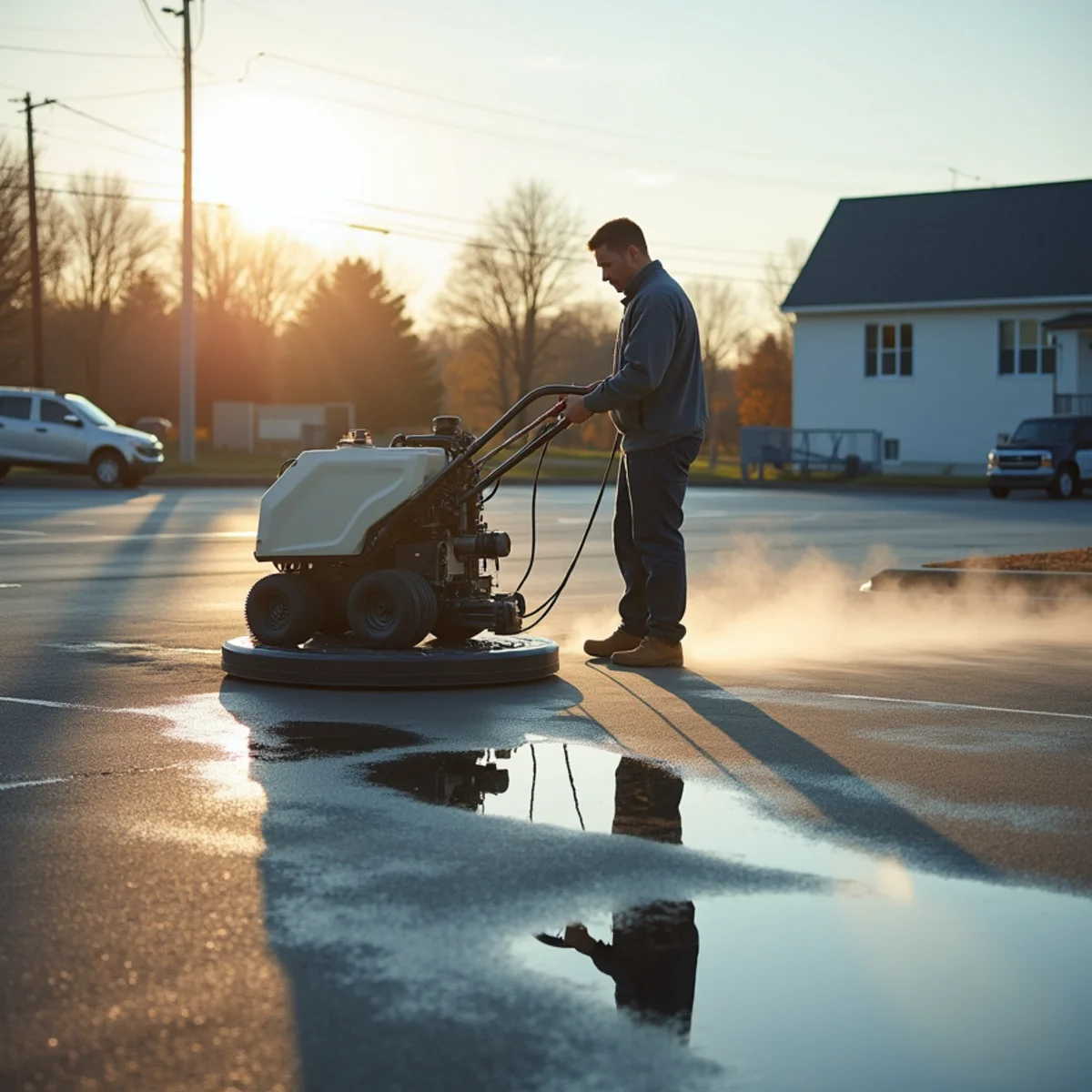
A parking lot is the most-trafficked surface on any commercial property, and it wears every mile of it — traffic film, gum ground in near the doors, tire scuffs, oil drips in the stalls, and green organic staining creeping across shaded aprons and curbs. In Hampden County that buildup is compounded by winter road salt and sand, spring pollen and tree sap under the valley's heavy canopy, and the freeze-thaw damp that keeps north-facing concrete perpetually shaded. A dingy lot makes even a well-run business look neglected before a customer reaches the door.
We surface clean lot concrete, asphalt, and walkways with a controlled-pressure method matched to each surface — a rotary surface cleaner for even, streak-free flatwork, a wand for curbs, edges, and expansion joints, and a degreaser with dwell time on the oil zones. Gum and grease soften with heat and a targeted cleaner; organic growth gets a low-pressure cleaning solution that kills it at the root rather than just rinsing the surface. The result is uniform, bright, and genuinely maintained.
We're straight about oil. Fresh and surface oil often lightens well; deep-set oil, transmission fluid, rust bleed, and heavy tire marking can be reduced but don't always clear fully, and we'll tell you which is which before we start. We also manage wash water responsibly and keep it out of storm drains — because in the Connecticut River valley, that runoff has somewhere real to go.
Recommended method
Controlled pressure washing
Even, streak-free cleaning for parking-lot concrete, asphalt, and walkways — traffic grime, gum, and organic buildup cleared, with oil treated honestly.
What builds up on a parking lot in the Connecticut River valley
A commercial lot collects grime faster than any other surface on the property because everything the site produces ends up on it. Drive lanes and stalls pick up traffic film, exhaust soot, and tire rubber; entrances and storefront approaches collect ground-in gum and foot-traffic dirt; dumpster pads and loading zones take on food residue and grease. Left alone, all of it dulls the pavement to a uniform gray that reads as neglect long before anyone complains.
In the Pioneer Valley, the seasons pile on. Winter brings road salt and sanding grit that gets tracked across aprons and entryways and left behind when the snow melts. Spring drops a heavy load of pollen, tree sap, and leaf tannin under the mature canopy that shades so many Hampden County lots — from Longmeadow and East Longmeadow to Wilbraham, Ludlow, and the older commercial blocks of Springfield and Chicopee. Then summer humidity and shade feed the organic growth that creeps across curbs, islands, and north-facing concrete.
How we clean a parking lot: surface cleaner, wand, and pre-treatment
Cleaning a lot well is a sequence, not a single pass. We start with a walkthrough to map the oil zones, gum, and organic staining so nothing gets missed or over-blasted. Oil-stained stalls and drive lanes get a degreaser pre-treatment and time to dwell — that dwell is what lifts oil out of the concrete's pores instead of just spreading it around.
The open flatwork is cleaned with a rotary surface cleaner: an enclosed spinning head that holds its nozzles at a fixed height and distance. It cleans several times faster than a hand wand and, more importantly, leaves an even finish with none of the zebra-striping you get from waving a wand across concrete. We then detail the edges by hand — curbs, wheel stops, expansion joints, entry thresholds, and the seams a surface cleaner can't reach. Gum and baked-on grease soften with heat and a targeted cleaner, so the deposit lifts cleanly rather than smearing across the slab.
Concrete or asphalt? Matching pressure to the pavement
Most Hampden County lots are a mix: an asphalt driving surface with concrete aprons, walkways, dumpster pads, and curbs. The two don't clean the same way. Concrete is durable hardscape and takes a firm, controlled pressure — but we still keep the nozzle at a working distance, because holding a tip too close will etch the slab and leave visible wand scars.
Asphalt needs a lighter touch. Its surface is bound by asphalt cement, and too much pressure held too close can dislodge aggregate or scour the binder, leaving a worn patch. On blacktop we drop the pressure, widen the spray angle, and let water volume and cleaning solution do the work instead of brute force. Matching the method to the surface is the difference between a clean lot and a damaged one — and it is the core of what we do across every surface we touch, from parking pavement to delicate cedar siding and shingle roofs.
Oil, gum, and tire stains: what actually comes out
This is where honest expectations matter. Fresh oil and surface grease usually lighten well, especially with a degreaser, added heat, and adequate dwell time. Deep-set oil that has soaked into aging concrete, dried transmission fluid, rust bleed, and heavy tire scuffing are different — they can often be reduced and made far less noticeable, but they don't always clear completely, and no honest company can promise otherwise.
We'll walk the lot with you first and tell you which stains we expect to remove, which we expect to lighten, and which are likely to stay as faint shadows in the concrete. For the worst oil spots we'll pre-treat, agitate, and often make a second pass — but we won't blast a stain so hard that we drive it deeper into the pores or etch a halo around it. Setting that expectation before we start is part of doing the job right.
Organic growth on shaded concrete — and why it comes back
The green and black staining on curbs, aprons, and north-facing concrete isn't just dirt; it's living organic growth — algae, mildew, and moss that thrive in the valley's humid summers and shaded, slow-drying corners. Simply blasting it off removes the color for a while but leaves the root structure behind, so it returns quickly and often darker.
Instead, we apply a low-pressure cleaning solution that kills the growth at the root, then rinse. That treats the cause, not just the symptom, and slows how fast the staining comes back. It won't stop regrowth for good — in a shaded, damp New England lot the conditions that grow algae never really go away — but it restores the surface and buys far more time between cleanings. Properties under heavy tree cover or with persistent shade benefit most from a recurring schedule that stays ahead of it.
Keeping wash water out of the storm drains
Parking-lot wash water isn't clean water. Once it contacts detergents, oil, grease, and the grit lifted off the pavement, it's treated as process wastewater under the Clean Water Act — and letting it run untreated into a storm drain that empties to the Connecticut River or a local brook is exactly what municipal stormwater rules are written to prevent.
We take that seriously. We control and direct wash water responsibly, keep contaminated runoff away from open storm drains, and manage the site so what we rinse off the lot doesn't become a problem downstream. It is a routine part of professional commercial cleaning, and it protects both your property and the watershed the whole Pioneer Valley shares.
How often should you schedule parking-lot cleaning?
There is no single answer, because it depends on how hard the lot works. A high-traffic retail center, restaurant, or medical plaza generally looks best on a quarterly schedule; a quieter office or light-commercial lot is often fine with twice-a-year cleaning, timed for spring — to clear winter salt, sand, and pollen — and fall, ahead of the leaf drop and freeze-up.
Entrances, dumpster pads, and drive lanes soil faster than the rest of the lot and can be scheduled more often on their own. The real drivers are traffic volume, spill and grease exposure, tree cover, and how visible the property is to your customers. We're glad to recommend a cadence for your specific site and set up recurring service so the lot never slides far enough to look neglected. To map it out, request a free estimate or call (351) 242-0666.
Problems This Service Solves
- General traffic grime, exhaust film, and embedded dirt across drive lanes and stalls
- Gum deposits ground into entrances, storefront approaches, and walkways
- Oil, transmission fluid, and tire-scuff staining in parking stalls and drive aisles
- Organic growth — algae, mildew, and moss — on shaded concrete aprons, curbs, and north-facing edges
- Winter road-salt and sand residue tracked across aprons and entryways
- Dumpster-pad and loading-zone buildup with food and grease residue
- Pollen, tree sap, and leaf-tannin staining under the valley's heavy tree canopy
- Dull, streaked concrete walkways that make a maintained property read as neglected
What's included
- A walkthrough to map oil zones, gum, and organic staining before any cleaning starts
- Degreaser pre-treatment and dwell time on oil-stained stalls and drive lanes
- Rotary surface-cleaner passes across concrete flatwork for an even, streak-free finish
- Detail wanding of curbs, wheel stops, expansion joints, and entry thresholds
- Focused treatment of gum and baked-on grease near entrances and dumpster pads
- Low-pressure cleaning-solution application on organic growth to kill it at the root
- Responsible containment and direction of wash water away from storm drains
- Optional recurring schedule — quarterly, seasonal, or as-needed — for high-traffic properties
Benefits
- A cleaner, well-maintained first impression for customers, tenants, and visitors
- Brighter, more uniform concrete without the zebra-striping a hand wand leaves
- Reduced slip hazards from algae, gum, and greasy buildup on walkways
- Organic staining treated at the root so regrowth is slowed between cleanings
- Wash water managed responsibly to protect storm drains and the Connecticut River watershed
- Flexible recurring service that keeps the property presentable year-round
- An honest, upfront assessment of what will fully clear, lighten, or remain
Surfaces we treat
- Concrete parking aprons, pads, and drive lanes
- Asphalt lot surfaces, cleaned at lower pressure to protect the binder and aggregate
- Pedestrian walkways and sidewalks within the lot
- Curbs, wheel stops, and concrete islands
- Entry thresholds and storefront approaches
- Dumpster pads and loading or service zones
- Concrete stairs and ramps within the property
Safety & protection
- Pressure and water volume matched to concrete versus asphalt so surfaces aren't etched or stripped
- Degreaser and cleaning solutions applied at labeled dilution with proper dwell time
- Wash water directed away from storm drains and managed responsibly under Clean Water Act guidance
- Work zones coned or coordinated so vehicle and pedestrian areas stay accessible
- Cleaning scheduled early morning or off-peak to minimize disruption to operations
- Wet surfaces flagged until dry to reduce slip risk
- Realistic expectations set on oil, rust, and tire staining before work begins
What to Expect
Request an estimate
Call or send us a few details and photos. We respond with next steps and, where possible, a preliminary range before we visit.
Property & surface assessment
We look at each surface — siding, roof, hardscape — and identify the material, its condition, and the buildup we're dealing with.
Written scope of work
You get a clear, written estimate that spells out which surfaces we'll clean and the method we'll use on each one.
Property & plant protection
On service day we pre-wet landscaping, cover delicate plants, and take steps to protect fixtures before any solution is applied.
Surface-specific cleaning
We match the pressure and cleaning solution to the material — gentle soft washing for delicate surfaces, controlled pressure for durable hardscape.
Final walkthrough
We rinse thoroughly, remove protective coverings, tidy up, and walk the property with you to confirm you're happy with the result.
Before & After
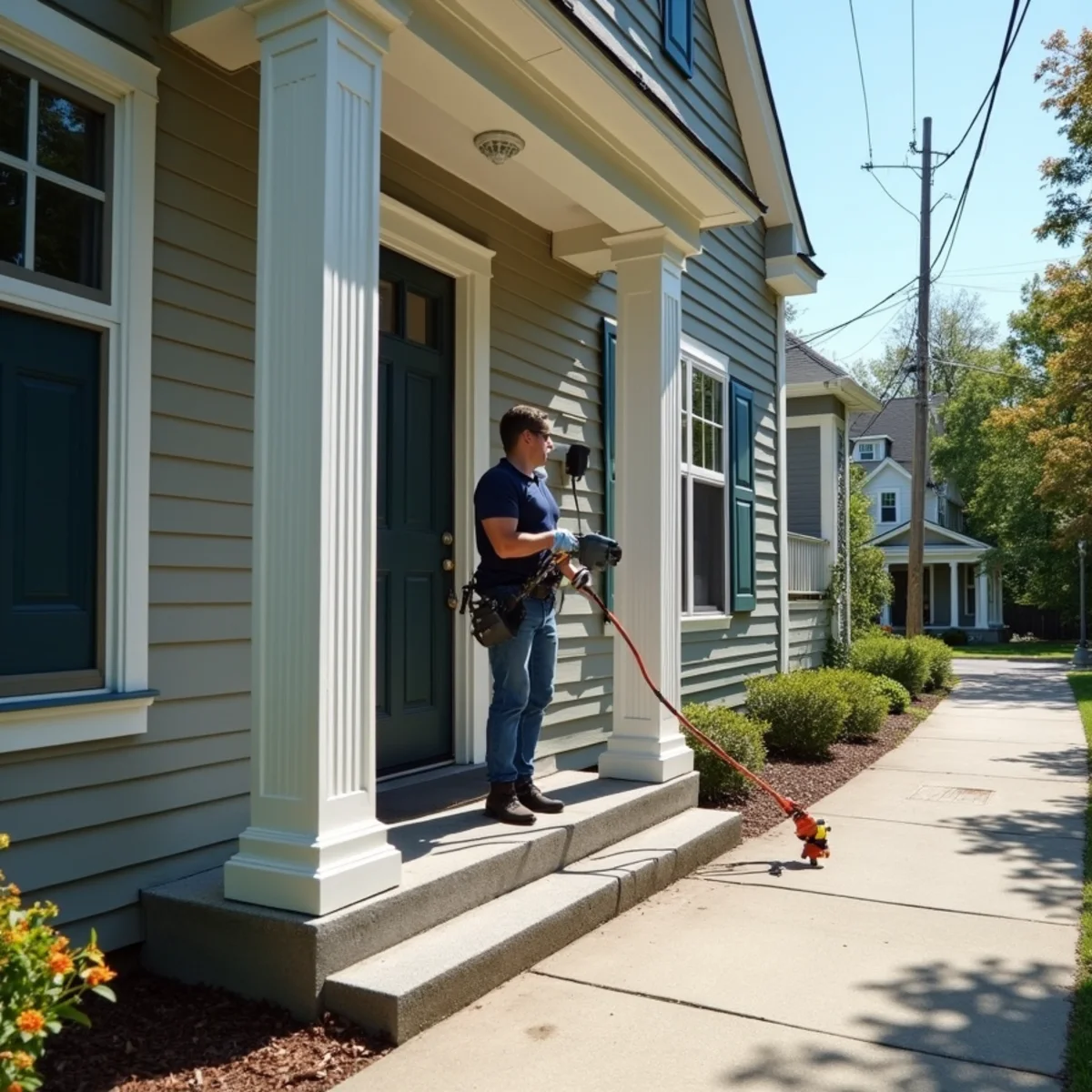
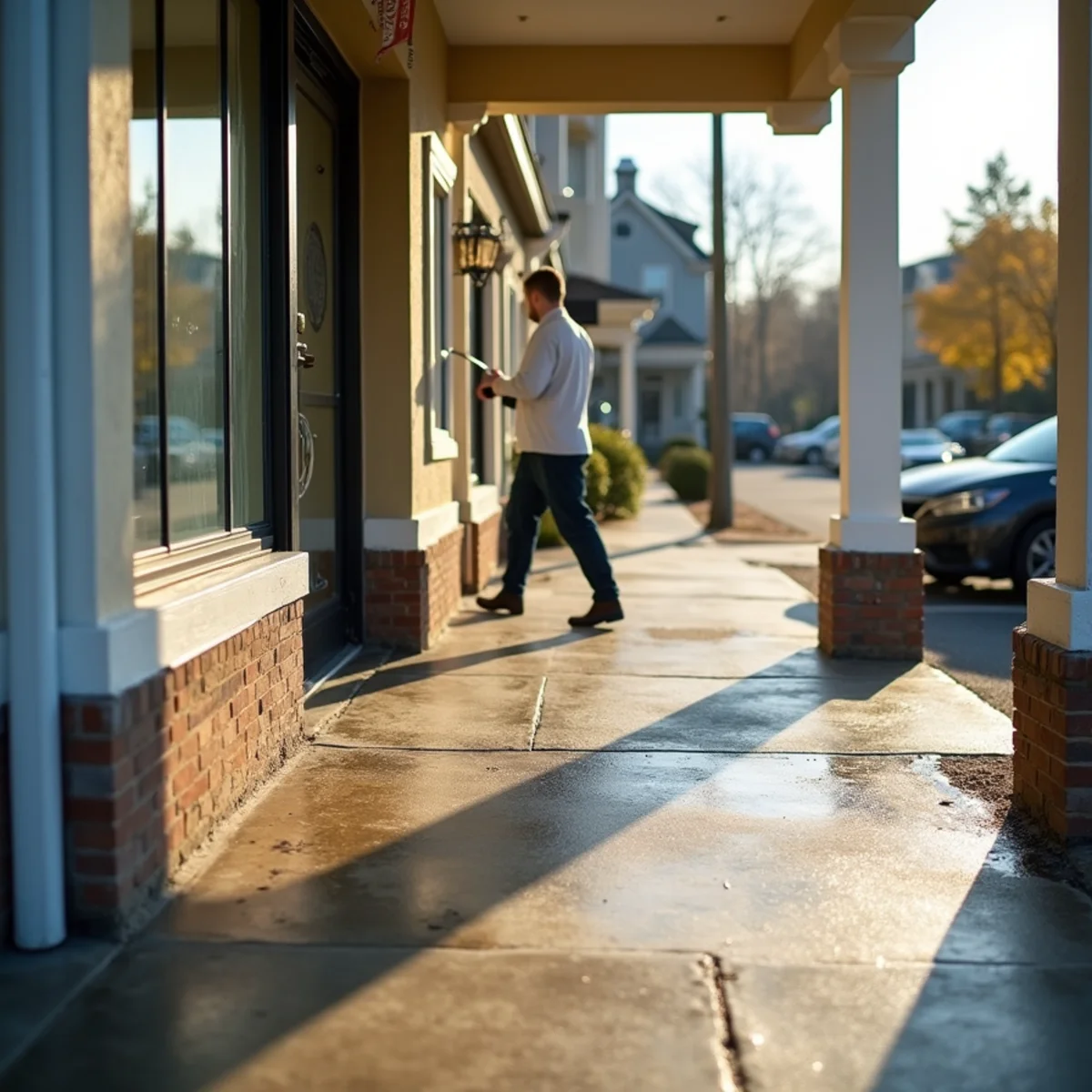
Parking-Lot Cleaning FAQs
It depends on traffic and exposure. High-traffic retail, restaurant, and medical properties usually look best on a quarterly schedule, while quieter office and light-commercial lots are often fine twice a year — spring to clear winter salt and pollen, and fall before the leaf drop. Entrances, dumpster pads, and drive lanes soil faster and can be done more often. We'll recommend a cadence for your site.
Fresh and surface oil usually lightens well with a degreaser, heat, and dwell time. Deep-set oil, dried transmission fluid, rust bleed, and heavy tire marks can be reduced and made much less noticeable, but they don't always clear fully. We'll walk the lot first and tell you honestly which stains we expect to remove, which to lighten, and which may remain as a faint shadow before any work begins.
Yes, when the pressure is controlled for the surface. Asphalt is bound by asphalt cement, so we lower the pressure, widen the spray angle, keep the nozzle at a distance, and let water volume and cleaning solution do the work rather than brute force. That cleans the blacktop without dislodging aggregate or scouring the binder. Durable concrete aprons and walkways take a firmer, still-careful touch.
Because it's living organic growth — algae, mildew, and moss — not just dirt, and the Connecticut River valley's humidity and shade keep feeding it. Blasting only removes the color and leaves the roots, so it returns fast. We apply a low-pressure solution that kills it at the root and slows regrowth, but shaded, damp lots will regrow over time. A recurring schedule keeps you ahead of it.
Yes. We typically work early mornings or off-peak hours and clean in sections so parking and pedestrian access stay open. We coordinate the schedule around your operations, cone or flag wet areas until they dry, and keep the site safe and usable throughout. For larger properties we can phase the work across zones so the lot never fully closes.
We manage it responsibly. Once wash water picks up detergents, oil, and grease it counts as process wastewater under the Clean Water Act, so we control and direct runoff to keep it out of open storm drains that feed local waterways. It's a standard part of professional commercial cleaning and protects both your property and the Pioneer Valley watershed.
There is no flat rate, because cost depends on the lot's square footage, the surface type (concrete, asphalt, or mixed), its condition, how much oil and gum need detailed treatment, site access, and whether you want one-time or recurring service. The best way to get an accurate number is a quick walkthrough. Request a free estimate or call (351) 242-0666 and we'll price your specific property.
Ready to Refresh Your Property?
Request an estimate for pressure washing, house washing, roof cleaning, or soft washing in Longmeadow and surrounding communities.