Sidewalk Cleaning in Hampden County, MA
Pedestrian-safe cleaning that lifts gum, traffic film, and organic staining from concrete and paver walkways.
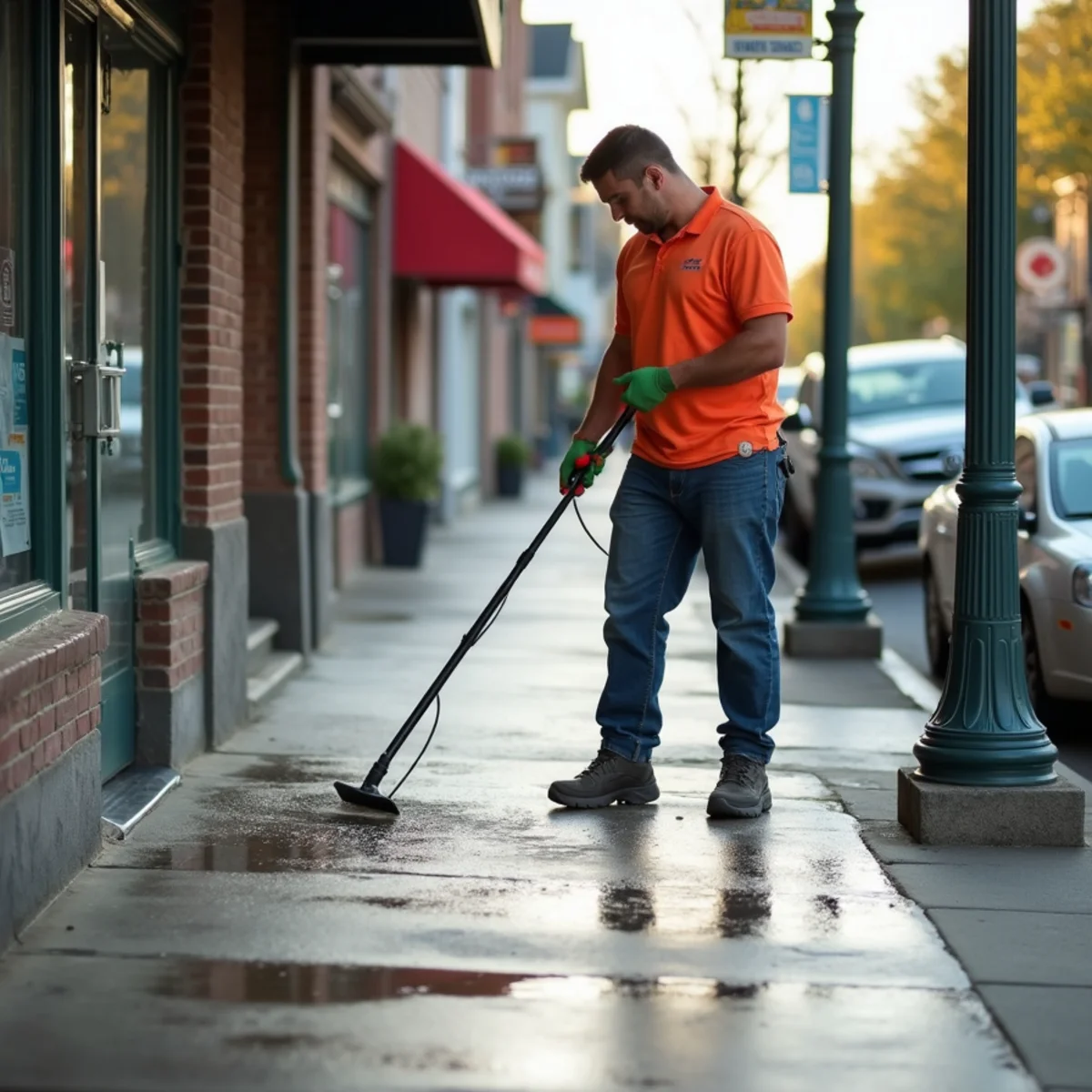
The sidewalk in front of your business is the first thing a customer steps on, and in the Connecticut River valley it takes a beating. Gum, black traffic film, coffee spills, spring pollen, and green algae build up fast on the shaded, high-traffic walkways of Hampden County storefronts and plazas.
We surface clean concrete, brick, and paver walkways with a rotary surface cleaner and hot water, matching pressure to the material so the finish comes back even and stripe-free rather than etched or gouged. Where organic staining and slip-prone film have set in, a low-pressure biodegradable pre-treatment loosens it at the source before we rinse.
Serving Longmeadow and the surrounding Hampden County towns, we schedule around your business hours and can set up recurring service so your entrance stays clean, safe underfoot, and welcoming through every season.
Recommended method
Controlled pressure washing
Pedestrian-safe cleaning that lifts gum, traffic film, and organic staining from concrete and paver walkways.
What builds up on Hampden County sidewalks
Walkways here sit under humid summers and a heavy mature tree canopy, so shaded and north-facing stretches stay damp long enough for algae, moss, and lichen to take hold. That green or black film is mostly algae and cyanobacteria that grip the pores of the concrete; it looks dingy, and once it is wet it gets genuinely slippery underfoot.
Foot traffic adds its own layer. Chewing gum gets ground into the surface, black rubber-and-dirt traffic film darkens doorways, and coffee, soda, and food spills collect outside cafes and storefronts. Spring lays down a yellow film of pine and oak pollen and sticky tree sap, and fall leaves leave tannin stains wherever they sit long enough.
Winter is hard on Pioneer Valley walkways too. Road salt and de-icer track in and leave a chalky residue, and the freeze-thaw cycle grinds grit into every joint and crack. By spring, most sidewalks in Longmeadow, Springfield, and the surrounding towns are carrying a full year of buildup.
Our controlled-pressure process for an even, stripe-free finish
We clean flat hardscape with a rotary surface cleaner, a shrouded attachment that spins two nozzles at a fixed height so the pressure lands evenly across the whole slab. That is what prevents the wand marks, zebra striping, and etched lines you get when someone waves a narrow pressure tip back and forth by hand.
Pressure is matched to the material, not cranked to maximum. Durable poured concrete takes more than brick or pavers, so we dial it in for each surface and lean on heat and cleaning solution rather than brute force. Hot water is a big part of that: it breaks down grease, gum polymers, and bonded film far faster than cold water at the same pressure, so we can clean thoroughly without going aggressive on the surface.
Heavier organic staining gets a low-pressure biodegradable pre-treatment first. It loosens algae and film at the root so the rinse can do the work gently. Then we detail the edges, expansion joints, and thresholds the surface cleaner cannot reach and finish with a full rinse.
Removing gum, traffic film, and stubborn stains
Chewing gum is the classic storefront problem. It bonds to concrete and flattens into black dots that a standard wash skips right over. We soften it with hot water, which breaks down the sticky polymers, and lift it with focused pressure, working spot by spot at entrances, transit stops, and anywhere people tend to queue.
Black traffic film, the mix of tire rubber, dirt, and body oils that darkens doorways and high-traffic lanes, responds to the same combination of heat, detergent, and even surface-cleaner passes. Coffee, soda, and food spills outside cafes and takeout windows get spot-treated as part of the same visit.
Some stains are more stubborn: oil and grease drips near service doors, rust bleed from metal furniture or railings, and deep tannin from leaves. We treat these directly where we can, and we are honest about what fully lifts versus what only lightens. Old oil and rust that have soaked into porous concrete do not always come all the way out.
Green film and algae: why pressure alone does not keep it away
Pressure washing removes the green and black film you can see, but it does not stop it from coming back. The algae and cyanobacteria behind that dark sheath, plus moss that anchors into the surface with tiny root-like rhizoids, survive at the microscopic level and simply regrow, often within a season on a shaded walk.
That is why we pre-treat with a biodegradable cleaning solution that kills the organics at the root rather than only stripping the top layer. It is the same soft-washing principle we use on siding and roofs, applied at low pressure to the walkway. Growth that has been killed releases more cleanly and is slower to return.
No treatment is permanent. A damp, shaded sidewalk under the valley's tree canopy will see growth again eventually. But a proper kill-and-rinse buys far more clean time than a plain pressure pass, and a recurring visit keeps organics from ever fully re-establishing.
Concrete, pavers, and brick: matching method to the material
Poured concrete is the workhorse and the most forgiving surface, but even concrete can be etched or striped by too much pressure held too close, so technique still matters, especially on older, worn, or thin slabs where the top layer is already fragile.
Brick and concrete pavers need a lighter touch. Too much pressure blows the jointing sand out from between the units, and once those joints are empty the pavers shift and weeds move in. We clean pavers at lower pressure and can point you toward re-sanding when the joints need it. Efflorescence, the white salty haze that surfaces on brick and pavers, rises from within the masonry as water evaporates rather than sitting on top as dirt, so we set honest expectations on how much of it a cleaning will address.
Stamped and exposed-aggregate concrete, stair treads, and ADA ramps each get handled on their own terms. The goal is always the same: clean the surface fully without damaging it or the joints that hold it together.
Keeping public walkways safe: foot traffic, runoff, and scheduling
On a live storefront or plaza, the cleaning has to work around people. We sequence the walkway in sections, cone and sign wet areas, and keep a clear path so customers and tenants can still reach the door while we work. Many commercial jobs go smoothest early in the morning or after close, and we schedule around your hours.
Runoff matters on public surfaces. We use biodegradable, low-toxicity solutions and direct rinse water away from open storm drains where practical, so what we clean off the walkway does not simply move the problem downstream.
Because entrances get dirty on a predictable cycle, many Hampden County businesses and property managers set up recurring service, whether monthly, quarterly, or seasonal. Regular visits keep gum and film from building up, keep algae from re-establishing, and keep the whole storefront looking maintained instead of neglected. Ask about a schedule for your property when you call (351) 242-0666.
Problems This Service Solves
- Chewing gum bonded and flattened into concrete and paver walkways
- Black traffic film and rubber scuffing at doorways and high-traffic lanes
- Green algae and slippery organic film on shaded, north-facing walks
- Moss and lichen anchored in paver joints and along walkway edges
- Coffee, soda, and food spills outside cafes and storefronts
- Winter road-salt and de-icer residue tracked across the surface
- Tree sap, pollen, and fall leaf-tannin staining
- Dull, grimy entrances that drag down the whole storefront
What's included
- Pre-inspection of the walkway surface and problem areas
- Low-pressure biodegradable pre-treatment to loosen organics and film
- Rotary surface-cleaner passes for even, stripe-free results
- Hot-water gum and traffic-film removal at entrances and high-traffic spots
- Spot treatment of oil, grease, and stubborn stains
- Detailing of edges, expansion joints, and thresholds
- Final rinse and a slip-hazard check of walked areas
- Optional recurring maintenance scheduling
Benefits
- Safer footing with slip-prone film and gum removed
- A brighter, sharper look for your whole storefront
- A cleaner first impression for customers and tenants
- Slowed regrowth of algae and moss between visits
- Method matched to concrete, pavers, or brick to protect the surface
- Flexible scheduling around your business hours
- Recurring plans that keep entrances consistently clean
Surfaces we treat
- Concrete sidewalks and poured walkways
- Brick and concrete-paver pedestrian areas
- Entry aprons, thresholds, and door landings
- Storefront and plaza walkways
- Stamped and exposed-aggregate concrete
- Stair treads and ADA ramps
- Curbs and walkway edges
Safety & protection
- Pressure and water temperature matched to each surface
- Rotary surface cleaner used to avoid gouging or striping
- Work sequenced and coned off around foot traffic
- Runoff directed away from open storm drains where practical
- Biodegradable, low-toxicity cleaning solutions
- Wet-surface signage and prompt drying of walked areas
- Extra care taken at joints, edges, and thin or aging concrete
What to Expect
Request an estimate
Call or send us a few details and photos. We respond with next steps and, where possible, a preliminary range before we visit.
Property & surface assessment
We look at each surface — siding, roof, hardscape — and identify the material, its condition, and the buildup we're dealing with.
Written scope of work
You get a clear, written estimate that spells out which surfaces we'll clean and the method we'll use on each one.
Property & plant protection
On service day we pre-wet landscaping, cover delicate plants, and take steps to protect fixtures before any solution is applied.
Surface-specific cleaning
We match the pressure and cleaning solution to the material — gentle soft washing for delicate surfaces, controlled pressure for durable hardscape.
Final walkthrough
We rinse thoroughly, remove protective coverings, tidy up, and walk the property with you to confirm you're happy with the result.
Before & After
Sidewalk Cleaning FAQs
Not when it is done right. Damage such as etching, striping, or exposed aggregate comes from too much pressure, the wrong nozzle, holding the wand too close, or dwelling on one spot. We use a rotary surface cleaner that spreads pressure evenly, match the setting to the concrete's age and condition, and rely on heat and cleaning solution instead of brute force, so your walkway comes back even rather than eaten up.
Gum bonds to concrete and flattens into stubborn black dots that a normal wash skips. We soften it with hot water, which breaks down the sticky polymers far better than cold, then lift it with focused pressure, working spot by spot at entrances and other high-traffic areas. For storefronts with constant gum, a recurring visit keeps it from building back into a solid field of spots.
Eventually, yes. A shaded, damp walkway under the valley's tree canopy is a place algae wants to live, and plain pressure washing only strips the surface, so it regrows fast. We pre-treat with a biodegradable solution that kills the organics at the root, which releases more cleanly and stays gone longer. No treatment is permanent, but a proper kill-and-rinse plus periodic maintenance keeps regrowth slow.
Most walkways benefit from a thorough cleaning once or twice a year, but it depends on the site. A busy storefront with heavy gum and foot traffic, or a shaded walk that grows algae, may want quarterly or monthly service, while a lower-traffic entrance can be fine annually. We can look at your walkway and recommend a cycle that keeps it consistently clean and safe underfoot.
Yes. Brick and concrete pavers need a lighter touch than poured concrete, since too much pressure blasts the jointing sand out and lets the units shift, so we clean them at lower pressure and can flag when joints need re-sanding. We also treat moss and algae in the joints. Efflorescence, the white salty haze that rises from within masonry, is a separate issue we will set honest expectations on.
It depends on the size of the area, the surface, how much gum and staining has built up, and site access. A small storefront entrance is very different from a long plaza walkway, and recurring plans usually cost less per visit than one-off cleanings. The best way to get an accurate number is a free estimate. Call (351) 242-0666 and we will price your specific walkway.
Yes. On a live storefront we clean in sections, cone and sign wet areas, and keep a clear path to your door so customers and tenants can still get in while we work. Many commercial jobs go smoothest early in the morning or after close, and we schedule around your hours to keep disruption to a minimum.
Ready to Refresh Your Property?
Request an estimate for pressure washing, house washing, roof cleaning, or soft washing in Longmeadow and surrounding communities.