
Stucco Cleaning in Longmeadow, MA
Low-pressure soft washing that lifts mildew, algae, and staining from stucco and EIFS without cracking or pitting the finish.
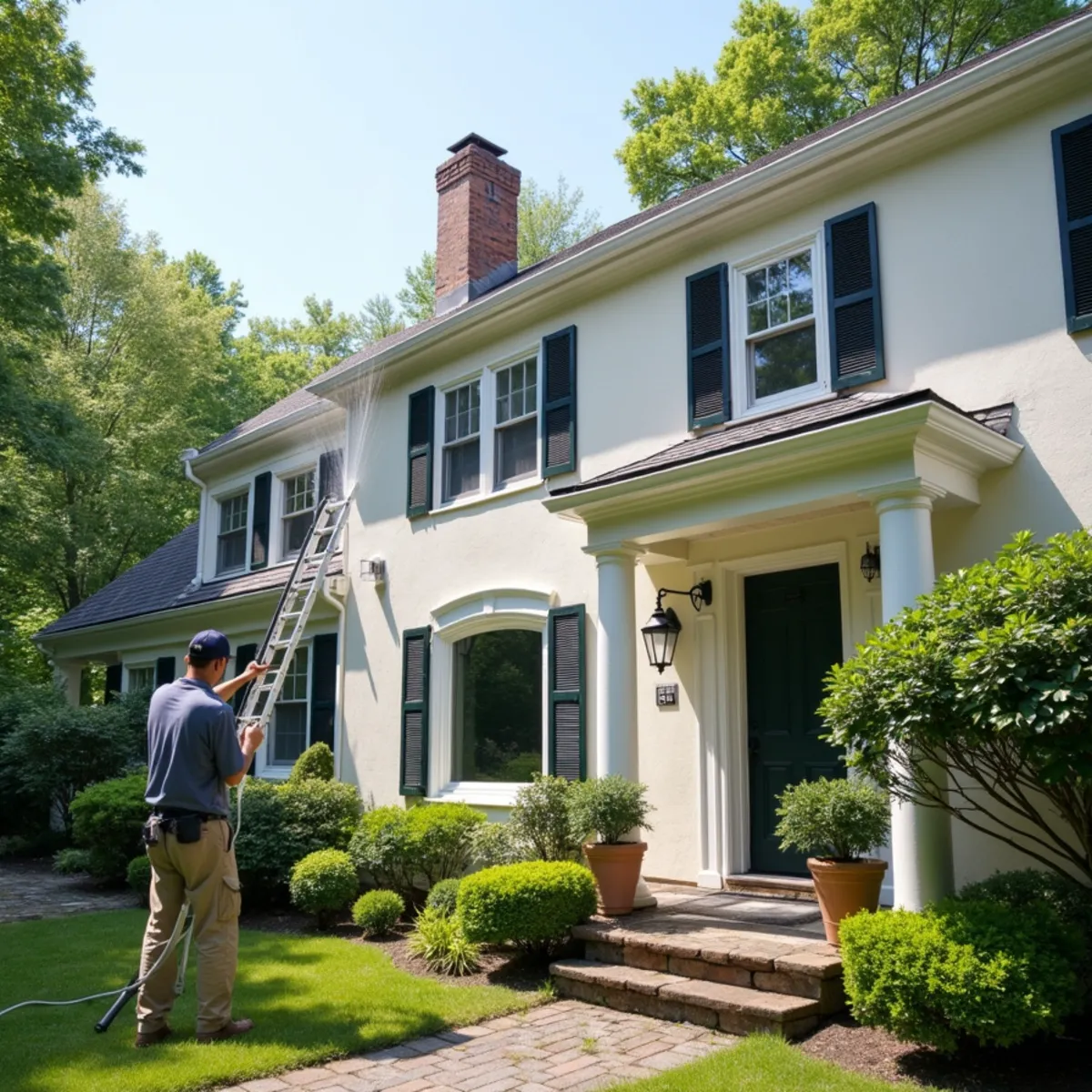
Stucco is one of the least forgiving exteriors in the Connecticut River valley. Its porous, textured surface holds moisture and traps spores, so algae, mildew, and dark staining take hold fast on shaded elevations — yet the same brittle, cement-based finish cracks and pits under the high pressure most companies reach for.
We clean stucco and EIFS the way the material demands: soft washing. Low pressure carries a biodegradable cleaning solution into the texture, kills the organic growth at the root, and rinses away evenly without forcing water behind the finish or chipping the surface.
From the older stucco and Tudor-style homes around the Longmeadow green to newer synthetic-stucco elevations across Hampden County, we match the solution strength and dwell time to your finish and its condition — so the wall comes back clean and the surface stays intact.
Recommended method
Low-pressure soft washing
Low-pressure soft washing that lifts mildew, algae, and staining from stucco and EIFS without cracking or pitting the finish.
Why stucco can't take the pressure most siding shrugs off
Stucco looks tough, but it behaves nothing like vinyl or fiber cement under a cleaning wand. A cement-based finish is porous and slightly brittle, built up in thin coats over lath or foam. Aim a high-pressure tip at it and you don't just clean the surface — you erode the texture, open hairline cracks, and blow the sand finish right off the wall. Once that skin is broken, water gets in.
That last part matters more here than in warmer regions. In the Connecticut River valley, moisture that soaks into a cracked wall doesn't just sit there — it freezes. Our winters run through dozens of freeze-thaw cycles, and every time trapped water expands it widens the crack a little more. A wall that was blasted too hard in October can spend all winter quietly failing. Soft washing sidesteps the whole problem by cleaning with chemistry instead of force.
How soft washing actually cleans stucco
Soft washing does the work that high pressure can't do safely. We apply a biodegradable cleaning solution — surfactants blended with a controlled amount of sodium hypochlorite where the staining calls for it — at very low pressure, closer to a garden hose than a pressure washer. The solution soaks into the texture, and we give it time to dwell so it can break down algae, mildew, and mold at the root rather than just knocking the color off the top layer.
That root-level kill is why soft washing lasts. High pressure can make a wall look clean for a few weeks, but if the organism is still alive down in the pores it grows back fast. Once the solution has done its job, we rinse the wall evenly and gently, from the top down, clearing the dead growth and loosened grime without driving water behind the finish. The result is consistent across the whole elevation — no clean stripes next to missed patches, and no wand marks etched into the texture.
Traditional stucco vs. EIFS — and why we treat them differently
Not every stucco wall is the same, and the difference changes how carefully we work. Traditional stucco is a hard, cement-based coat troweled over lath. EIFS — an exterior insulation and finish system, sometimes called synthetic stucco or known by brand names like Dryvit — is a thin acrylic finish over a foam insulation board. It can look similar from the curb, but underneath it is far softer and far less able to take a hit.
EIFS demands the lightest touch we offer. Its foam core means high pressure can dent, puncture, or drive water behind the finish, where it has nowhere to drain and can rot the substrate. We soft wash EIFS at the lowest workable pressure and let the solution do everything. If we're not certain which system a wall is, we treat it as the more delicate of the two — there's no downside to being gentle, and real risk in being aggressive.
What's staining stucco in the Pioneer Valley
Most of what discolors stucco around here is alive. The humid summers, heavy tree canopy, and shaded north and east walls that define so many Hampden County lots keep exterior surfaces damp for long stretches — ideal conditions for algae, mildew, moss, and lichen. The black and green you see in the texture is usually Gloeocapsa magma and its relatives: airborne organisms that settle into the pores and spread across any wall that stays wet.
The rest is seasonal. Spring coats everything in the valley with pine pollen and tree sap; summer storms splash soil and organic debris onto lower walls; and winter road spray leaves a gray film along elevations that face the street. Light-colored and shaded stucco shows all of it first, which is why the north side of a house so often looks years older than the sunny south side. Soft washing addresses the biological staining and the surface grime in the same visit.
Efflorescence and mineral staining are a different problem
Not every white or gray patch on stucco is dirt. Efflorescence — a chalky, crystalline deposit — forms when water moves through the wall, dissolves salts in the cement or masonry, and leaves them behind on the surface as it evaporates. It often lightens with a gentle cleaning, but because it's a sign of moisture traveling through the wall, it tends to return until the water source is addressed. We clean it gently, avoid harsh acids that can burn the finish, and tell you honestly when what you're seeing points to a moisture issue worth having a stucco contractor look at rather than something washing alone will solve.
How long the results last — and keeping stucco clean
Soft washing restores the finish, but no exterior cleaning is permanent. Algae and mildew are airborne and opportunistic, so on a shaded, tree-lined lot they will eventually find their way back. What soft washing does is reset the wall to clean and slow the regrowth by killing the organisms at the root, so it takes far longer for staining to return than it would after a plain surface rinse.
How often you'll want it done depends on the wall. A bright, sunny elevation might go a few years between cleanings; a damp north wall under heavy canopy may want attention every year or two. Many homeowners pair a stucco cleaning with a full house washing so the whole exterior is done at once. We'll give you an honest read on your walls and a realistic interval — never a hard sell for work you don't need.
Stucco cleaning across Longmeadow and Hampden County
We soft wash stucco and EIFS for homeowners throughout Longmeadow, East Longmeadow, and the surrounding Hampden County towns — Springfield, Wilbraham, Agawam, West Springfield, Ludlow, and Chicopee among them. Whether it's a single stucco chimney, an accent gable, or a full synthetic-stucco elevation, we bring the same careful low-pressure approach and match it to your finish. If your project also includes brick, concrete, or other siding, we can fold stucco cleaning into a broader house washing or soft washing visit. Call (351) 242-0666 for a free estimate.
Problems This Service Solves
- Green and black algae growing in the porous texture of the stucco
- Mildew and mold on shaded north- and east-facing elevations
- Dark organic streaking that dulls the finish
- White, chalky efflorescence and mineral deposits
- Pine pollen, tree sap, and airborne grime under heavy tree canopy
- Surface dirt and road-spray film along street-facing walls
- Discoloration around gutters, downspouts, and rooflines
What's included
- Walk-around assessment of the finish, its condition, and the type of staining
- Spot test in an inconspicuous area before full cleaning
- Pre-wetting and protection of plants, trim, and fixtures
- Even, low-pressure soft-wash application of a biodegradable solution
- Controlled dwell time so the solution lifts growth at the root
- Gentle, thorough top-down rinse that clears residue without streaking
- Extra attention to trouble spots around downspouts, corners, and eaves
Benefits
- A clean, even finish across a hard-to-clean textured surface
- No cracking, pitting, or chipping from high pressure
- Organic growth killed at the root, not just rinsed off the surface
- Slowed regrowth for a longer-lasting result between cleanings
- Protection for a repair-prone, moisture-sensitive material
- Brighter curb appeal without repainting or refinishing
- A method safe for both traditional cement stucco and EIFS
Surfaces we treat
- Traditional cement-based (Portland) stucco
- Synthetic acrylic stucco finishes
- EIFS (exterior insulation and finish systems)
- Dryvit and similar synthetic wall systems
- Stucco accents, gables, and full elevations
- Stucco chimneys, columns, and architectural detail
- Stucco foundations and knee walls
Safety & protection
- Very low pressure kept well within the finish's tolerance
- Spot testing before any full application
- Biodegradable, plant-conscious cleaning solutions
- Pre-wetting and rinsing of surrounding landscaping
- Even coverage to prevent streaking and uneven lightening
- Solution strength matched to finish type and staining
- Care to keep water from being driven behind the finish
- Protection of windows, trim, lighting, and fixtures
What to Expect
Request an estimate
Call or send us a few details and photos. We respond with next steps and, where possible, a preliminary range before we visit.
Property & surface assessment
We look at each surface — siding, roof, hardscape — and identify the material, its condition, and the buildup we're dealing with.
Written scope of work
You get a clear, written estimate that spells out which surfaces we'll clean and the method we'll use on each one.
Property & plant protection
On service day we pre-wet landscaping, cover delicate plants, and take steps to protect fixtures before any solution is applied.
Surface-specific cleaning
We match the pressure and cleaning solution to the material — gentle soft washing for delicate surfaces, controlled pressure for durable hardscape.
Final walkthrough
We rinse thoroughly, remove protective coverings, tidy up, and walk the property with you to confirm you're happy with the result.
Before & After
Related Services
Stucco Cleaning FAQs
It shouldn't be with the high pressure most people picture. Stucco is porous and brittle, so a strong tip erodes the texture, opens hairline cracks, and can drive water behind the finish — a real problem in our freeze-thaw winters. Soft washing is the safe method: low pressure plus a cleaning solution does the work instead of force.
It depends on the wall. A sunny, exposed elevation may go a few years between cleanings, while a shaded north wall under heavy tree canopy can need attention every year or two. Because our valley summers are humid and many Hampden County lots are tree-lined, most stucco benefits from a periodic soft wash rather than a fixed schedule. We'll suggest a realistic interval for your home.
Eventually, yes — algae and mildew are airborne and will find any wall that stays damp, so no cleaning is permanent. Soft washing slows regrowth by killing the organisms at the root rather than just rinsing the surface, so staining takes far longer to return. Periodic maintenance keeps the finish looking its best, and we can talk through options that help on stubborn north walls.
Yes — soft washing is the right method for EIFS. Because it has a foam core under a thin acrylic finish, EIFS can't take pressure without risking dents, punctures, or water forced behind the wall, where it can rot the substrate. We clean it at the lowest workable pressure and let a gentle solution do the work. If we're unsure which system a wall is, we treat it as the more delicate one.
We take real care with landscaping. Before and after the wash we pre-wet and rinse the plants and soil around the work area, and we use biodegradable solutions applied at controlled strength. Stucco often sits close to foundation beds, so we plan our rinse to protect them. Let us know about anything delicate and we'll take extra steps around it.
That's usually efflorescence — mineral salts left behind as water moves through the wall and evaporates at the surface. A gentle cleaning often removes it, but because it signals moisture traveling through the stucco, it can return until the water source is addressed. We clean it without harsh acids and will tell you honestly if it points to a repair worth a stucco contractor's look.
There's no flat rate, because the cost depends on the size and height of the walls, the number of stories, how heavy the staining is, the finish type, and how accessible the elevations are. Architectural detail and landscaping factor in too. The best way to get an accurate number is a free estimate — call (351) 242-0666 and we'll take a look.
Ready to Refresh Your Property?
Request an estimate for pressure washing, house washing, roof cleaning, or soft washing in Longmeadow and surrounding communities.